
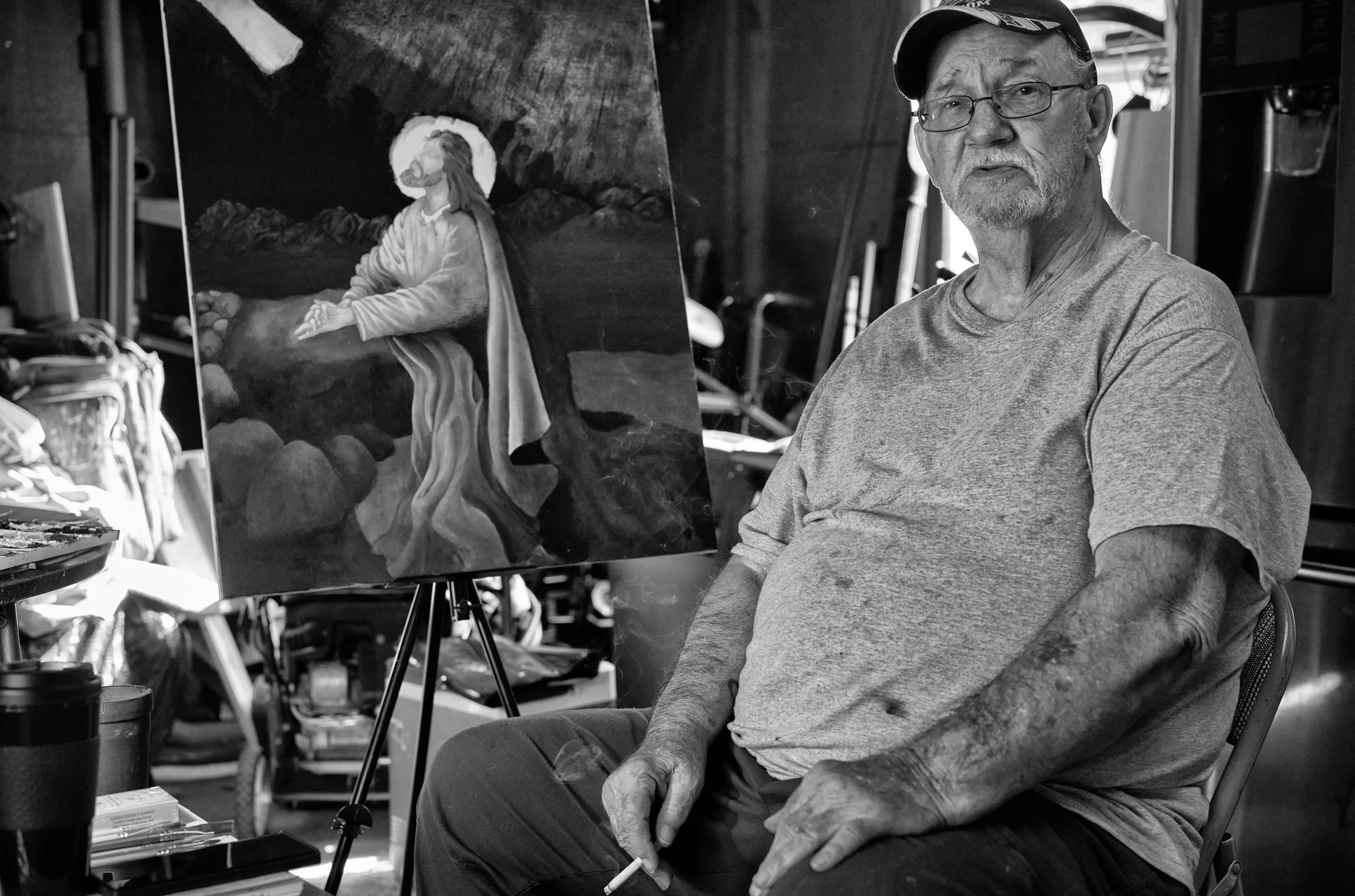
The Gift He Painted in Gratitude
This is Larry.
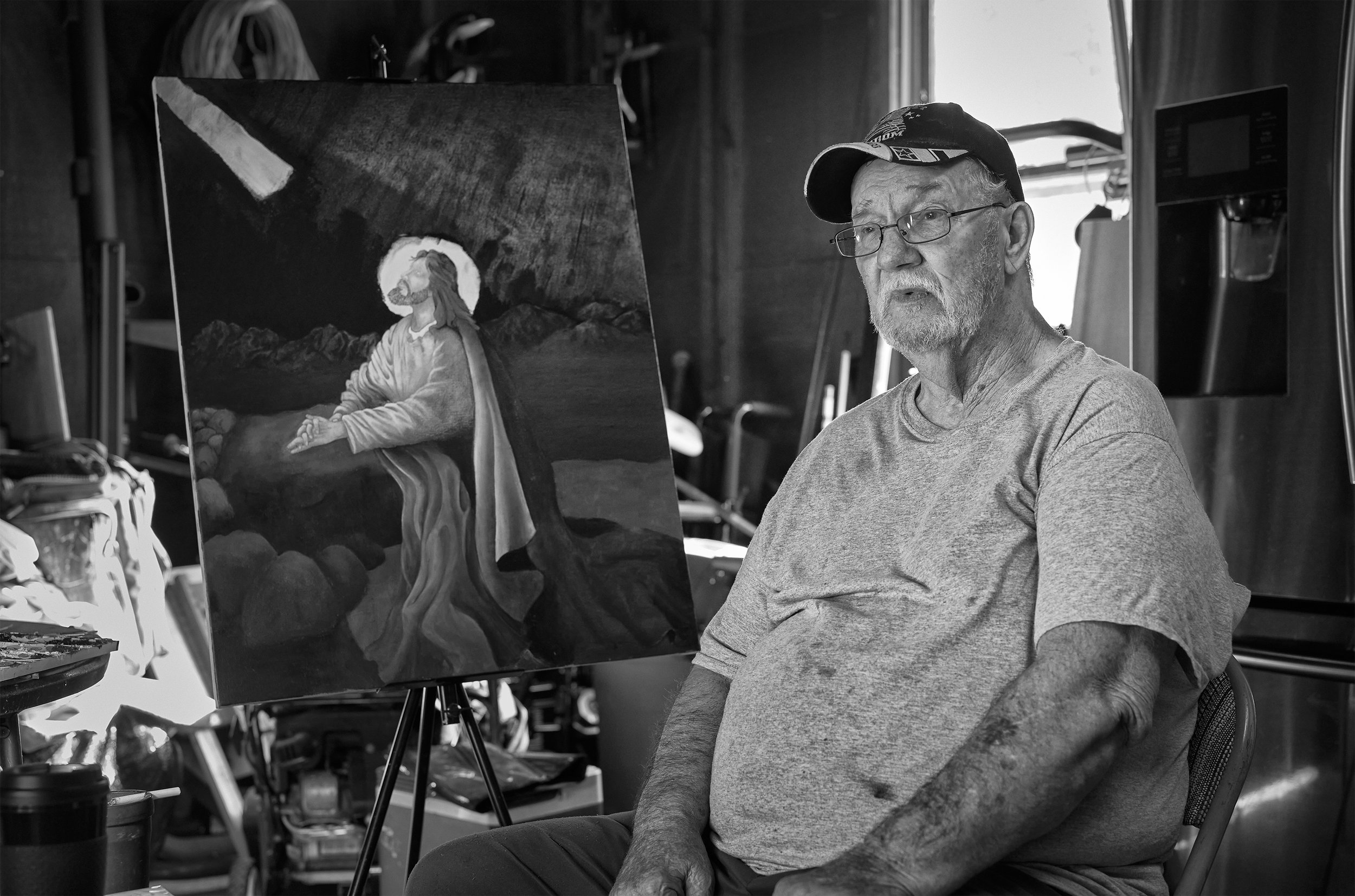
Larry is Native American and served four years in Vietnam, where he was shot and stabbed several times. He survived wounds most of us could never imagine and has carried those memories for a lifetime.
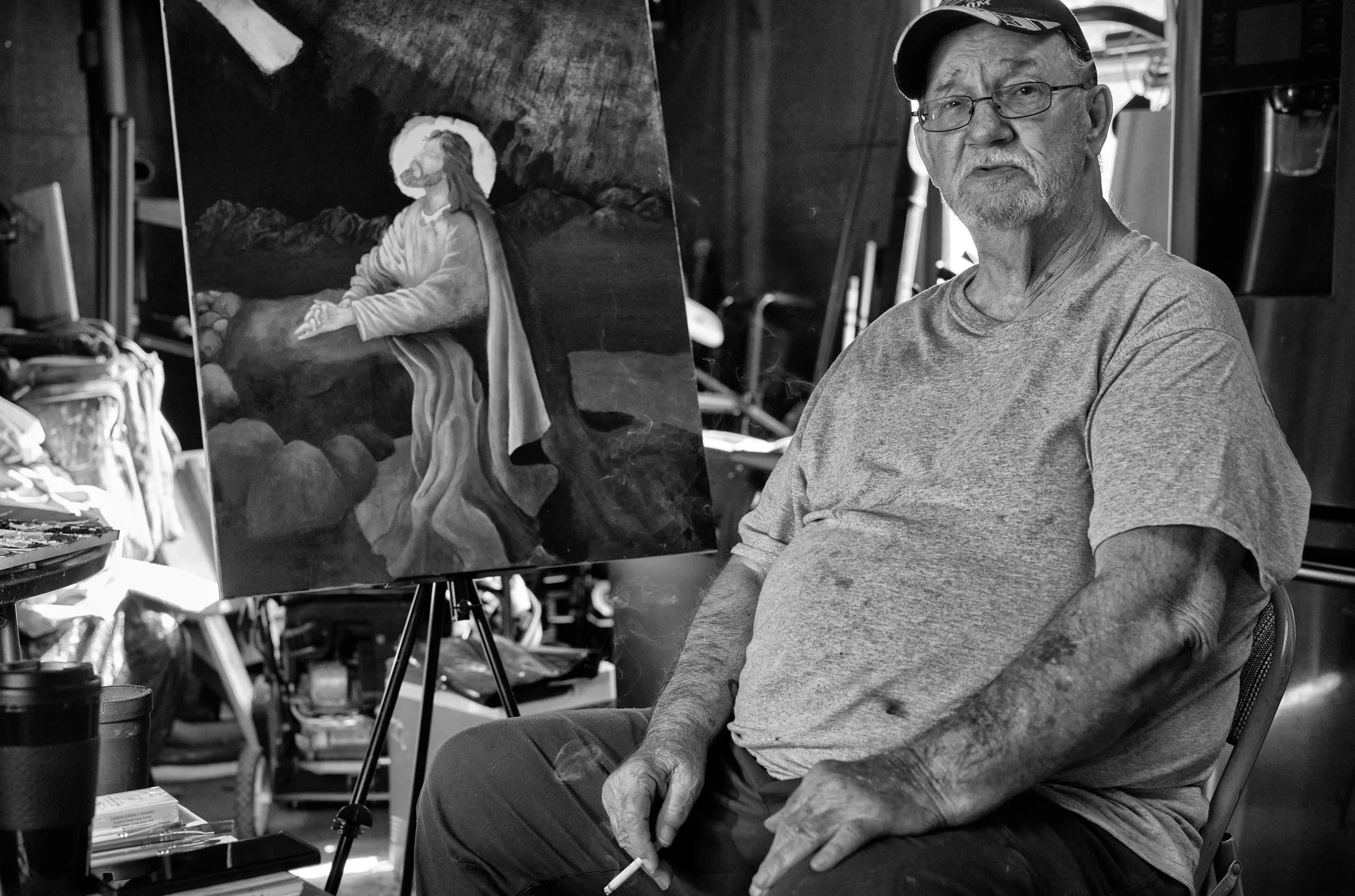
Recently, Larry spent several weeks in the hospital. During that time, a chaplain came to his room every day and often stayed for a couple of hours, simply talking with him and offering comfort. She especially loved his painting of Jesus praying in the Garden of Gethsemane.
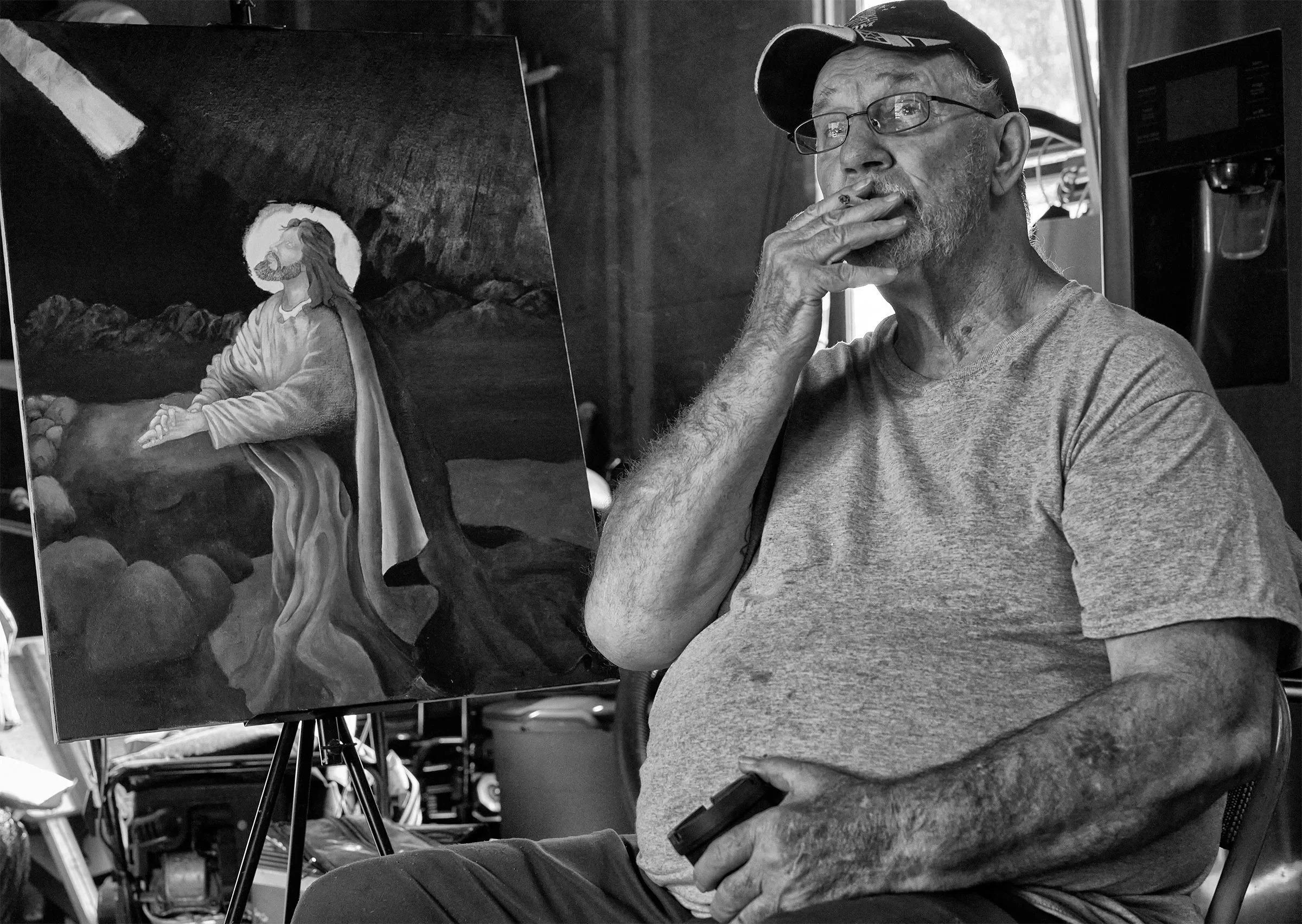
Now that Larry is home, he is painting one especially for her.
After everything he has endured, this is the man Larry remains—an artist, a veteran, and someone who remembers kindness and returns it with kindness of his own. It was an honor to photograph him and the gift taking shape beside him.
The Silent City Project
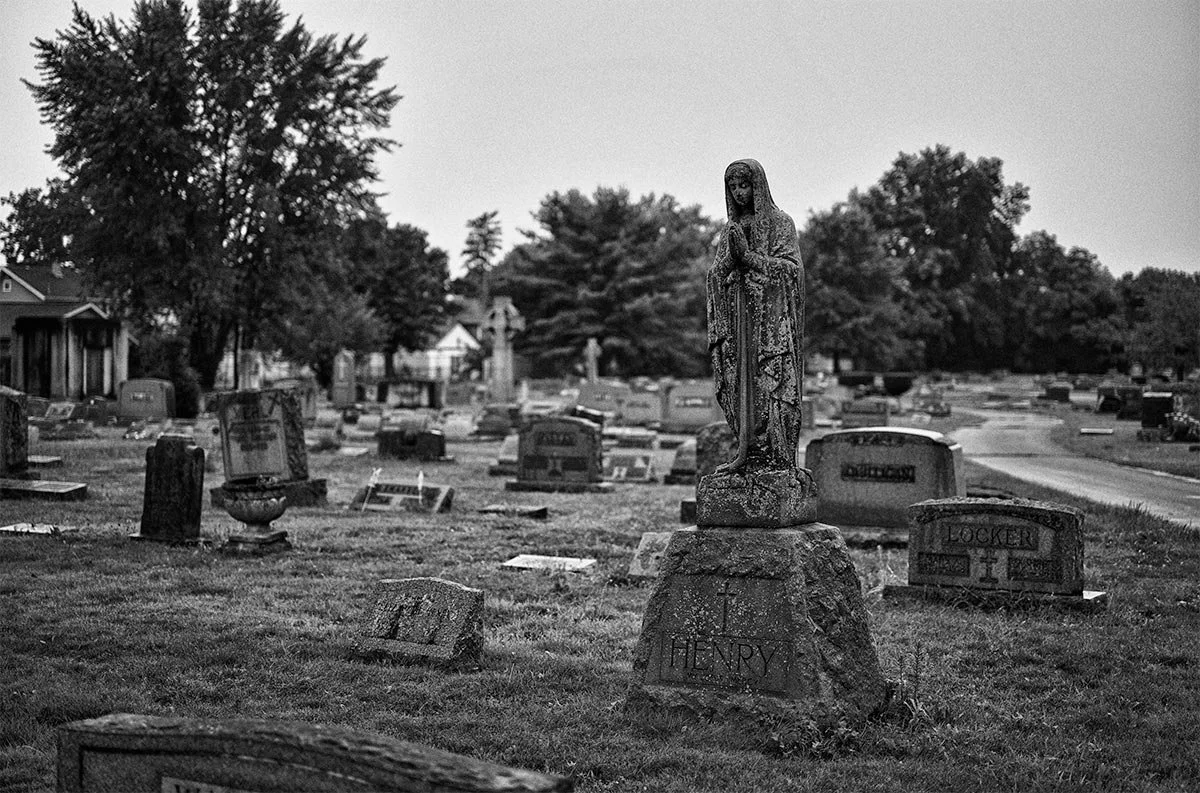
I have walked through this cemetery many times. I thought I knew it well—the old stones, winding roads, mature trees and names slowly surrendering to time. But on this visit, I noticed something I had somehow passed countless times before: a small stone altar bearing the Latin words Lumen Christi—Deo Gratias.
The Light of Christ. Thanks be to God.
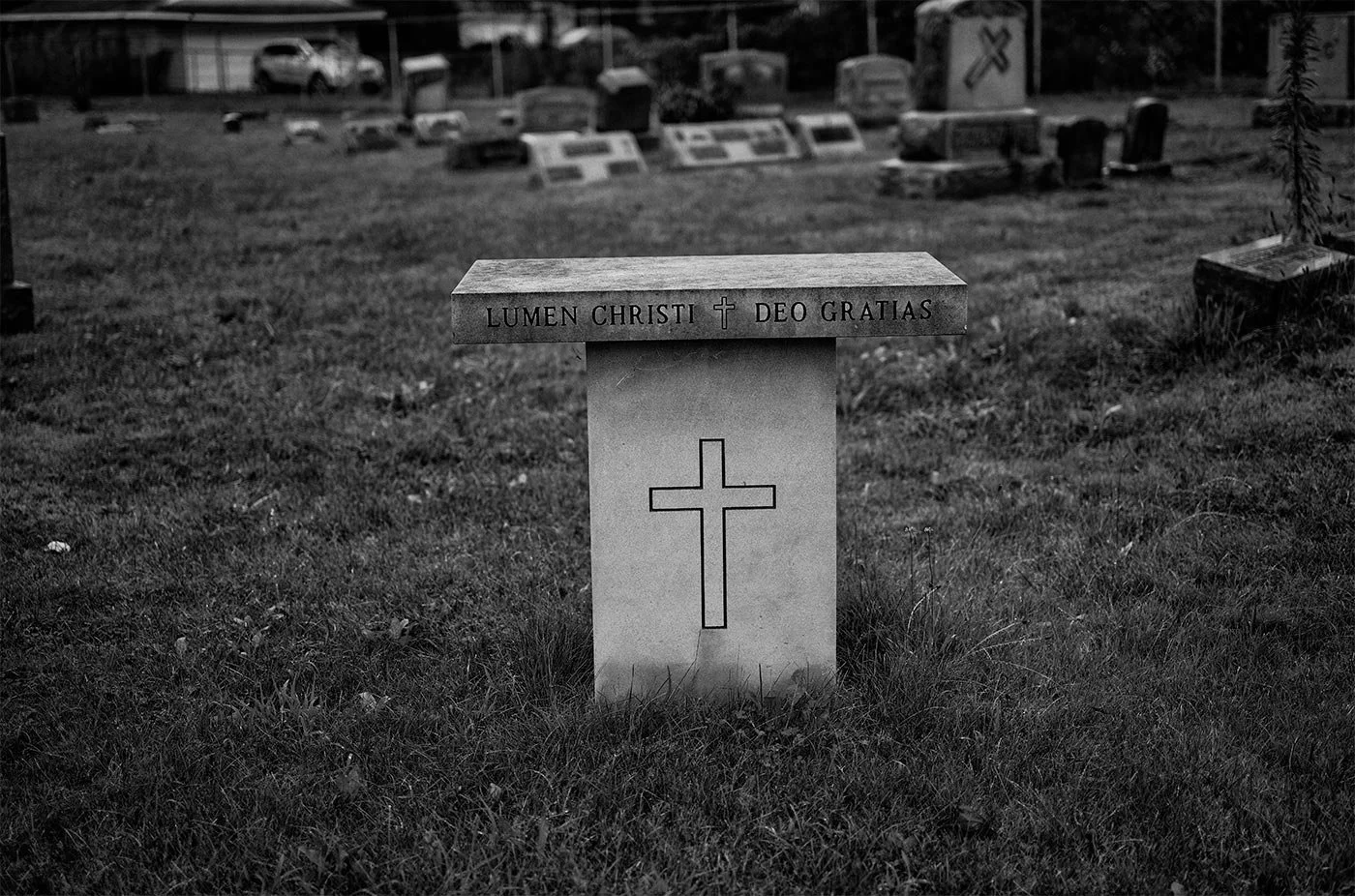
Alter in the cemetery
That discovery reminded me why I continue photographing cemeteries. They may appear still and unchanging, yet each visit reveals something different. A weathered statue, a pair of carved hands, a fading inscription or a monument standing quietly among generations of lives. These details have always been there, waiting for someone to slow down and notice them.
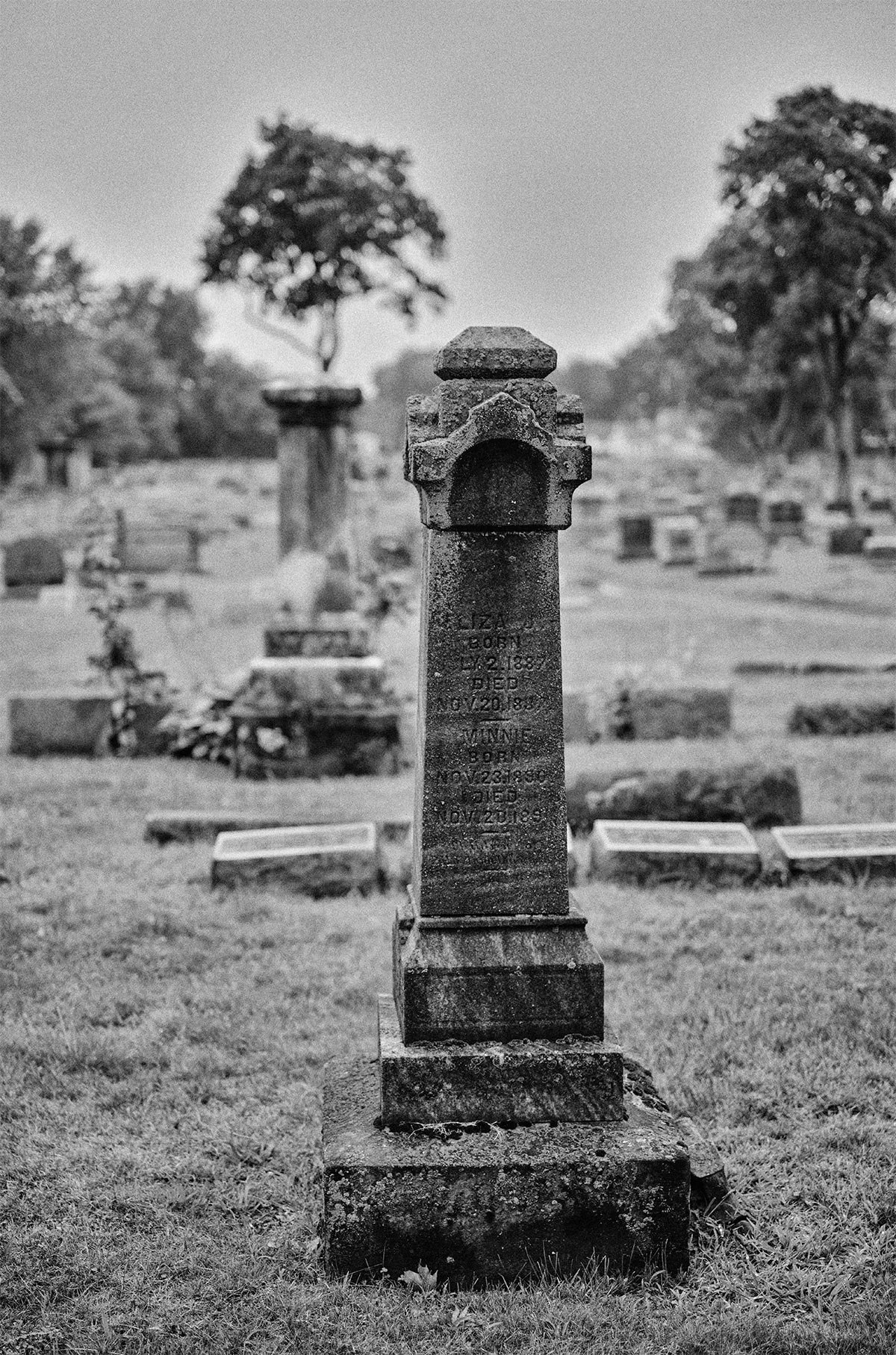
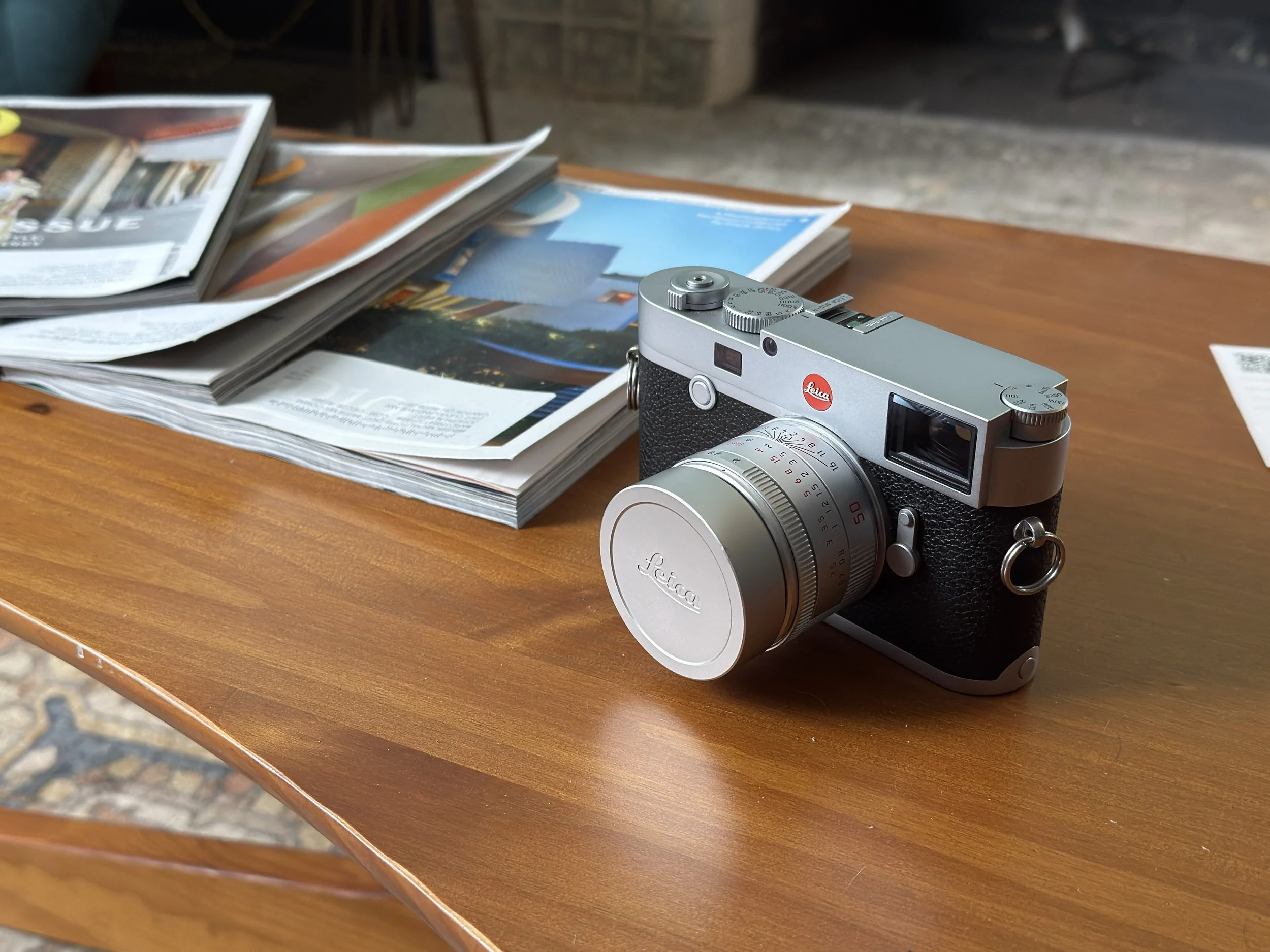
I photographed this series with my Leica M10-R and 50mm APO-Summicron. I chose black and white because I wanted the images to feel timeless and undistracted. In some photographs, the nearest object is sharp. In others, I focused deeper into the scene and allowed a cross or monument to fade softly from view. Those choices were deliberate. Memory works much the same way—some things remain clear while others gradually disappear.
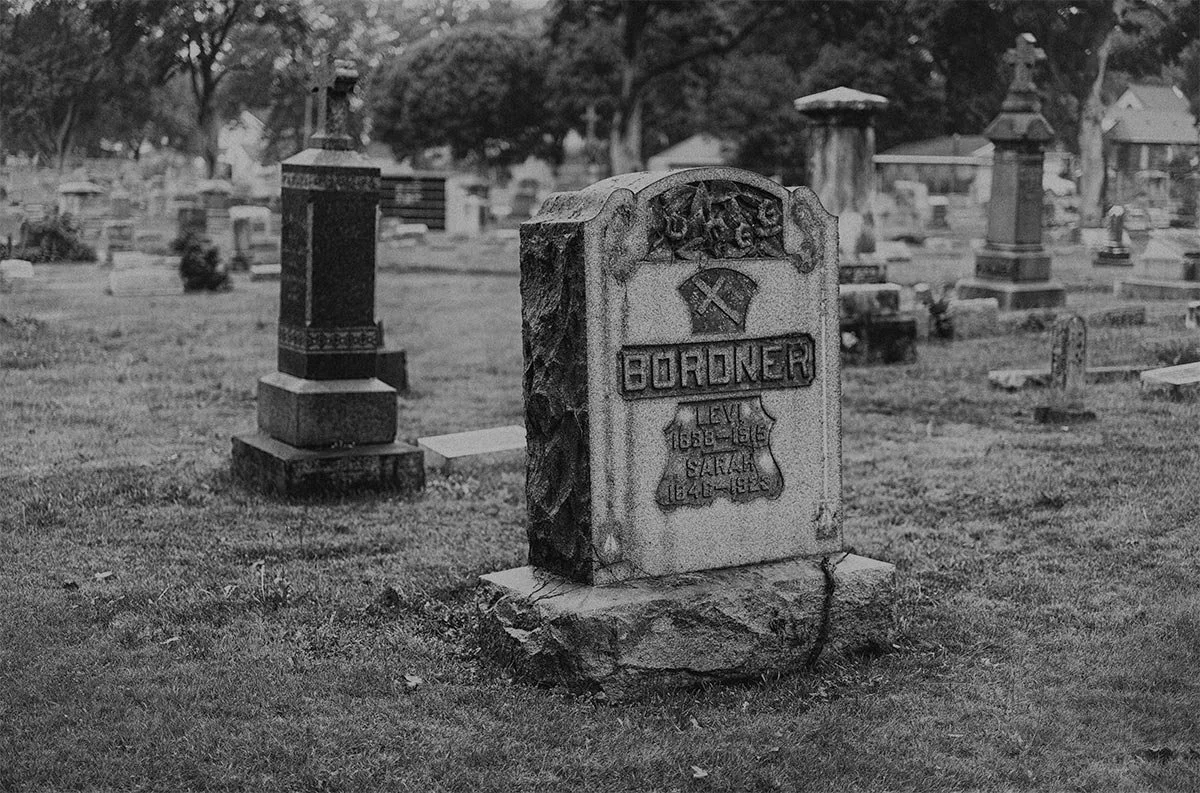
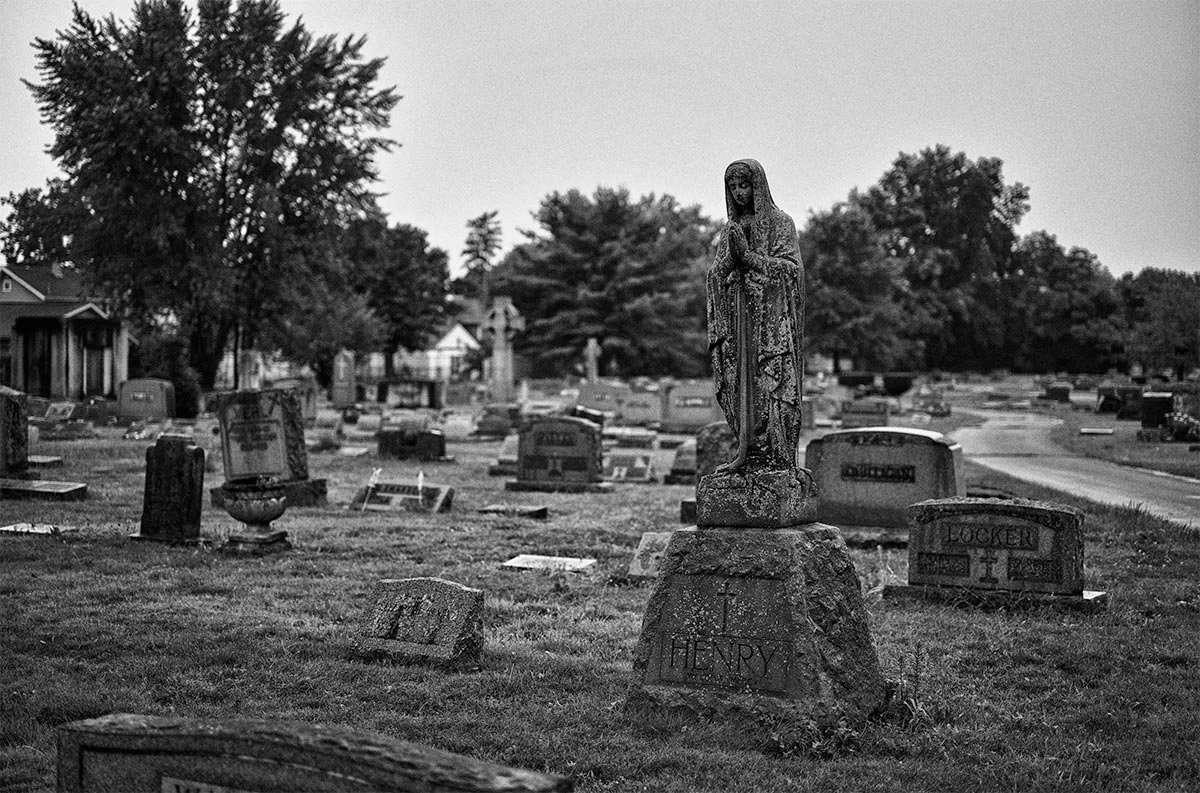
Not every photograph needs to shout. Some are meant to whisper. Individually, these images may seem simple, but together they begin to describe a place: a city with roads, architecture, history and residents whose names remain carved in stone.
This is the beginning of The Silent City Project—an ongoing photographic record of cemeteries, their beauty and the stories quietly resting within them.
More than a Machine Shop…
Sometimes a photography assignment becomes something more than documenting a building.
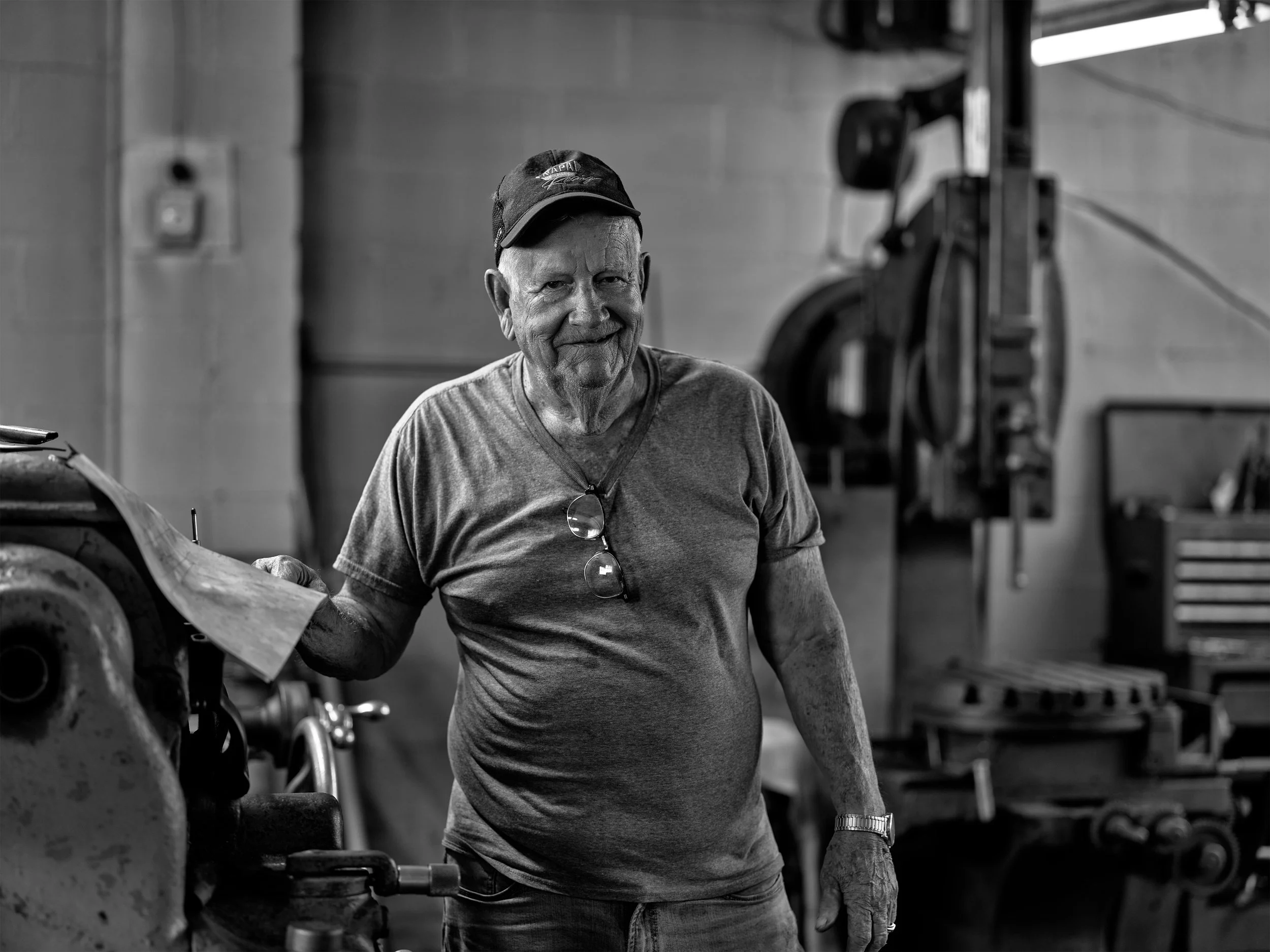
I recently had the opportunity to photograph a machine shop that has served our community for more than forty years. As I walked through the shop, it was immediately clear that this wasn't just a business. Every machine, every worn workbench, and every tool represented decades of hard work, skill, and dedication.
As we talked, I learned that the owner and his wife are preparing for a new chapter in life. They are looking forward to traveling together after many years of building both a business and a livelihood.
Before I left, I asked him if I could make one portrait—not because I needed another photograph, but because I wanted to preserve a piece of his story.
I asked him if there was one machine that meant the most to him. Without hesitation, he pointed to his favorite machine. That's where we made the portrait.
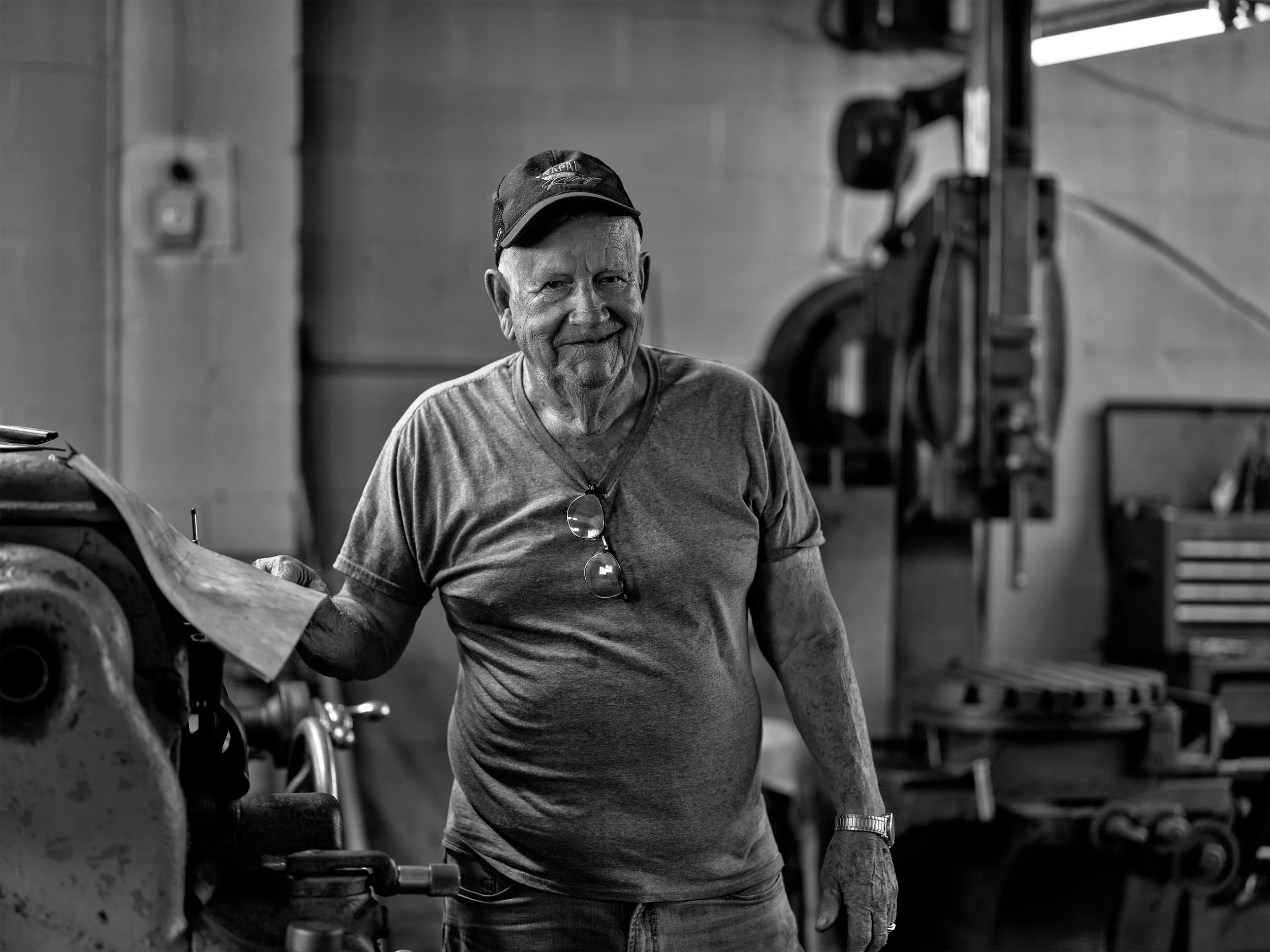
Bill by his favorite machine.
For me, that photograph isn't about machinery. It's about a craftsman standing beside something that helped define his life's work. Long after the shop changes hands, I hope that image reminds his family of the man who spent more than four decades doing what he loved.
Photography has a unique way of preserving moments that might otherwise be forgotten. Sometimes the most meaningful photograph isn't the newest building, the latest piece of equipment, or the finished product. Sometimes it's simply a person standing in the place where they built their life.
— Joe Albert
J. Albert Studios
His Last Ride
A Ride to Remember: Honoring Smitty
As photographers, we often think we're hired to document events.
Sometimes, we're invited to witness a life.
A few days ago, I received a call from my friend Scott. Scott is a talented photographer himself, so when he reached out, I knew this assignment was different.
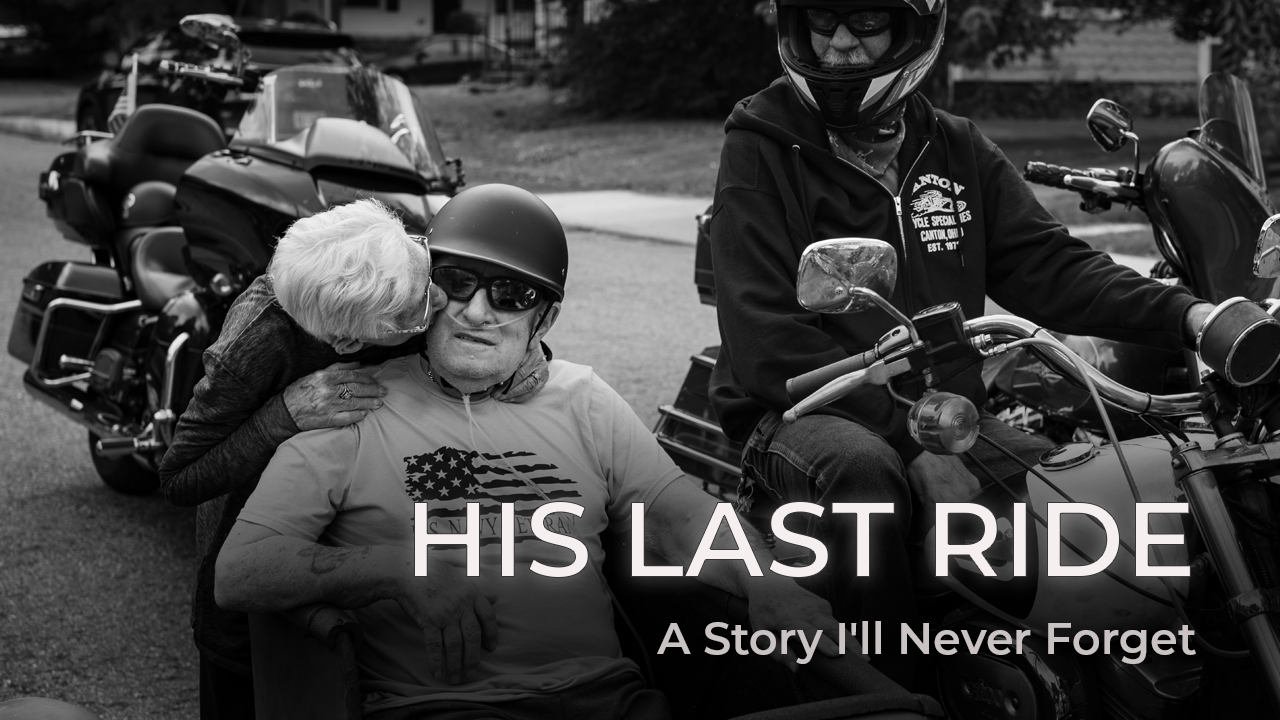
He told me about an 85-year-old Navy veteran named Smitty. His health had declined, and his brothers from the Patriot Guard Riders wanted to give him one final motorcycle ride. They asked if I would photograph the day. I never imagined how much it would affect me.
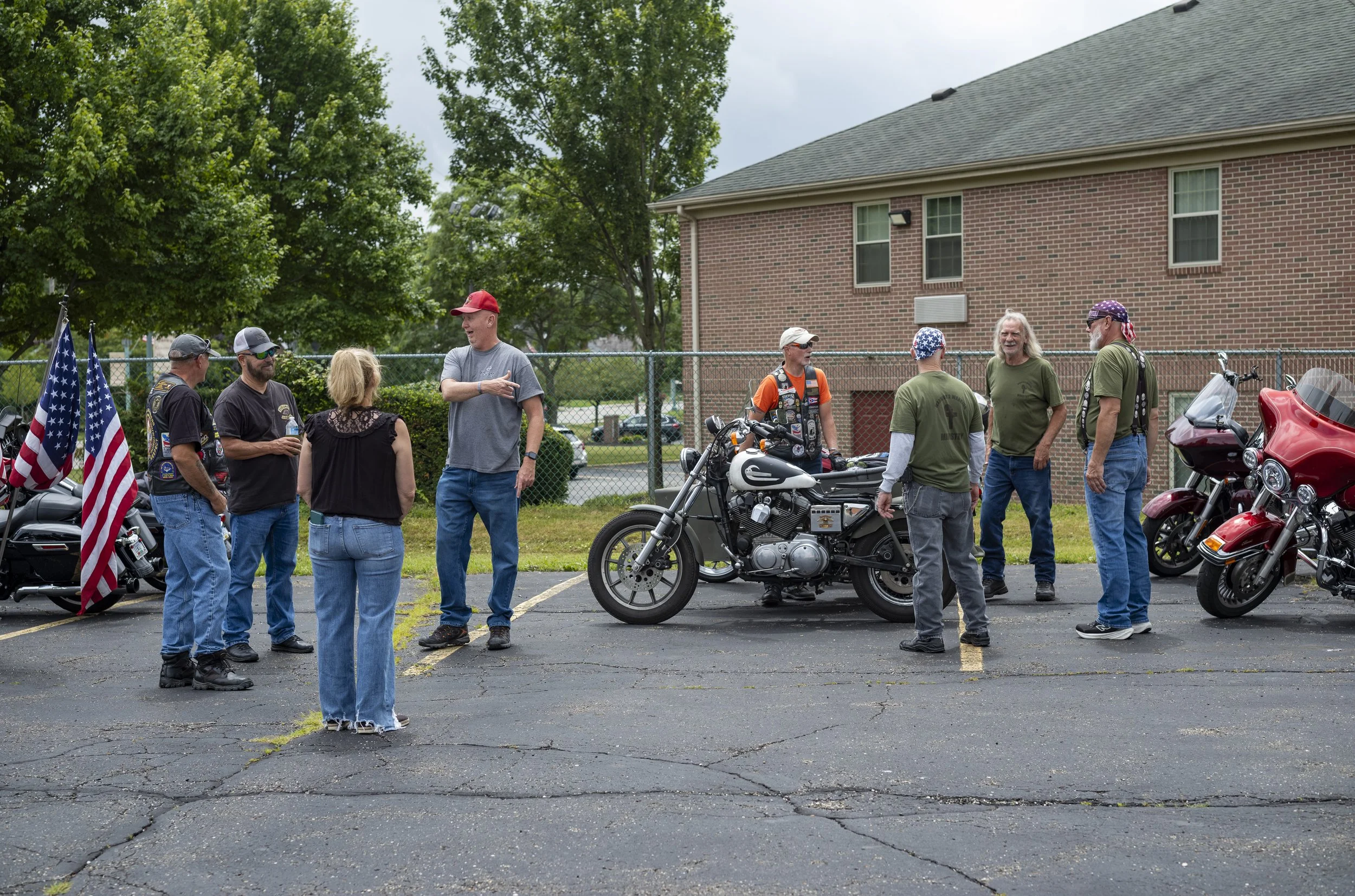
The crew gathered to all go to Smitty’s house
When I arrived, Smitty was waiting at home with his wife. Before the ride even began, I watched them share a quiet moment together. At one point, Smitty looked at me and said something I'll never forget.
"If it wasn't for her, I wouldn't be here."
Those words changed the way I saw the rest of the afternoon.
This wasn't simply about motorcycles.
It was about a marriage.
It was about friendship.
It was about gratitude.
The riders carefully helped Smitty into the sidecar. They joked with him, laughed with him, and at one point even convinced him to wear a bright pink helmet just to get everyone smiling. His grin said everything.
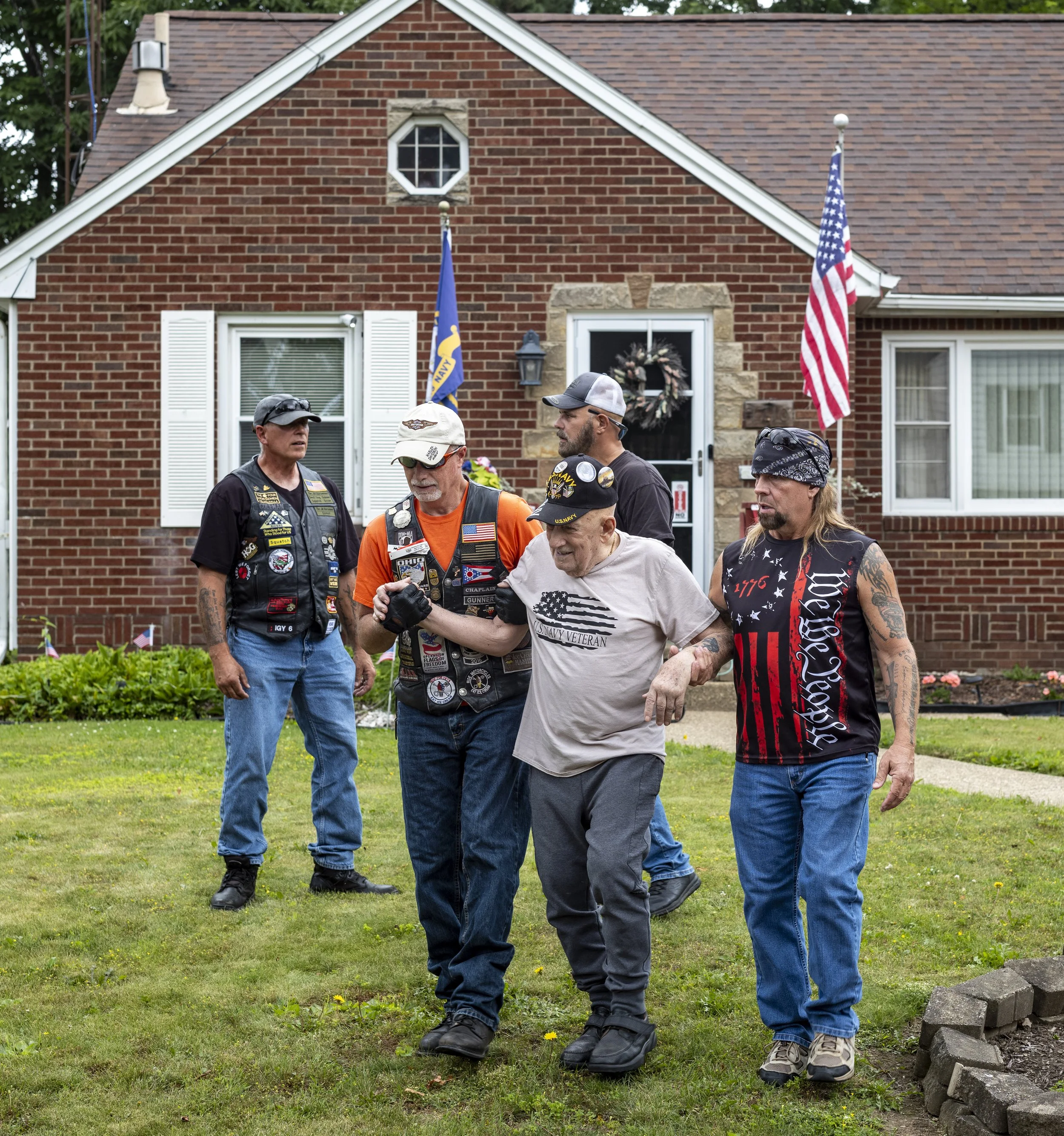
When the ride began, the sidecar rolled out surrounded by motorcycles carrying American flags. It wasn't loud because of the engines. It was powerful because of the love surrounding one man.
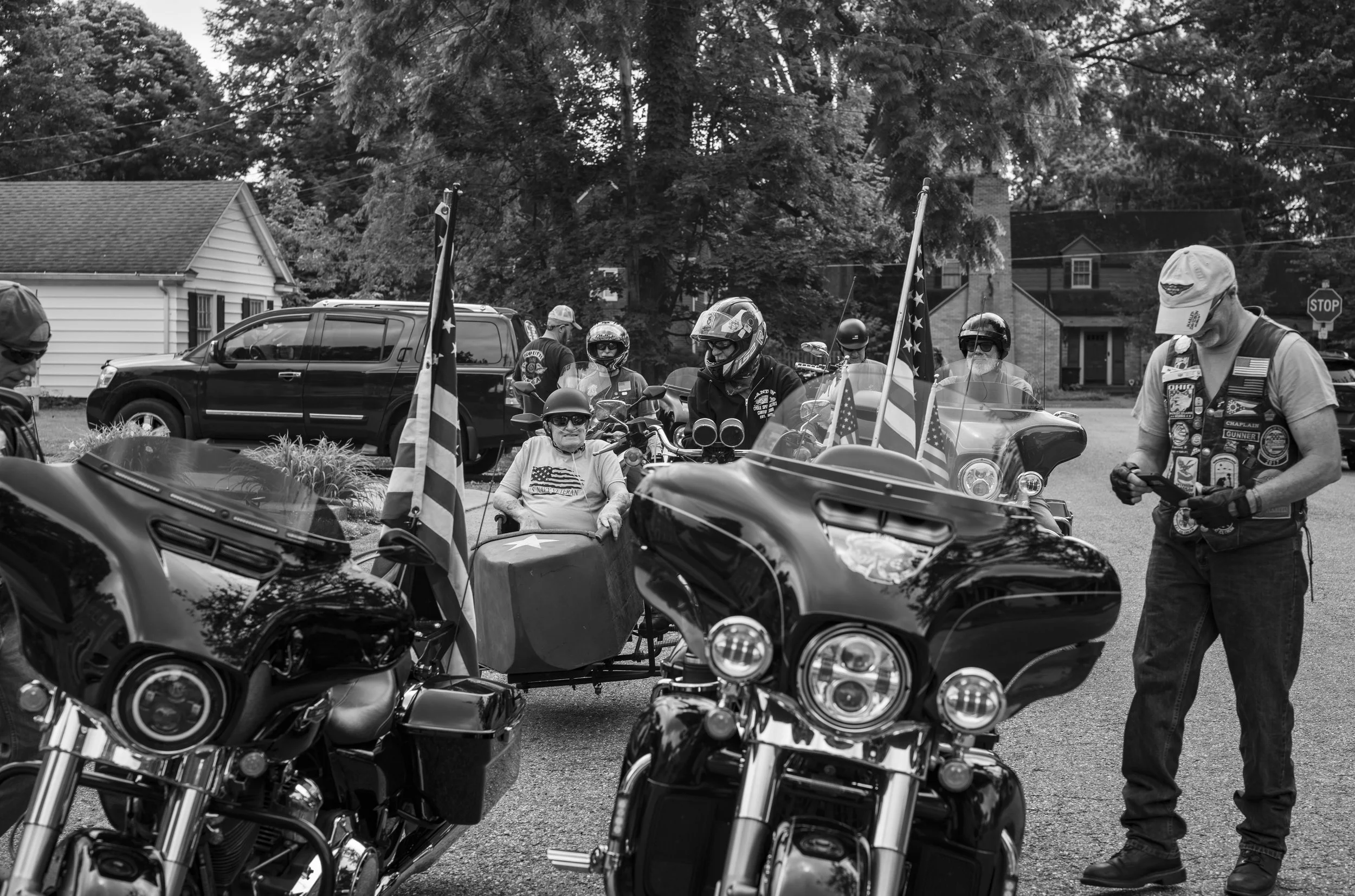
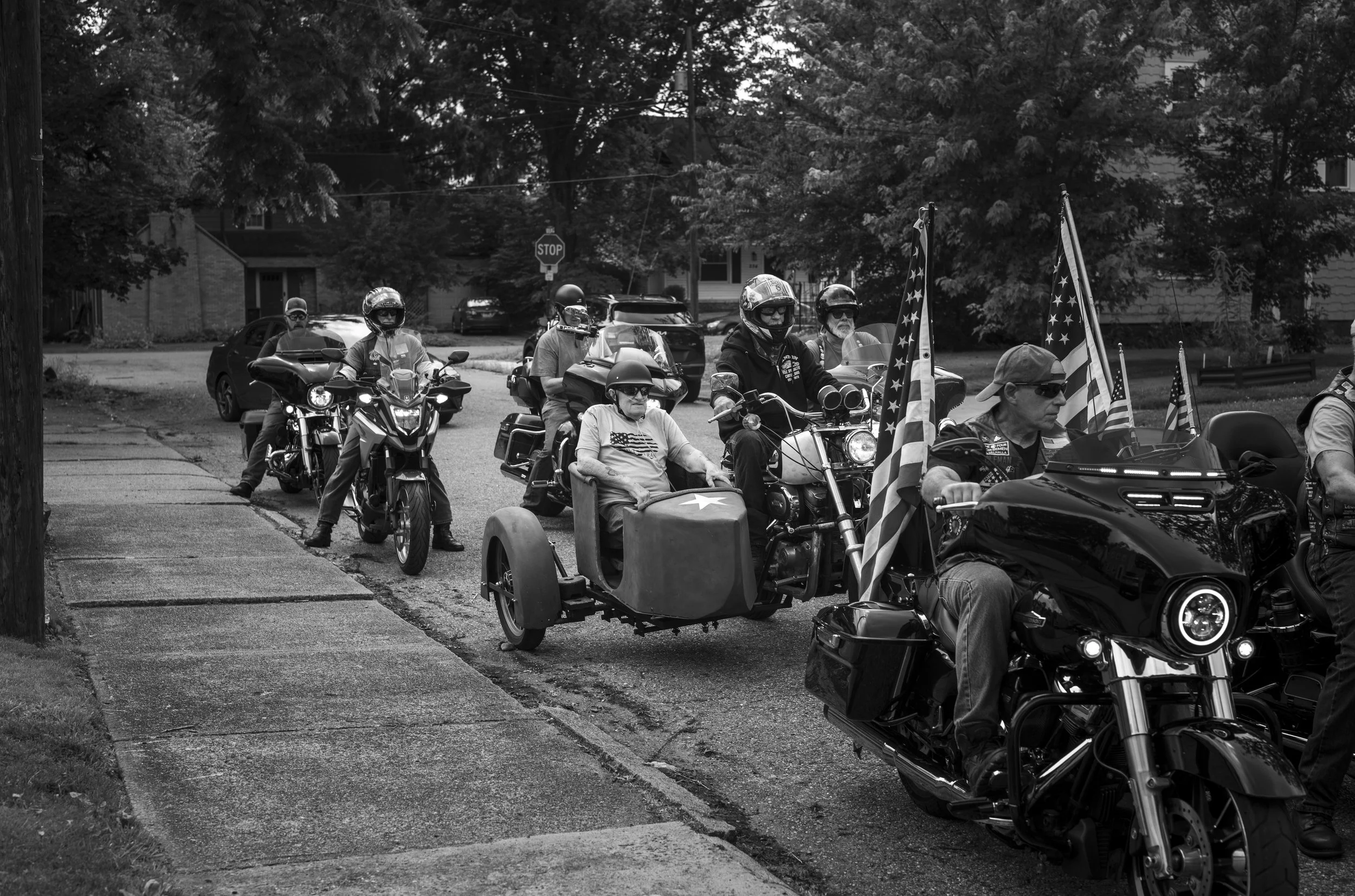
Along the route, they stopped at Country Cones because Smitty wanted a banana split.
That stop became one of my favorite parts of the day.
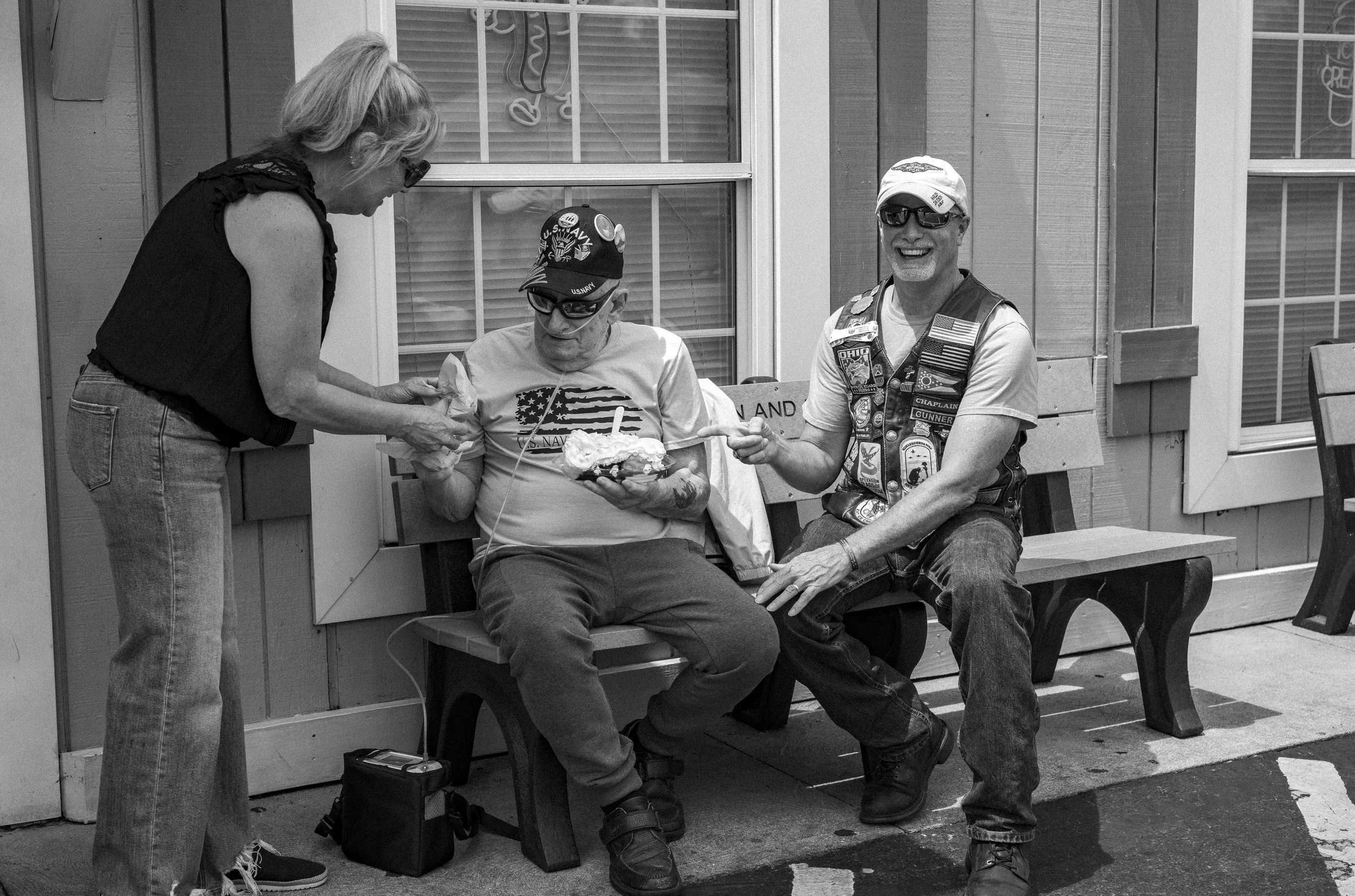
His Marine buddy Dave sat beside him, teasing him while they ate ice cream together. You could tell these weren't friends who had known each other for a few years. These were men connected by decades of stories, service, and respect.
The weather turned cooler, so one of the riders took off his own jacket and wrapped it around Smitty. Nobody asked him to do it. He simply did what friends do.
Near the end of the afternoon, Smitty's grandson, who has Down syndrome, walked over and wrapped his grandfather in a hug. It was one of those moments photographers hope they're ready for. There was no posing, no direction—just love.
As I packed my camera to leave, I thought my day was over.
Then I heard someone call out.
"I want to shake your hand."
It was Smitty.
He had stood up just to thank me.
Instead of simply shaking hands, we took one last selfie together.
It is a photograph I'll treasure for the rest of my life.
One of the riders, Scott, quietly tried to pay me for my time. I thanked him, but I couldn't accept it. He told me, "Your time is worth money."
I understood what he meant.
But some experiences are worth far more than money.
The payment was being trusted to preserve memories that one family will hold onto forever.
As documentary photographers, we sometimes spend so much time worrying about cameras, lenses, and settings that we forget why we picked them up in the first place.
Photography isn't just about creating beautiful images.
It's about preserving moments that can never happen again.
For one afternoon, I had the privilege of watching a community honor one man they loved.
I didn't just photograph Smitty's last ride.
I photographed loyalty.
I photographed friendship.
I photographed a marriage built over a lifetime.
And I was reminded that sometimes the greatest gift a photographer receives isn't a paycheck.
It's being invited to witness something that truly matters.
Thank you, Smitty, for allowing me to be part of your story. It was an honor I will never forget.
— Joe Albert
J. Albert Studios
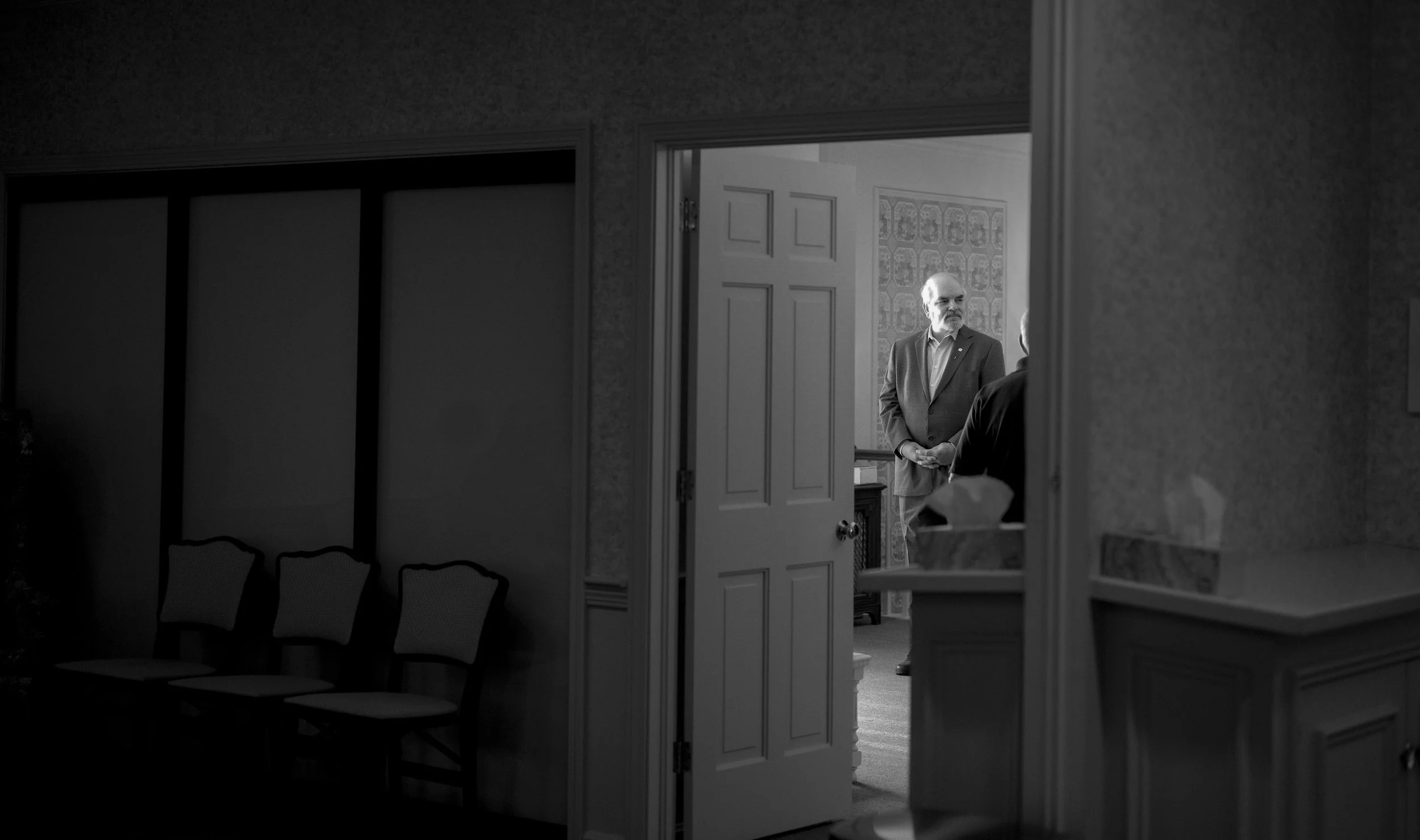
Quietly present. Respectfully documented.
I was blessed to capture a Celebration of Life this evening.
Of all the events I photograph, these gatherings are unlike any other. They are not staged or scripted—they are pure documentary photography. Raw emotions fill the room: love, sadness, disbelief, gratitude, memories, and ultimately, acceptance.
My role is to blend into the background, to quietly observe and preserve moments as they naturally unfold. A glance, a hug, a tear, a smile through grief—these are the moments that tell the story.
Tonight was a reminder that photography is about more than creating images. Sometimes it is about preserving a family's memories during one of life's most difficult and meaningful chapters.
It is truly a unique privilege to witness and document.
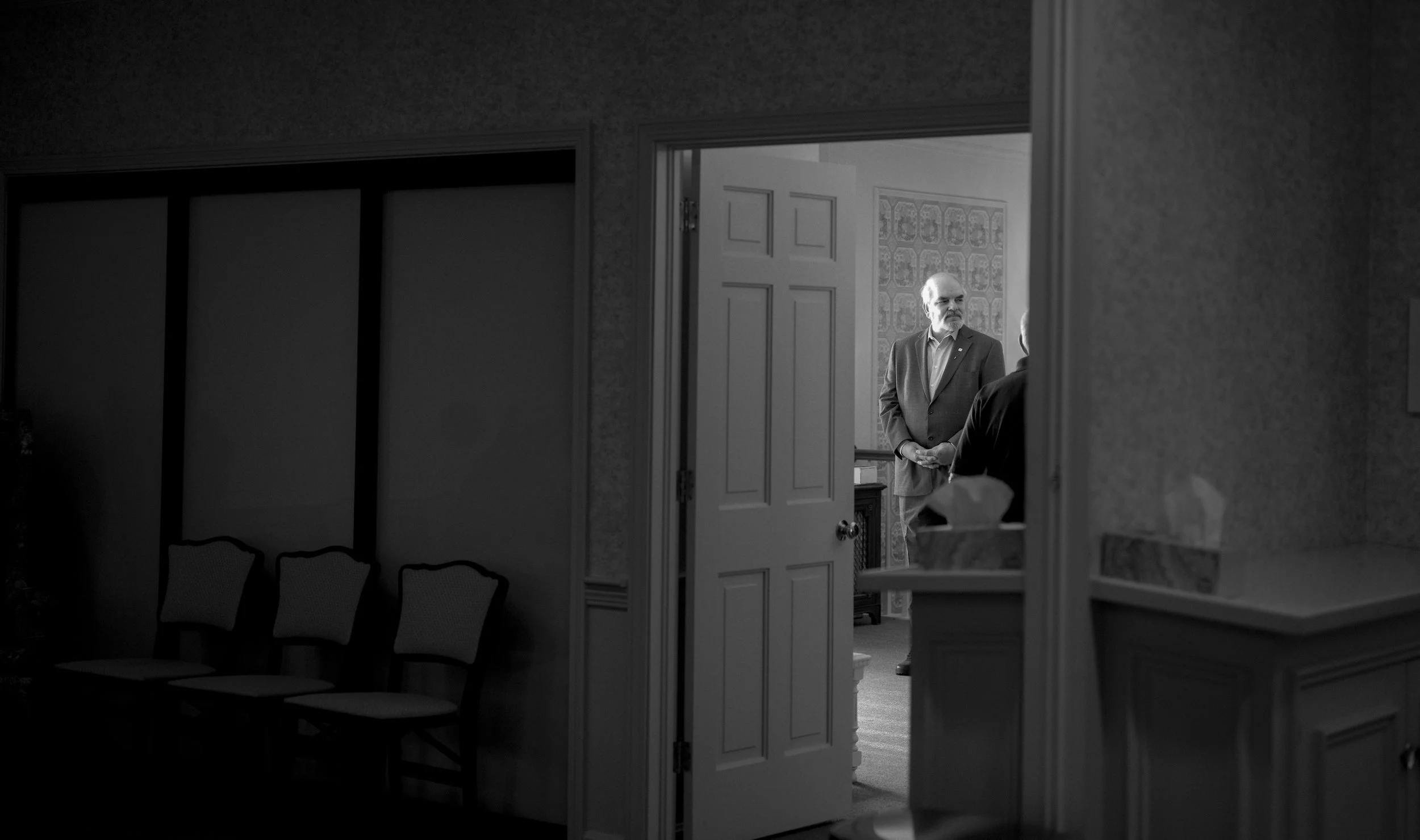
The Watcher…
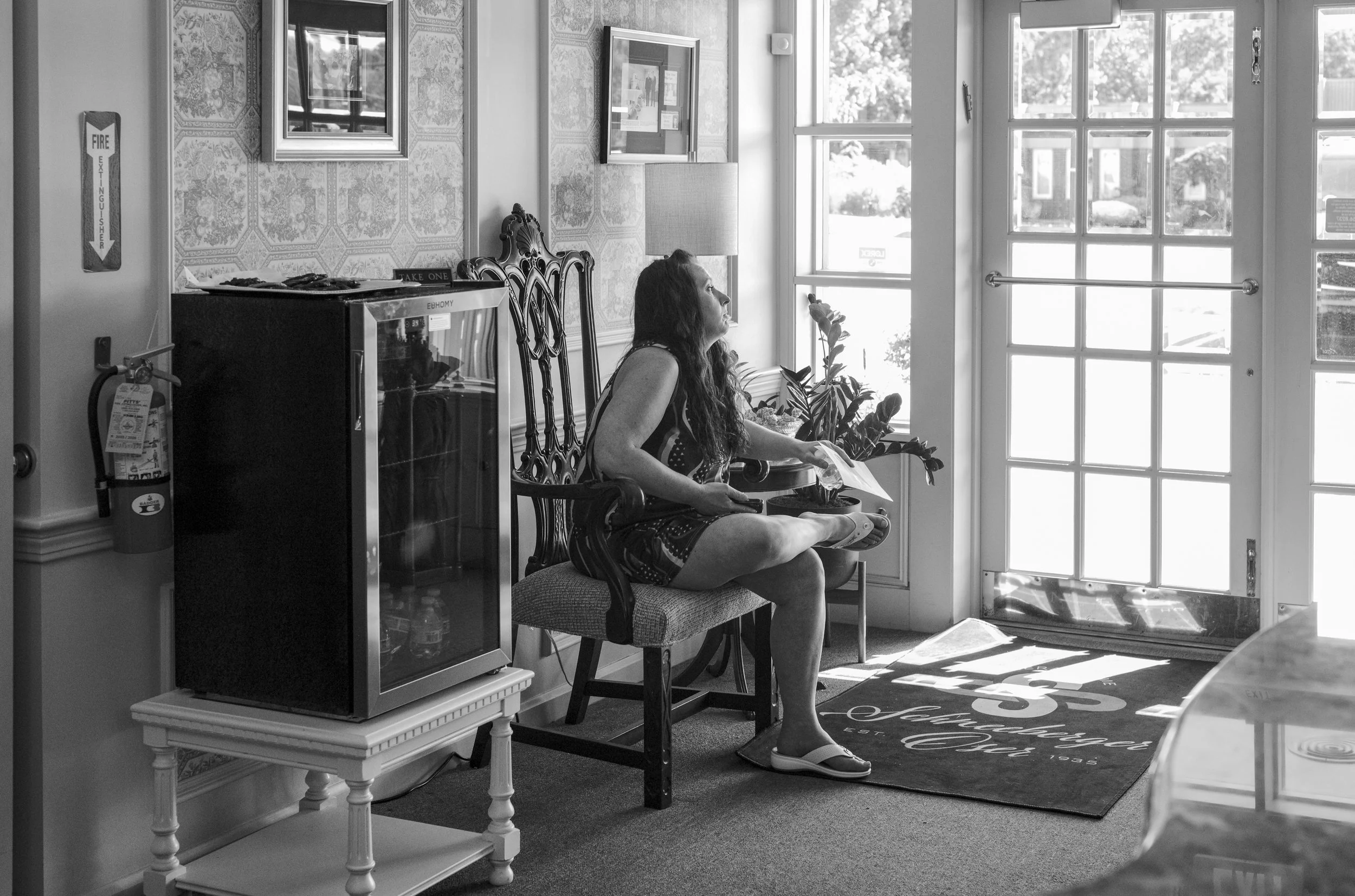
The light comes in the same as any morning. She waits in it. Schneeberger Oser, before the service.
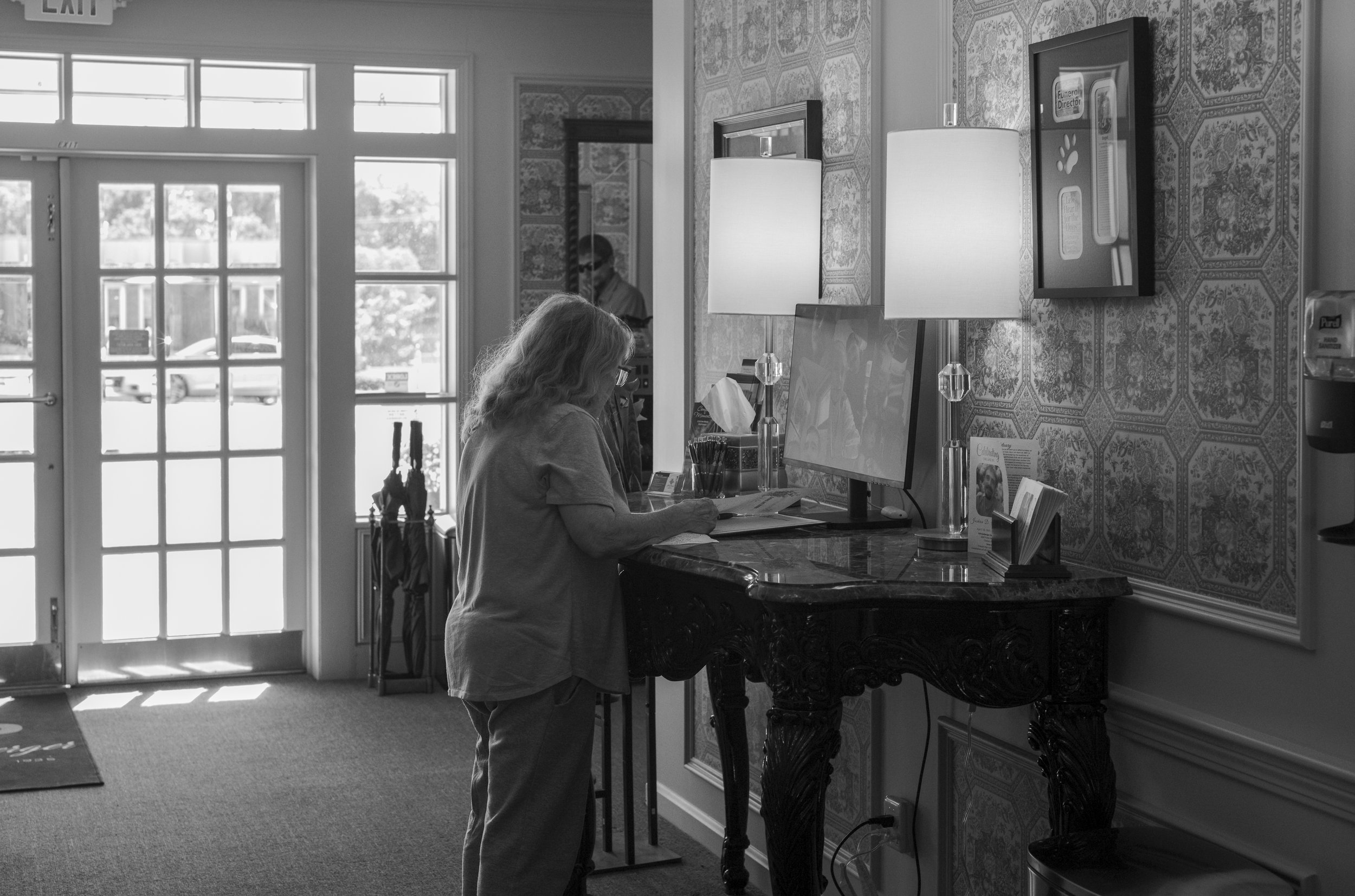
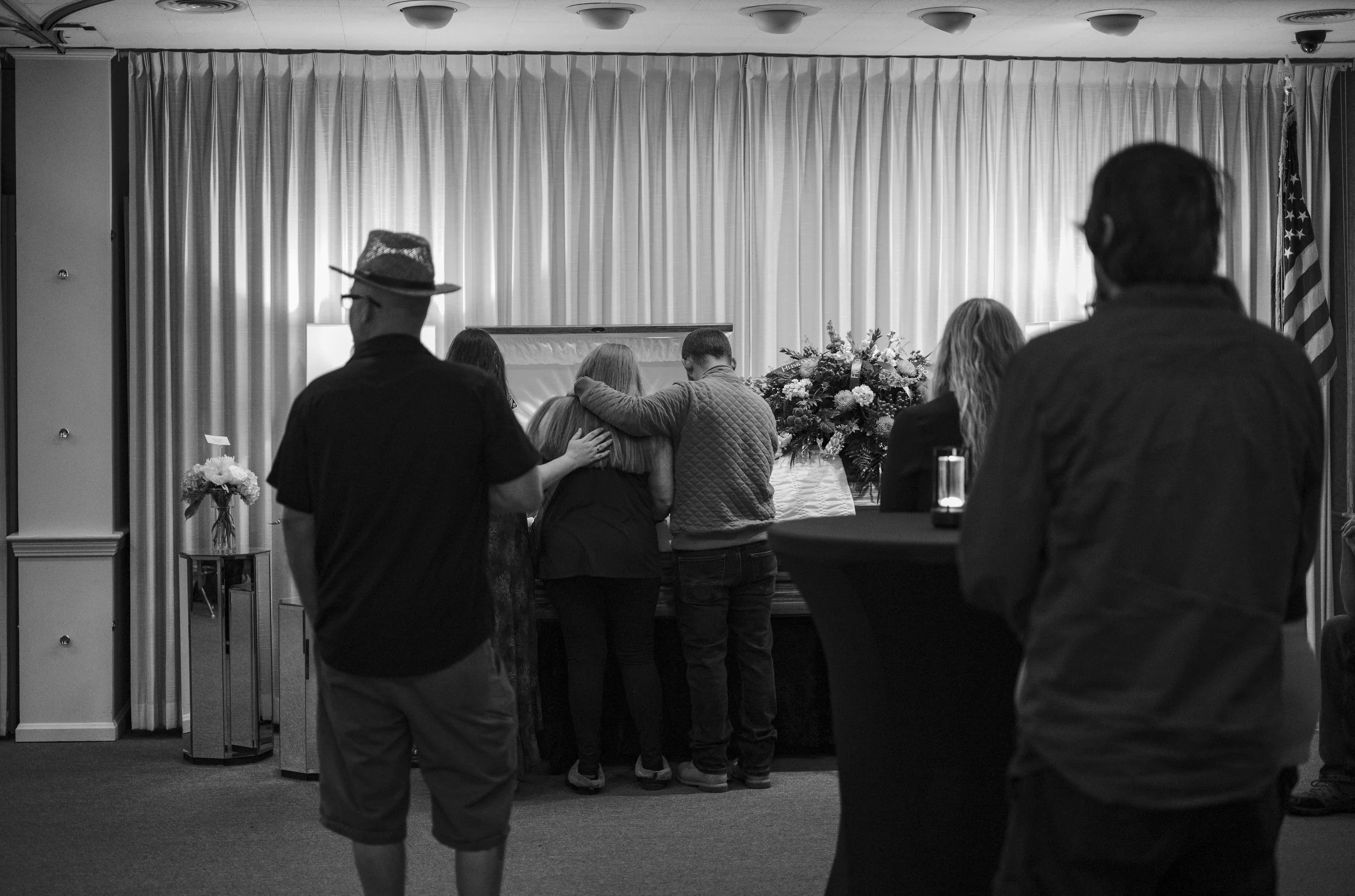
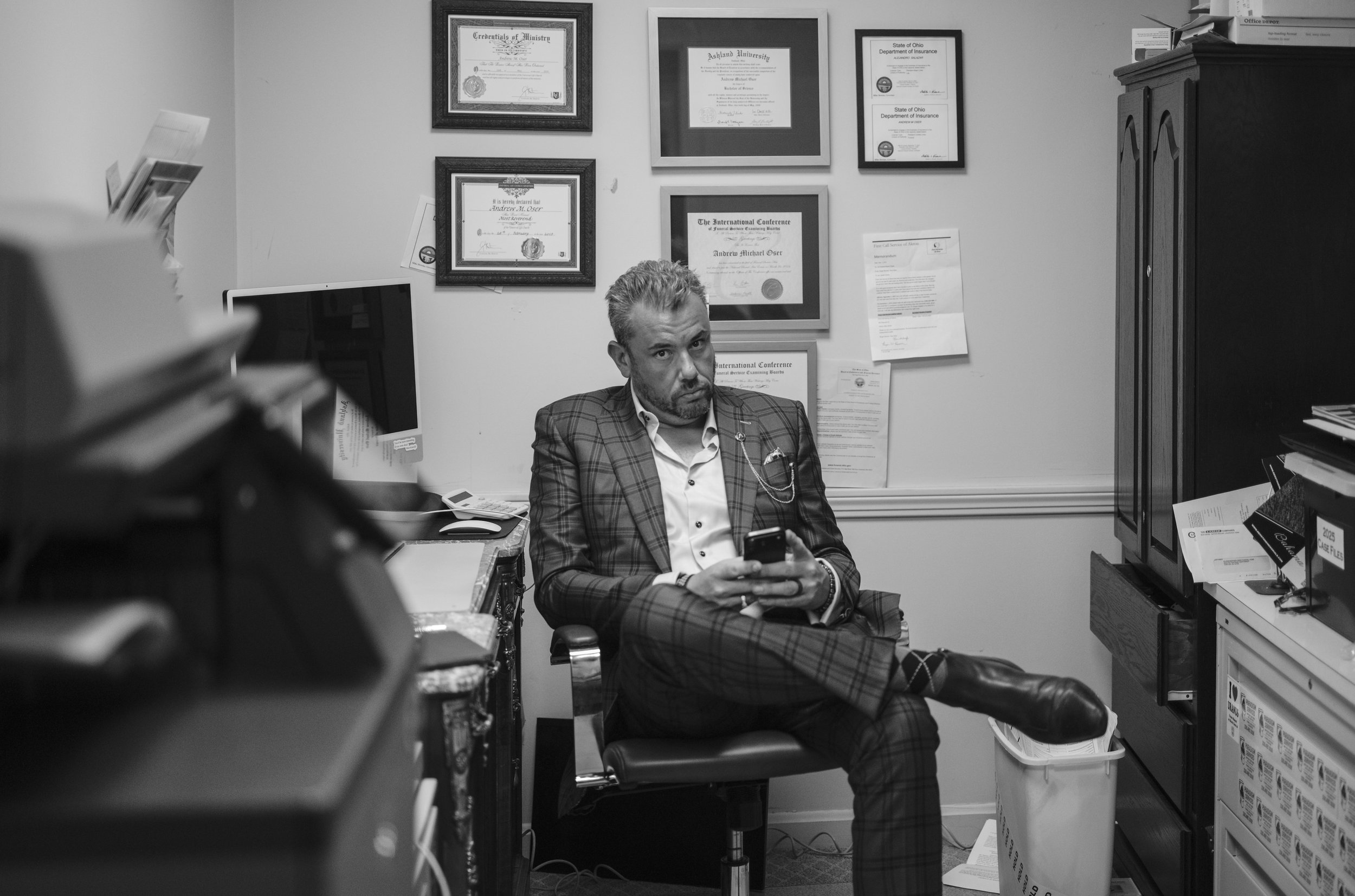
The man who holds the door, with his own door closed for a minute.
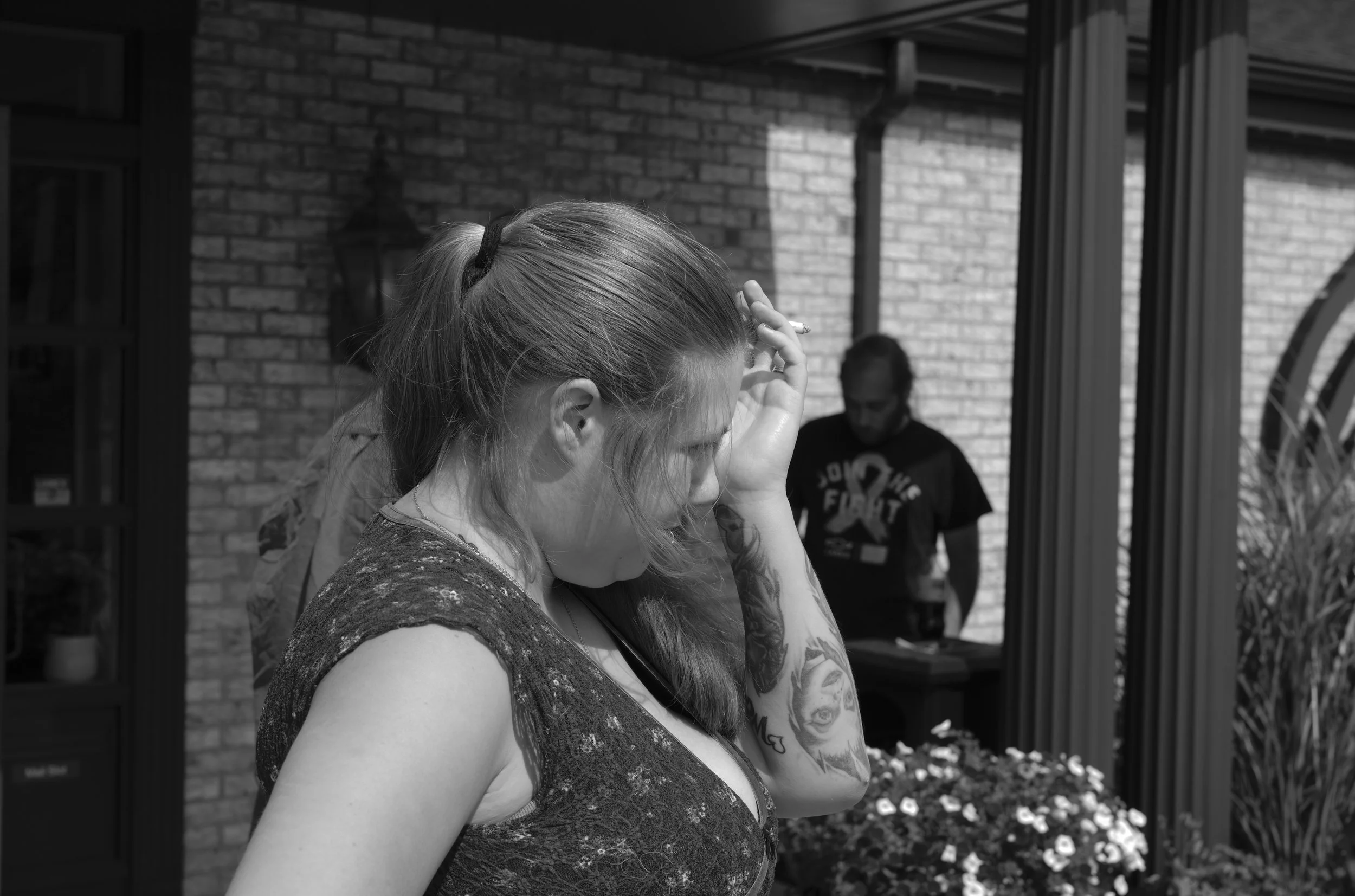
J. Albert Studios
Documenting life's most meaningful moments with honesty, compassion, and respect.
#CelebrationOfLife #DocumentaryPhotography #FuneralPhotography #LifeCelebration #Storytelling #CantonOhio #OhioPhotographer #JAlbertStudios #CompassionInFocus #PhotographyWithPurpose #schneebergerfuneral
He Just Wanted to Go Home
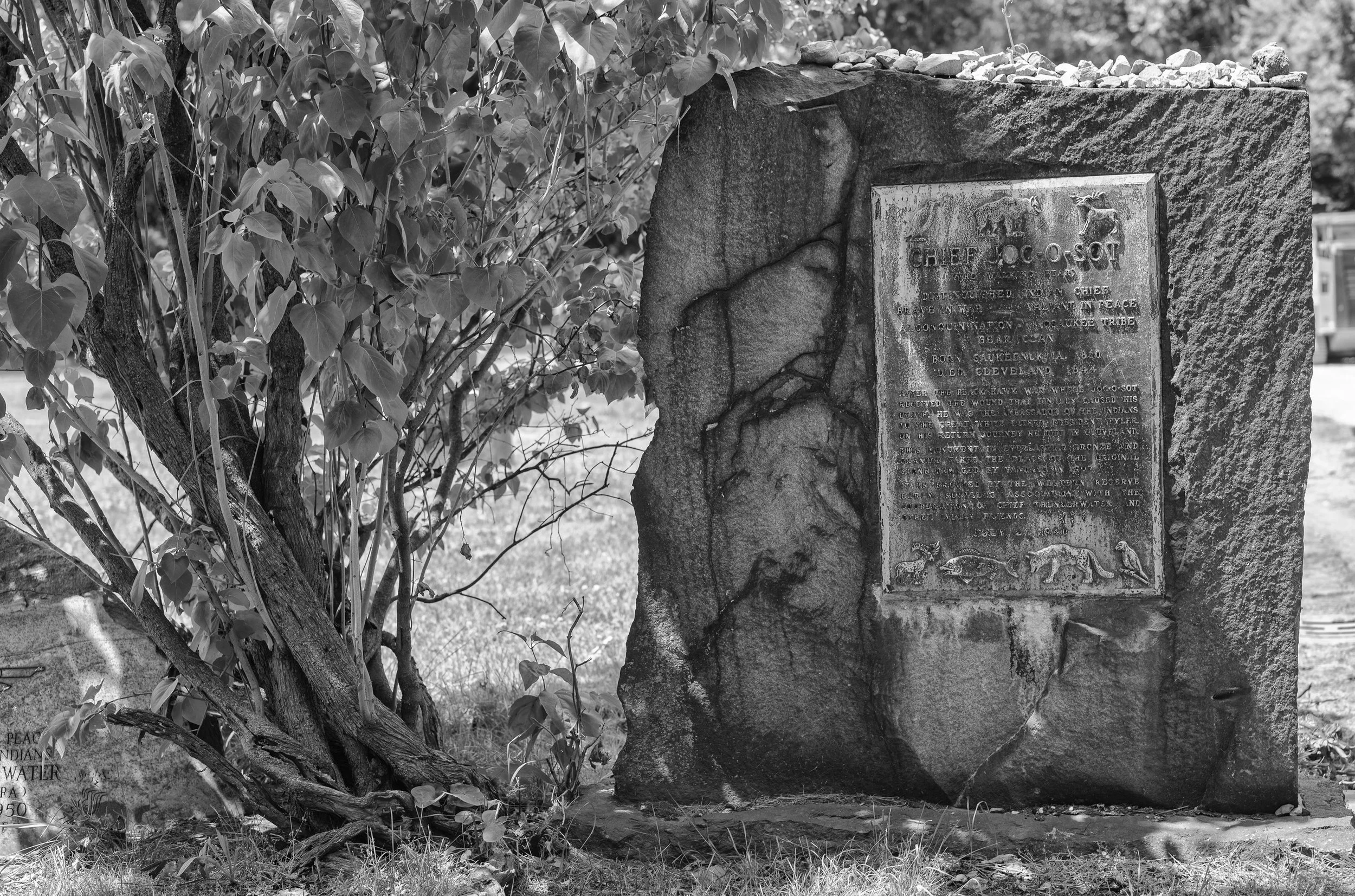
Joc-O-Sot, Walking Bear, fought in the Black Hawk War, met Queen Victoria, and died in Cleveland in 1844 trying to get back to Iowa. He never made it.
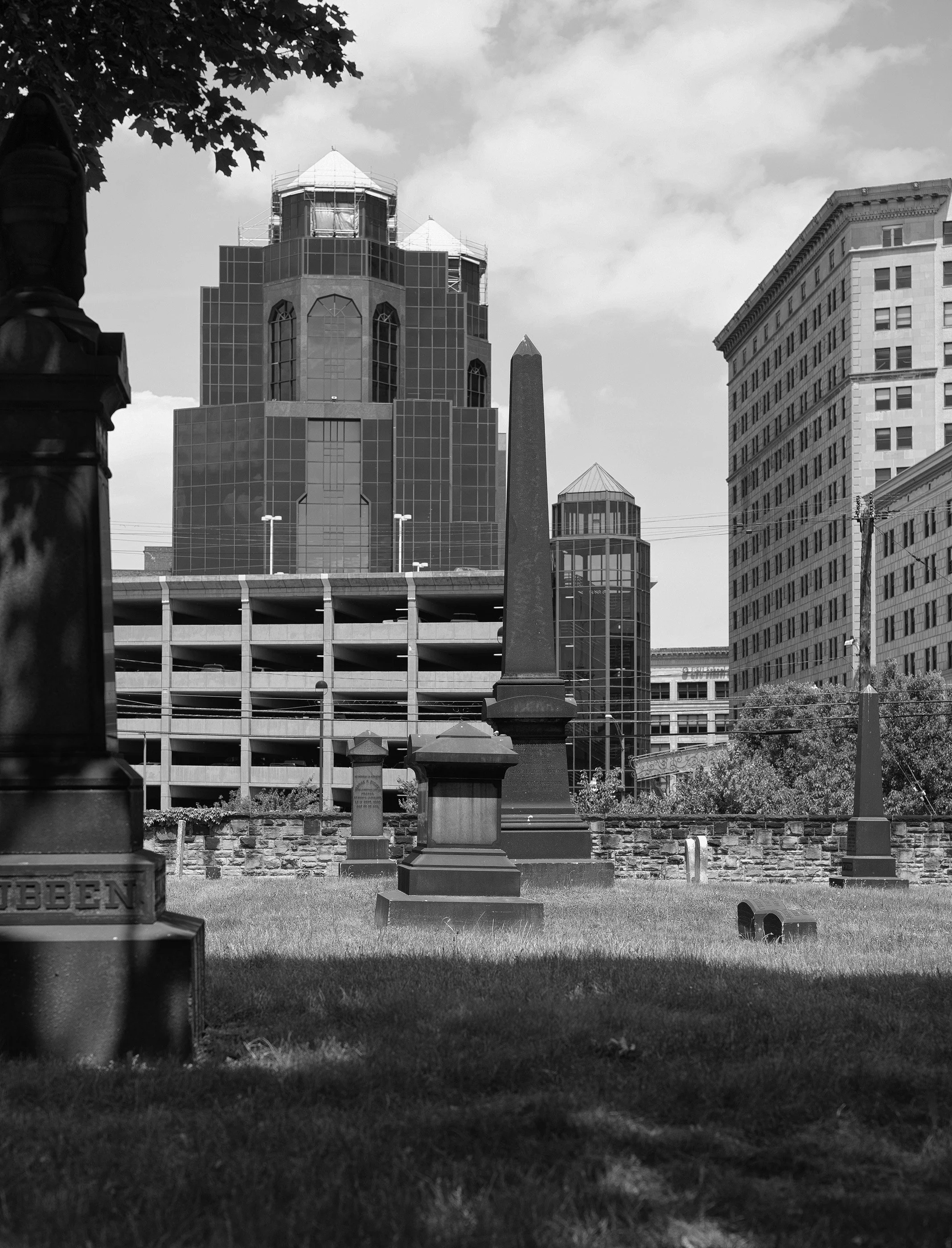
Erie Street Cemetery, East 9th Street, Cleveland. The city has grown up on all sides. The dead hold their ground.
A groundskeeper pointed me toward the stone. He said you need to see the Indian chief. I didn't know what I was walking toward.
Erie Street Cemetery sits in the heart of downtown Cleveland, hemmed in on all sides by the city that grew up around it. Established in 1826, it holds nearly 8,000 burials — Cleveland's founders, its first mayor, Civil War veterans, immigrant families, and the forgotten poor. Progressive Field is directly across the street. On a game day you can hear the crowd from the graves.
It is one of the most compressed, unsentimental burial grounds I have ever photographed. No pastoral buffer, no softening canopy. Just stone and city, separated by an iron fence.
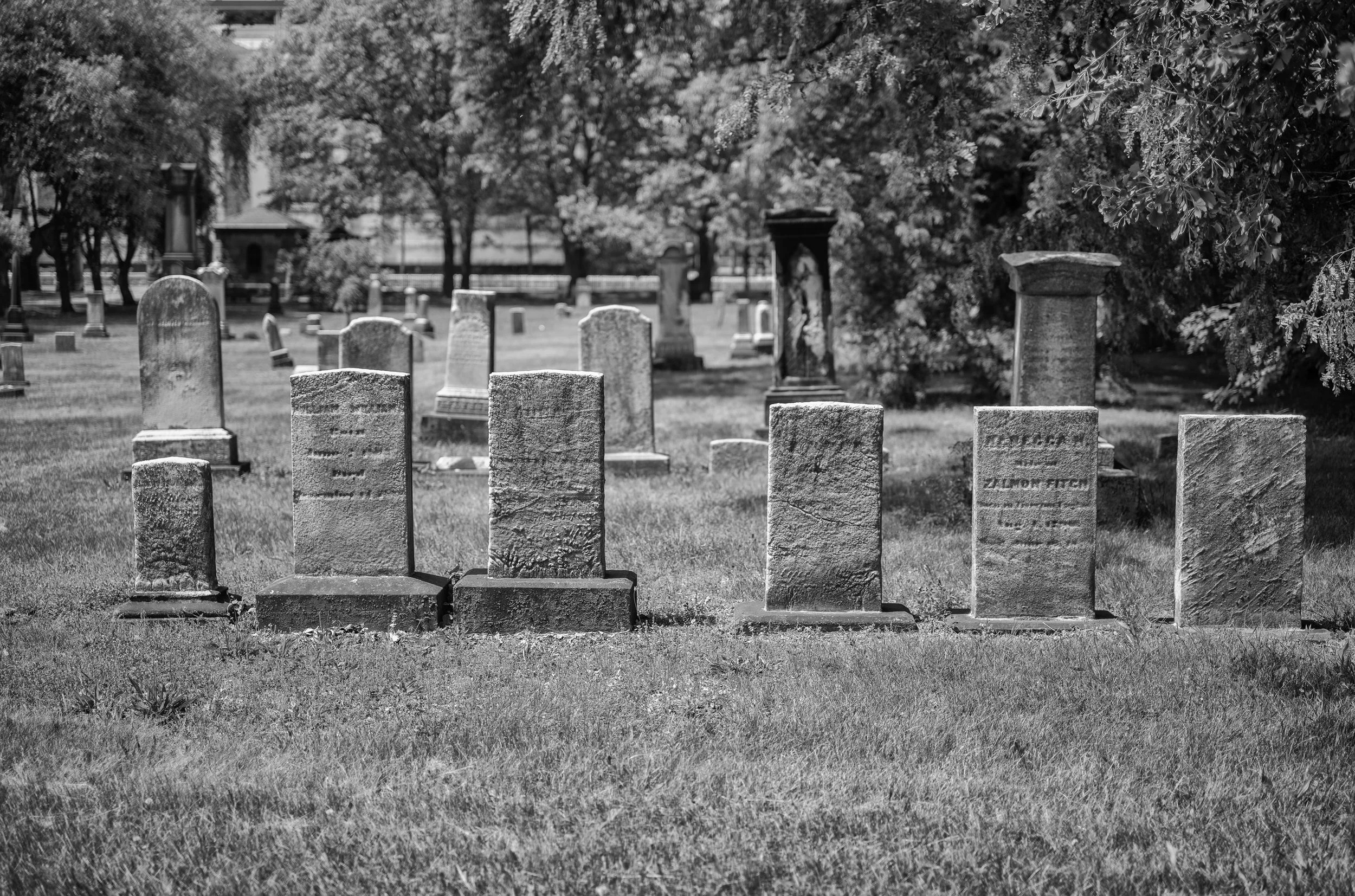
The open character of Erie Street. No tree canopy to soften the light. The city presses in from every side.
The groundskeeper was right. I needed to see the stone.
The Black Hawk War, 1832
Joc-O-Sot — Walking Bear — was born around 1810 in Saukenuk, Iowa, the ancestral home of the Meskwaki people. His father, Katuchasha, had earned the name "The Bear" through his exploits in war against the Osage Nation. The name carried forward.
In 1832, the Meskwaki allied with the Sauk under the leader Black Hawk in a desperate attempt to reclaim their homeland in Illinois, which the United States had taken by treaty. Joc-O-Sot personally tried to prevent the war, but fought in it as a Meskwaki leader when it came, suffering serious wounds in the conflict. Black Hawk's forces were defeated. The land was lost. The people were pushed further west.
Joc-O-Sot carried a wound from that war for the rest of his life. It would eventually kill him.
He tried to prevent the war. He fought in it anyway. He carried the wound west to Cleveland and then east to England and then back again, and it followed him all the way to the end.
Cleveland, and the Stage
Following the defeat of Black Hawk, Joc-O-Sot made his way east to Cleveland in the early 1830s, where he began leading hunting and fishing expeditions and became a close companion of Dr. Horace Ackley. Through Ackley's circle he came to the attention of theater promoter Dan Marble.
What followed was one of the stranger trajectories of 19th century American life. He joined Marble's theatrical troupe, touring cities across the Eastern United States performing in plays which purported to represent Native American life — a warrior chief turned performer, teaching audiences about a world they had spent decades trying to destroy. He also served as Indian Ambassador to President Tyler, carrying the concerns of his people to Washington.
In March 1844, at the behest of Marble, Joc-O-Sot traveled to England in the company of Irish composer William Vincent Wallace. In June 1844, Joc-O-Sot was received in audience by Queen Victoria. She was so impressed she commissioned a royal portrait of him. A Meskwaki chief from Iowa, born the year Madison was president, sitting for a portrait commissioned by the Queen of England.
He met Queen Victoria in June. He was dead by September. He was 34 years old.
The Return
He fell ill in England — likely tuberculosis, likely complicated by the old Black Hawk War wound that had never fully healed. He made his way back to Cleveland on his own, sick and trying to get home to Iowa. Among his last words, recorded by those who attended him: "Joc-O-Sot go up."
He died September 3, 1844, in Cleveland. He never made it home.
His stone was erected by ten citizens of Cleveland and a friend from Cincinnati. Not his people. Not his nation. Ten Clevelanders who had known him, or known of him, and felt the obligation. The original stone was damaged by vandals in 1907. A new bronze and granite monument was placed in 1940 by the Western Reserve Early Settlers Association. Both stones are still there.
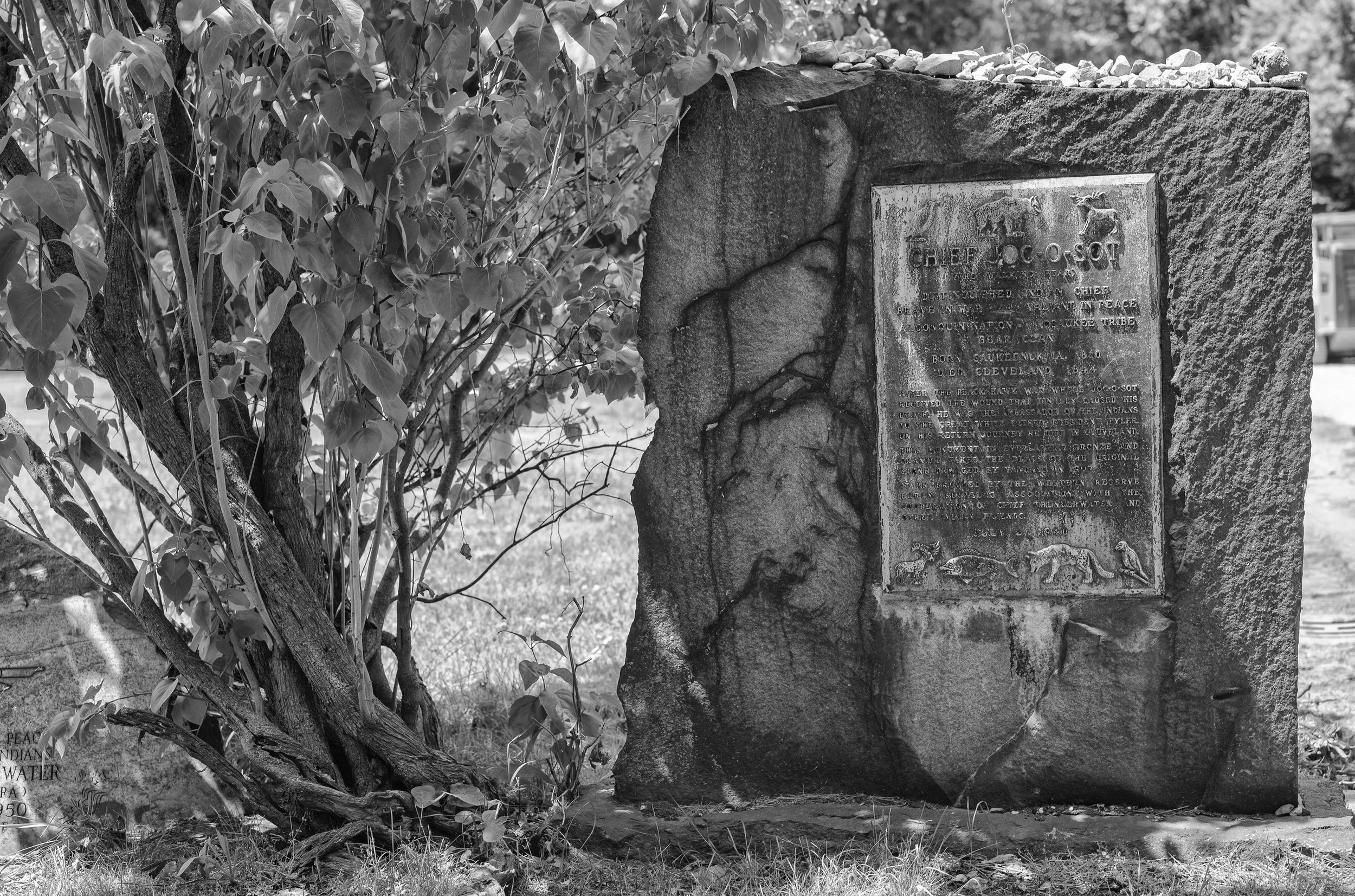
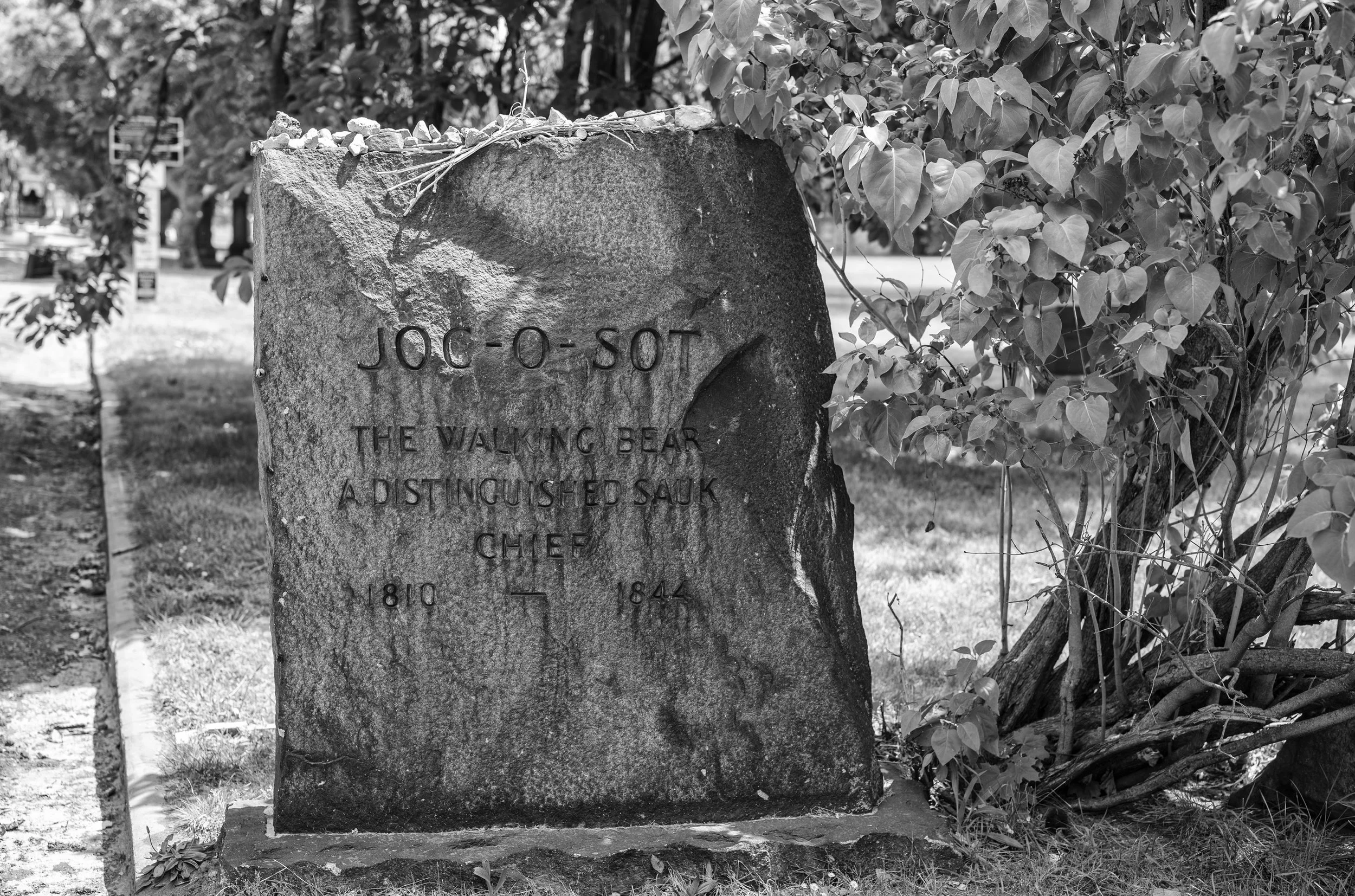
Left: the 1940 bronze and granite monument, stones placed along the top in the Native American tradition of remembrance. Right: the original stone, cracked through, still standing beside it. Both say the same thing. Both mean different things.
The Stones on Top
Look at the top of the 1940 monument. Someone has placed small rocks along the entire edge — a line of them, carefully arranged. This is a Native American tradition of remembrance, the equivalent of leaving flowers. It means someone who knew the custom was here. It means people still come.
The original cracked stone stands beside it. The crack runs diagonally through the face, splitting it almost in two. Whether it was vandals in 1907 or, as local legend insists, the angry spirit of a chief who never wanted to be buried in Cleveland — the stone is cracked and it is still standing and it still says his name.
JOC-O-SOT. The Walking Bear. A Distinguished Sauk Chief. 1810 — 1844. That's all it says. The rest you have to go find.
There is one more thing the historical record notes, quietly, in a subordinate clause. It is probable that Joc-O-Sot's remains were taken from his grave and used for medical experimentation, a practice that was all too common during the 1840s. The grave that people visit, leave stones on, photograph, and tell stories about — may have been empty for nearly 180 years.
He never made it home. And then, possibly, even that was taken from him.
The stones on top of the monument mean someone knows. Someone still comes anyway.
I'm glad the groundskeeper pointed me toward it.
More Than a Headshot: Celebrating a New Beginning
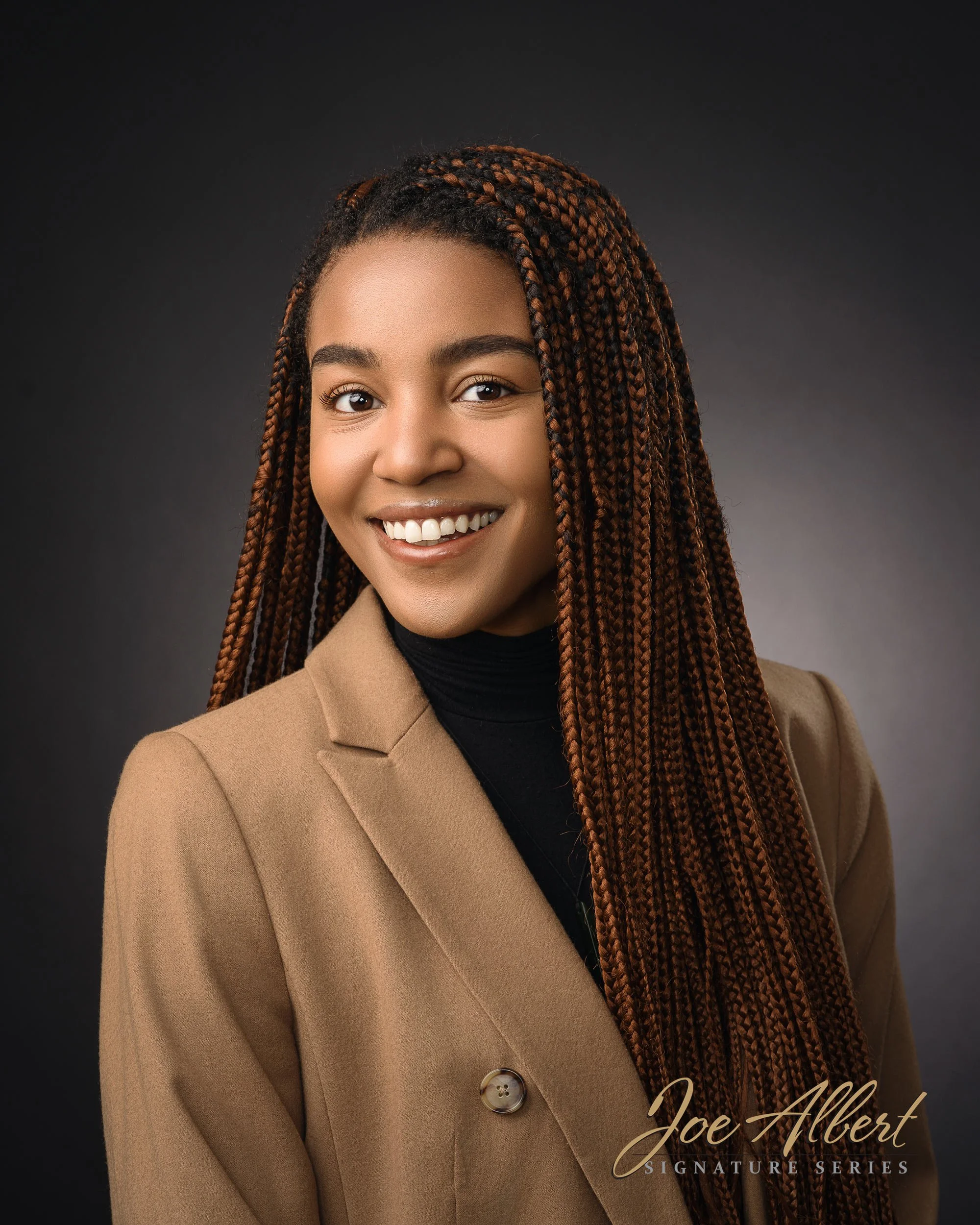
New headshot for her new beginning
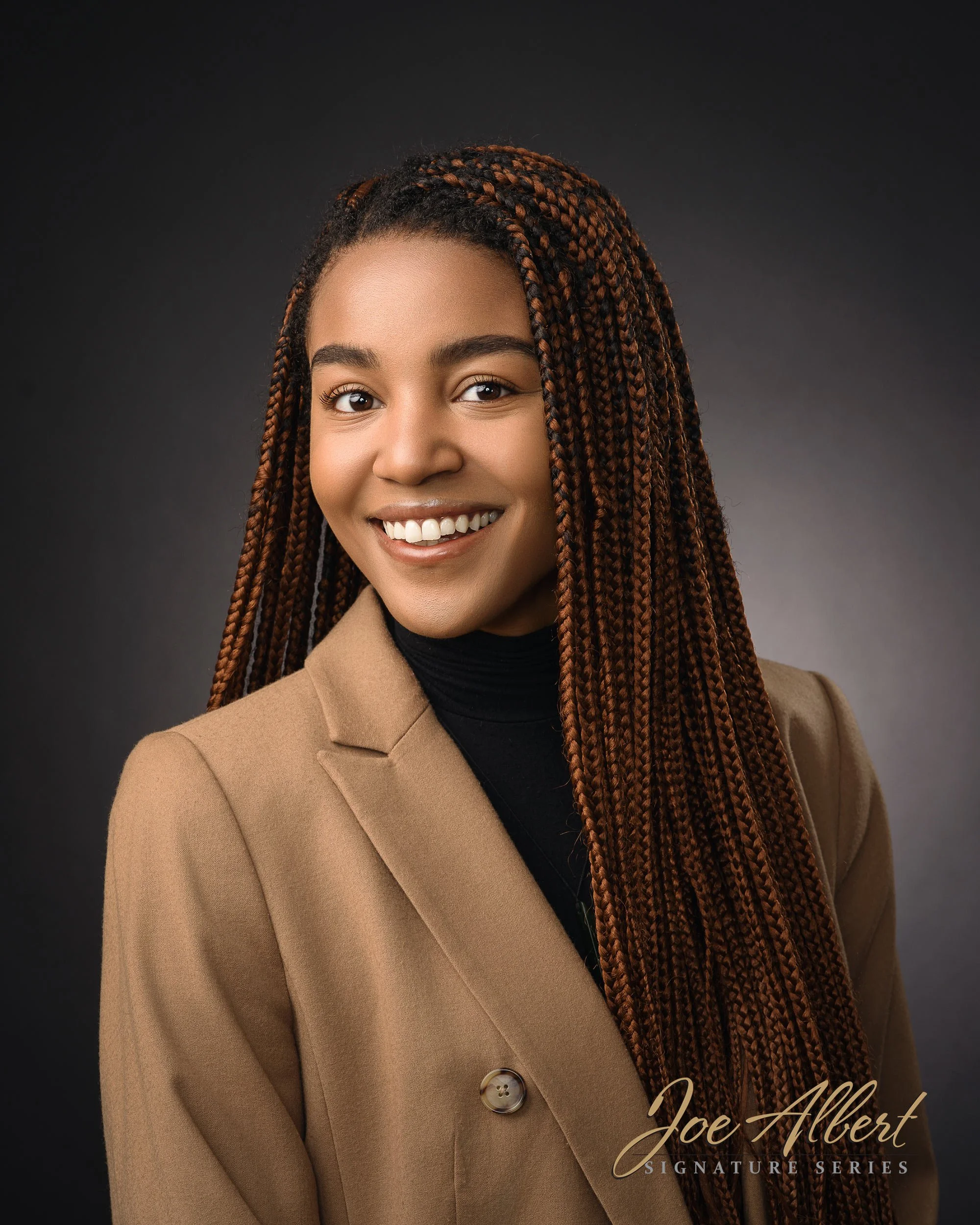
One of the things I enjoy most about photography is the people I meet along the way. Every portrait session is an opportunity to learn someone's story, and recently I had the pleasure of spending some time with Lauren as we created a new headshot to celebrate her new position.
What struck me immediately was how much we had in common. Our conversation quickly turned to photography, art, and architecture—subjects that both of us appreciate deeply. Those interests often reveal something about a person's perspective on the world. They speak to creativity, attention to detail, and an appreciation for craftsmanship, all qualities that came through naturally during her session.
As photographers, we know that a great portrait is about much more than lighting and camera settings. It's about connection. When people are comfortable and engaged, their personality begins to emerge. That's exactly what happened during Lauren's session. What started as a professional headshot quickly became a conversation about creativity, design, and the things that inspire us.
Lauren's genuine smile and warm personality made the session a pleasure. The resulting portrait reflects not only her professionalism but also her confidence and enthusiasm as she begins this exciting new chapter in her career.
A professional headshot often serves as a first introduction, whether on LinkedIn, a company website, or in business communications. But the best portraits go beyond simply documenting appearance. They communicate character, confidence, and authenticity. My goal is always to create images that help people present their best selves while remaining true to who they are.
Congratulations, Lauren, on your new position. Thank you for the wonderful conversation and for trusting me to create your new professional portrait. I have no doubt you'll do great things in this next chapter, and I wish you continued success in the journey ahead.
— Joe Albert
J. Albert Signature Series
45 Miles an Hour
A small cemetery off Faircrest Street, and 185 years of Canton history that most people drive right past.
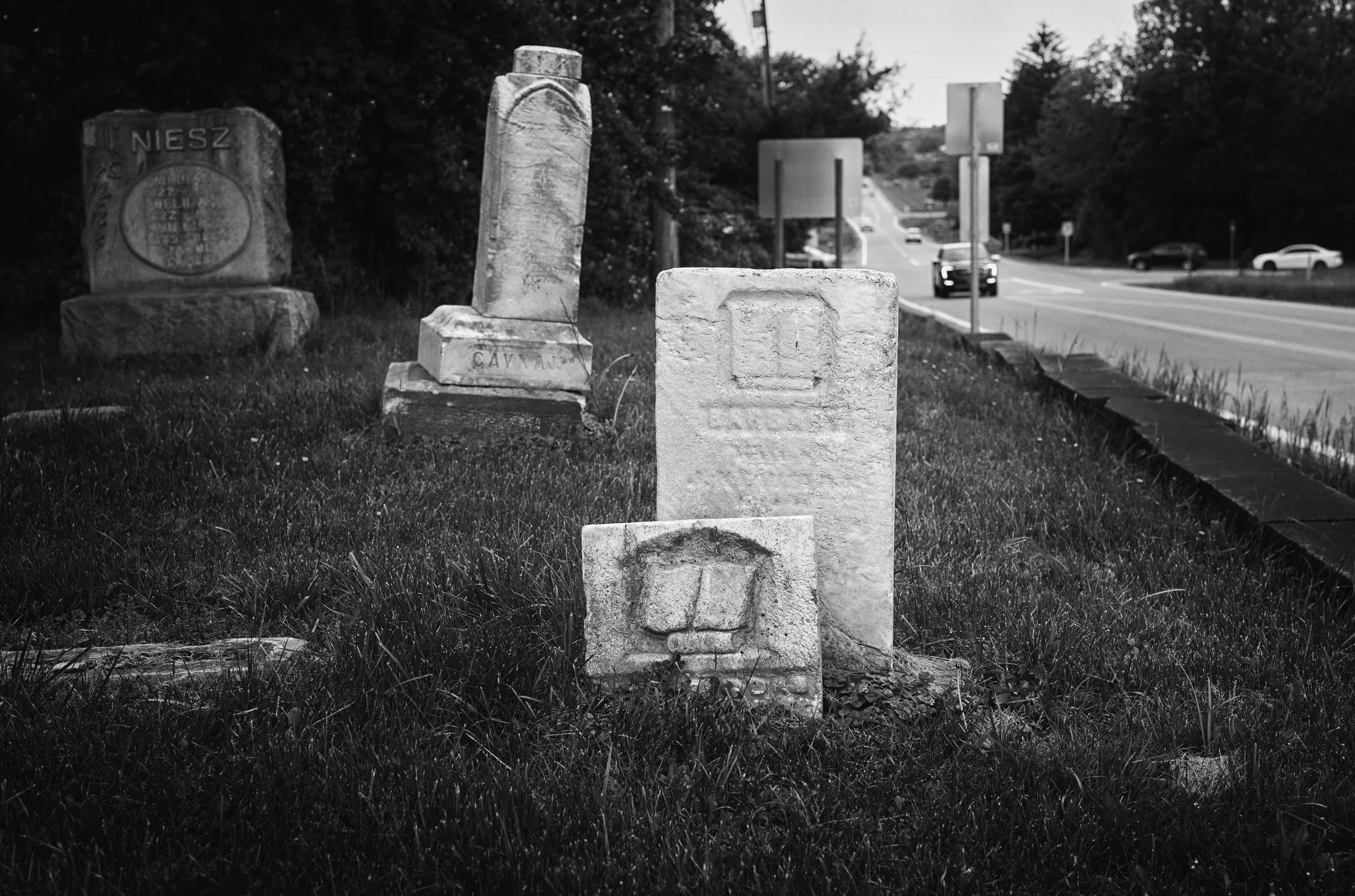
I wasn't planning to stop. I had a house shoot lined up, a client waiting, and a schedule to keep. But something about the little cemetery caught my eye as I came down OH-627 — a few headstones in an open field next to a worn-out brick church — and I pulled over before I'd made a conscious decision to do it.
That happens sometimes. The M10-R has a way of making you honest about what actually deserves a frame.
The cemetery sits right at the edge of the road. Not set back. Not protected behind a fence. Just there, at the shoulder of the state route, where the guardrail and the grass meet. At some point over the decades — as the road was widened, as traffic increased, as the world moved faster — a few of the older stones got pushed closer and closer to the margin. Nobody made a decision to disrespect them. It just happened the way things happen.
The cars on OH-627 don't slow down. They never did. That's the whole picture.
I walked in and started shooting
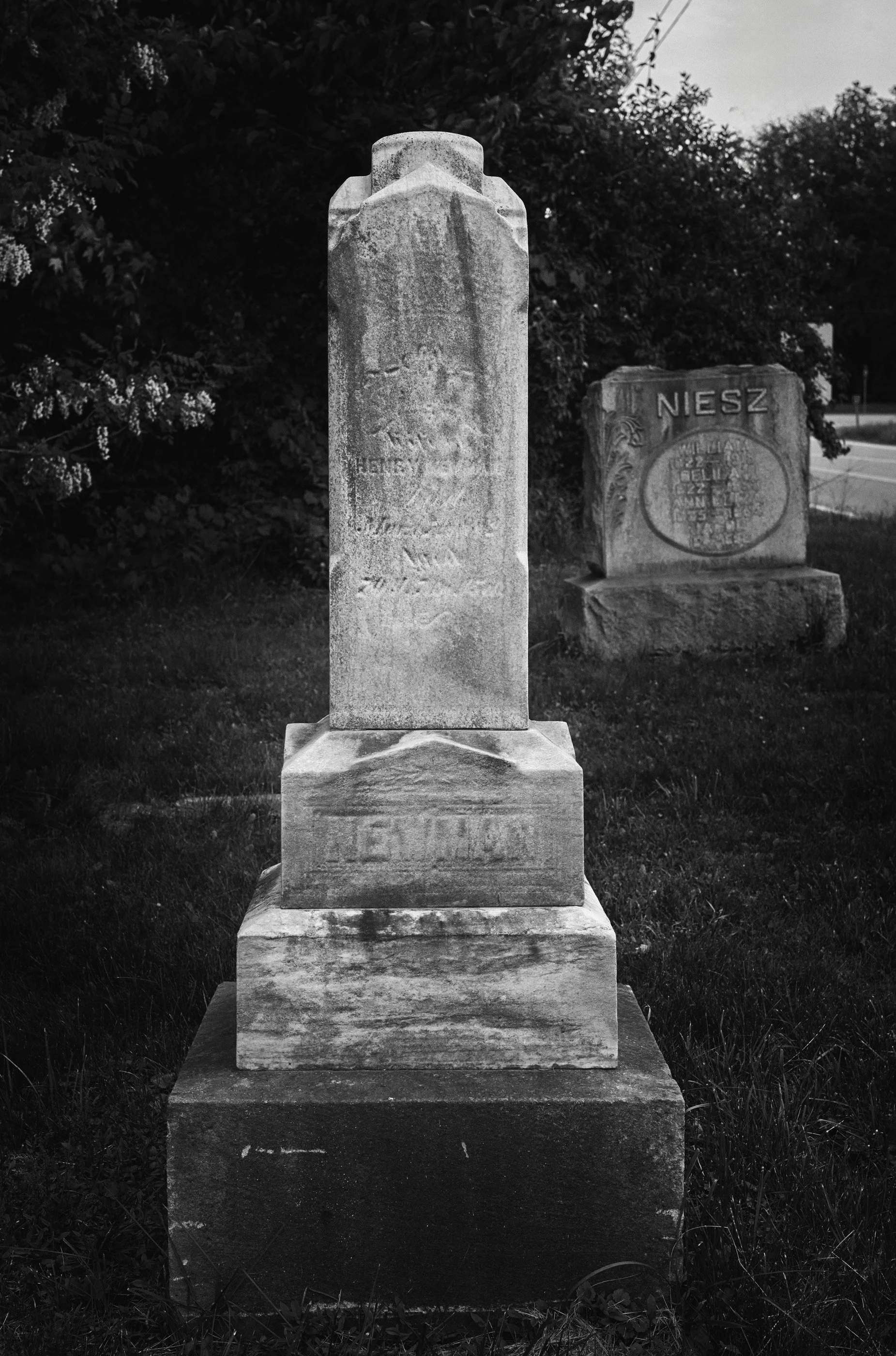
The Newman stone in the foreground, the Niesz family marker behind. The road is just visible through the trees on the right.
The cemetery is small — maybe a dozen visible stones, a large granite obelisk near the road, overgrowth pressing in at the edges. The church next door was red brick, Gothic arch windows, a food pantry sign out front. It had clearly been through several lives — renamed, repurposed, quietly persisting the way small Ohio churches do.
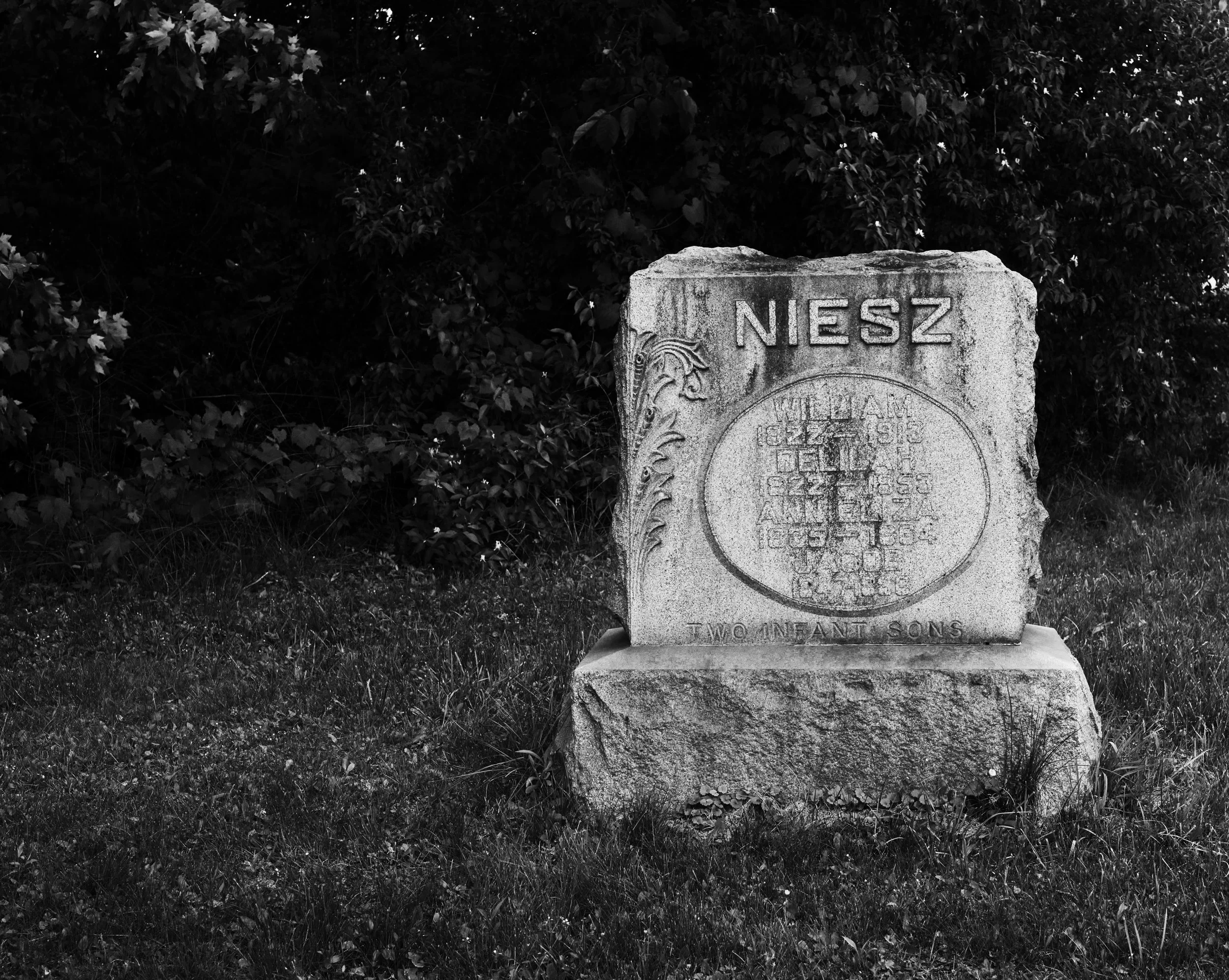
The first stone that stopped me was a family marker. The Niesz family. William. Delilah. Annelizia. And then at the very bottom, almost as an afterthought carved into the sandstone: Two Infant Sons. No names. No dates. Just that. The whole weight of 19th-century mortality compressed into three words.
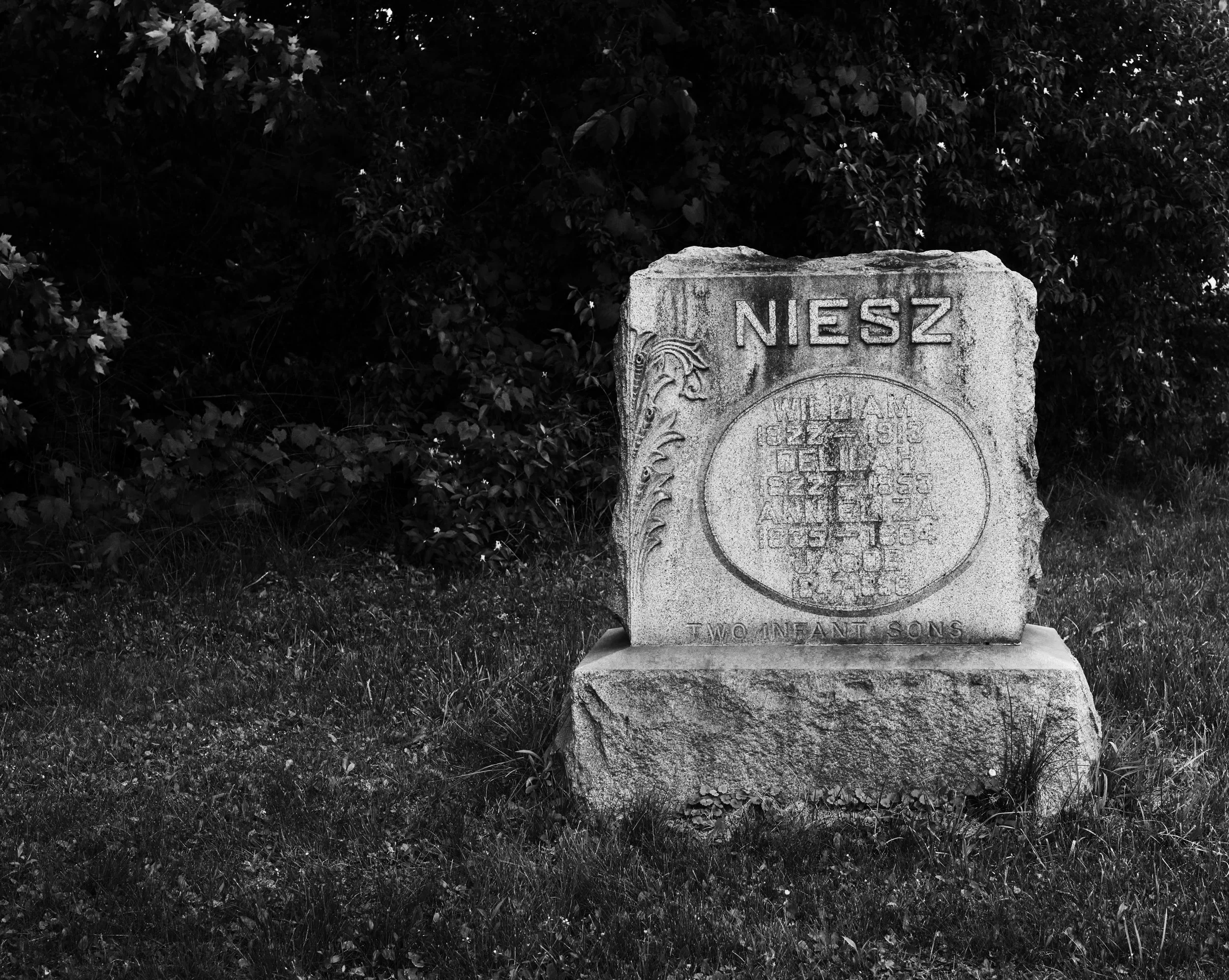
The Niesz family marker —
William, Delilah, Annelizia, and "Two Infant Sons
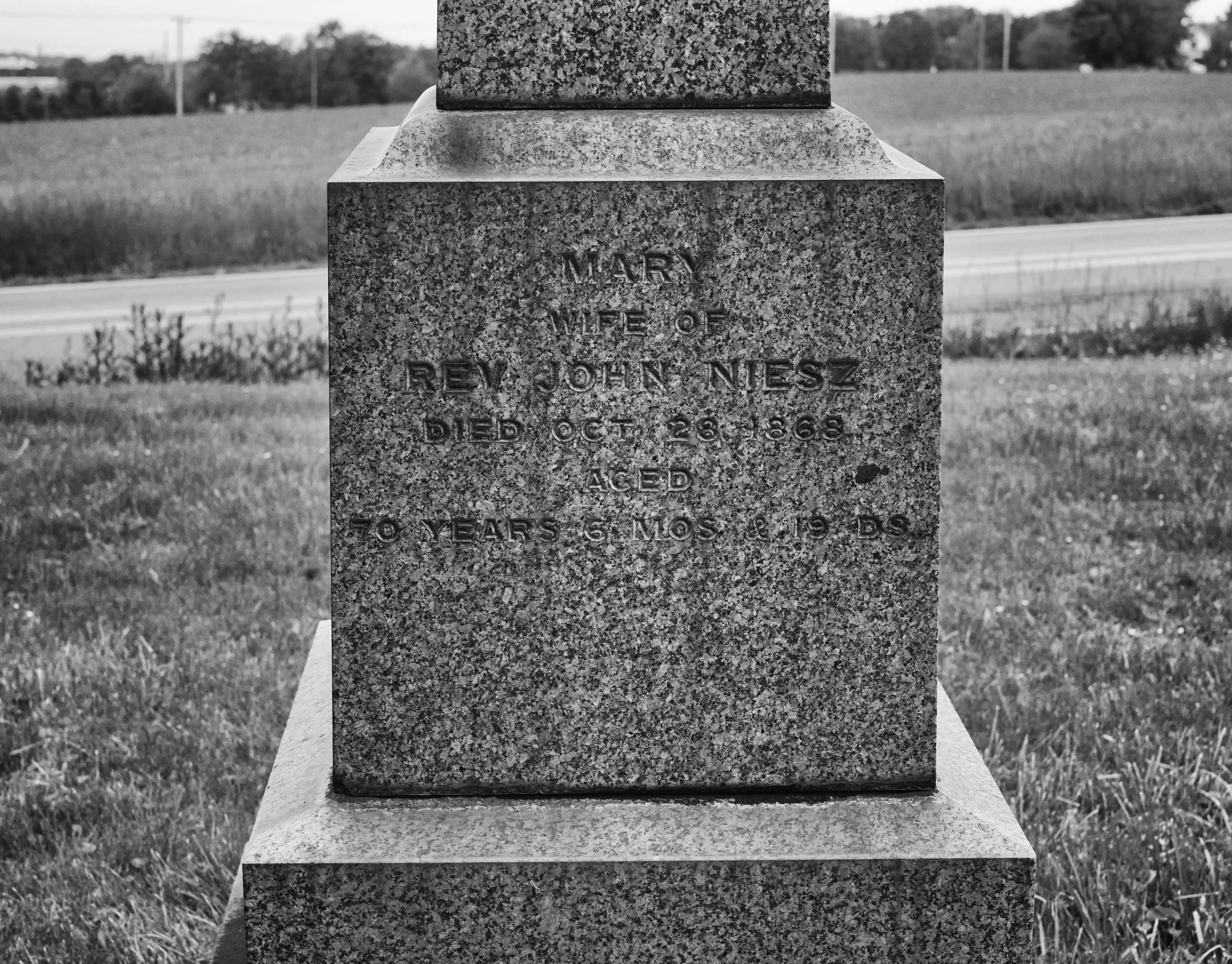
The base of the obelisk
Mary, wife of Rev. John Niesz, died October 23, 1868, aged 70 years, 5 months and 19 days.
The obelisk belonged to the Reverend John Niesz — or rather, to his wife Mary, who died in 1868. I did some digging when I got home. The story of Rev. Niesz is one of the more remarkable things I've come across in Canton Township.
In his younger years he was actively irreligious. He belonged to a group that published a paper in favor of infidelity. Then in 1831, one of his young children died while — according to his obituary — "shouting praises to Christ." That moment broke him open. He became ordained, and in 1841 he built a church on the corner of his own farmland, setting aside adjacent land as a cemetery. The man went from publishing anti-religion pamphlets to building a church with his own hands. This ground was his from the start.
He built the church in 1841. By the 1860s, young men from that same congregation were coming home from the Civil War — to be buried in the ground the reverend had set aside
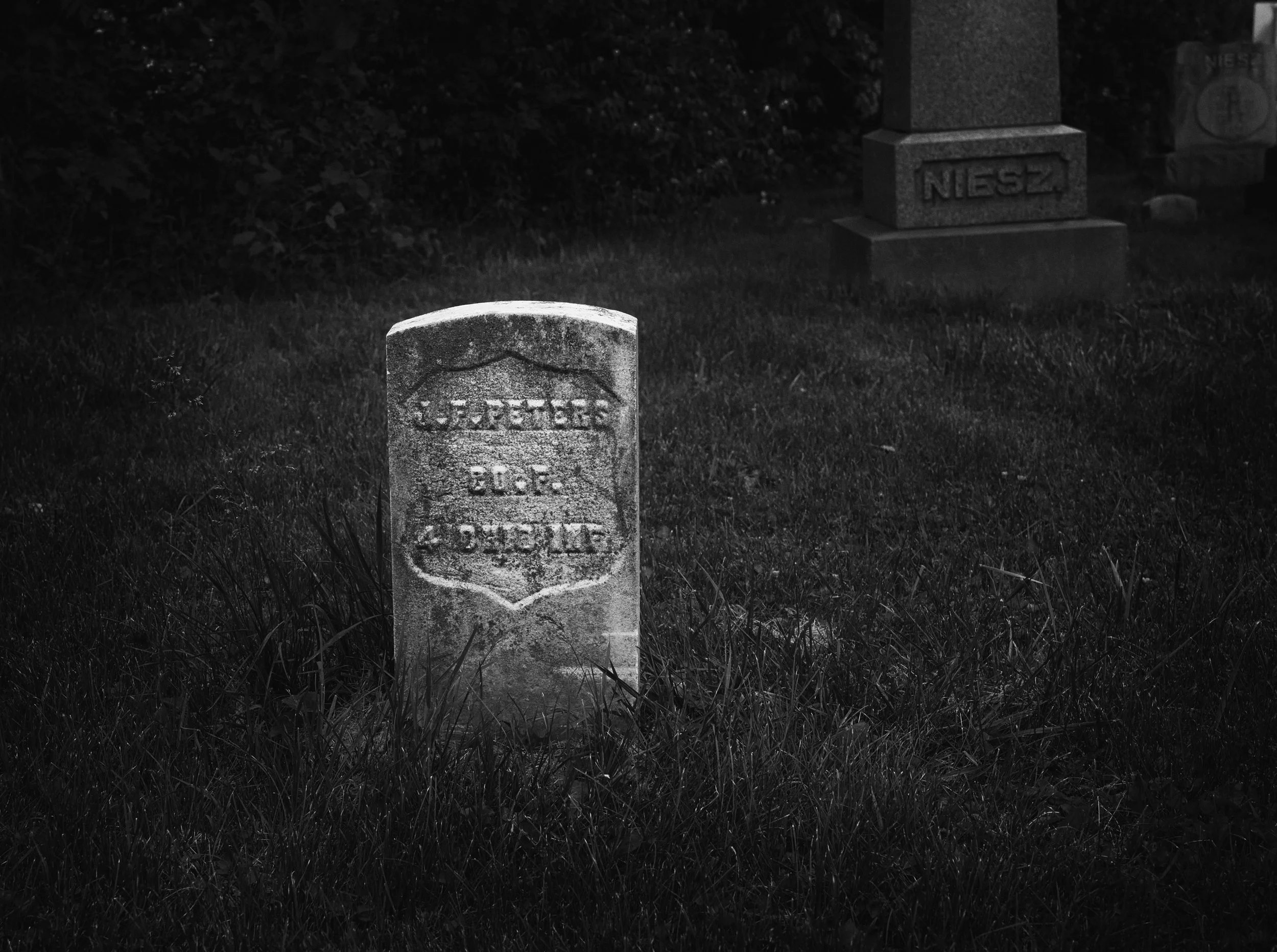
The government-issued marker of J.F. Peters, a Union veteran. The shield shape and plain lettering are unmistakable. The Niesz family stone stands behind him.
That small government-issued stone — the shield shape, the plain lettering — is a Union soldier's marker. J.F. Peters, Company F, likely the 4th Ohio Infantry. He was a member of this congregation, or at least a neighbor, buried here after the war. Rev. Niesz had consecrated this ground two decades before Peters ever left for the front.
I kept walking. And then I found this.
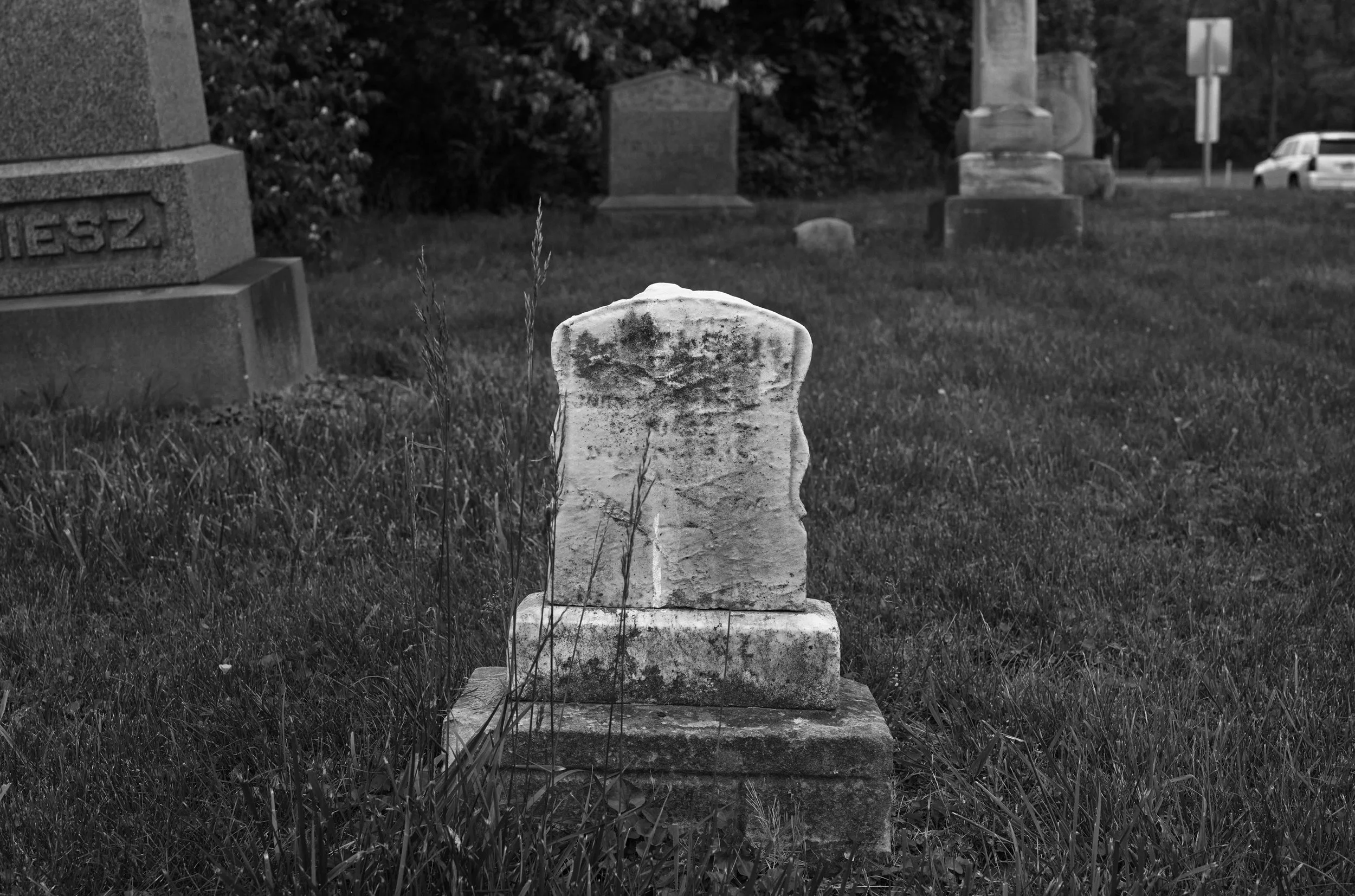
No name. No dates. A single weed growing through the crack. Someone is buried here. We'll never know who.
Somebody is buried here and we will never know who. That's not a mystery. It's just the end of the line for a human being.
The inscription is gone. Not damaged — gone. Whatever name was carved into that stone has been erased by time as completely as if it were never there. A single weed has pushed up through the crack between the stone and its base, filling the silence the way nature always does eventually.
Behind it, the rest of the cemetery stretches out. Other stones still standing. Other names still holding. The Niesz obelisk anchors the left edge. A road sign and a passing car are visible in the upper right. The world, still moving.
I think about this sometimes — the things that exist in plain sight along roads we drive every day. This cemetery has been here since 1841. Reverend Niesz died in 1872. J.F. Peters came home from the war and was buried here. Families brought their infants and their elders and carved their names into stone because that felt like it would last.
For most of them, it did. For this one, it didn't.
I'm glad I pulled over.
The Photography Trends Reshaping the Business in 2026 (And How to Stay Ahead)
The photography industry is in the middle of a quiet revolution. After years of chasing polished, algorithm-perfect aesthetics, something is shifting — and if you're running a photography business, paying attention to these trends could mean the difference between a packed calendar and crickets.
Here's what's actually changing in 2026, and what it means for your business.
1. Authenticity Is the New Luxury
Forget flawless. Clients and photographers alike are craving something more human — raw moments, genuine emotion, and images that feel real rather than overly controlled. PetaPixel Imperfection is no longer something to edit away; it's what makes a photo feel alive.
This is a huge opportunity if you lean into it. Lead with candid moments in your portfolio. Stop over-retouching. Show the laugh lines, the happy tears, the slightly blurry dance floor shot that captures pure joy. That's what clients are booking right now.
2. AI Is Your Assistant, Not Your Replacement
AI-assisted editing and culling are now standard tools in professional workflows — the conversation has shifted from whether to use AI, to how to use it responsibly without losing your artistic voice.
The photographers winning in 2026 are using AI to handle the tedious stuff — sorting through hundreds of shots, basic exposure corrections, background cleanup — so they can spend more energy on the creative work that actually sets them apart. If you're not using any AI tools yet, you're likely spending hours on tasks that could take minutes.
3. Clients Want Video Too
This one is hard to ignore. Brands now expect photographers to deliver platform-ready packages that include vertical photos, carousel sets, and short video loops — audiences are consuming more short-form visual storytelling than ever before. Pixpa
You don't need to become a full videographer overnight. Start by adding a simple reel or a few short clips to your session packages. Even 30 seconds of behind-the-scenes footage or a highlight loop can justify a higher price point and make you far more attractive to business clients.
4. The Wedding Market Is Splitting in Two
If you shoot weddings, this one deserves your full attention. The middle of the wedding photography market is beginning to collapse — the smart move is to either build a premium brand that commands higher prices, or commit to a streamlined, budget-friendly model. Trying to play both sides is increasingly costly.
Couples booking high-end weddings care deeply about photography and aren't very price-sensitive. Meanwhile, budget couples are often booking last-minute and treating photography as an afterthought. Knowing which client you're after will shape everything from your pricing to your Instagram feed.
5. Small Business Content Is a Gold Mine
Every small business knows they need daily content — social media posts, testimonials, behind-the-scenes, ads — but most have no idea how to produce it consistently. That's exactly where photographers come in.
Commercial content work for local businesses is one of the fastest-growing and most profitable niches right now. Businesses have marketing budgets and ongoing needs, which means recurring revenue for you. If you haven't explored this yet, consider reaching out to a local business and offering a trial shoot. The work is varied, the pay is steady, and it's genuinely fun.
The Bottom Line
The photographers thriving in 2026 aren't necessarily the most technically skilled — they're the most adaptable. They're leaning into authenticity, embracing tools that free up their time, expanding what they offer, and getting crystal clear on who their ideal client is.
Which of these trends is already showing up in your business? Drop a comment below — I'd love to hear what you're seeing out there.
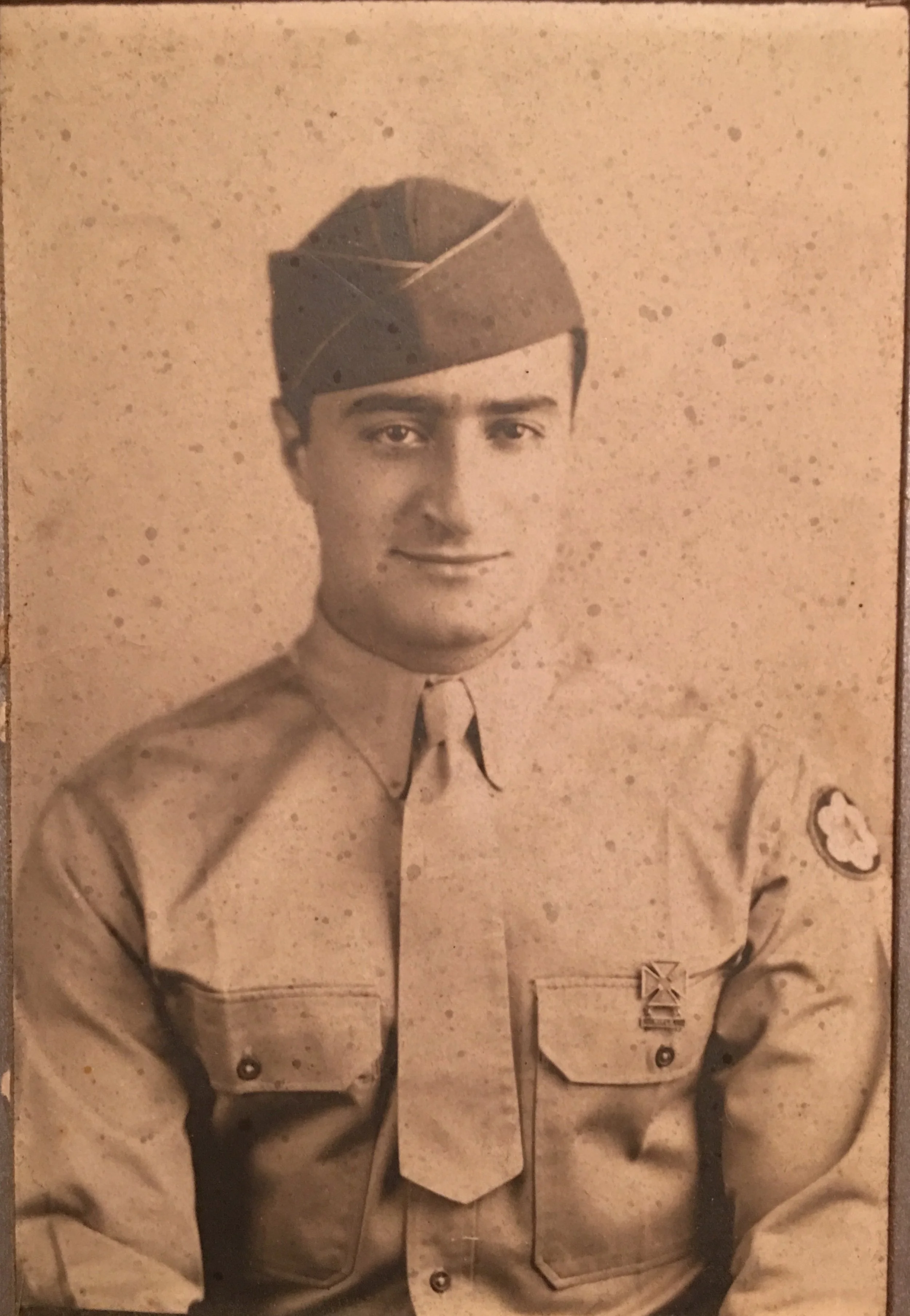
Honor Flight
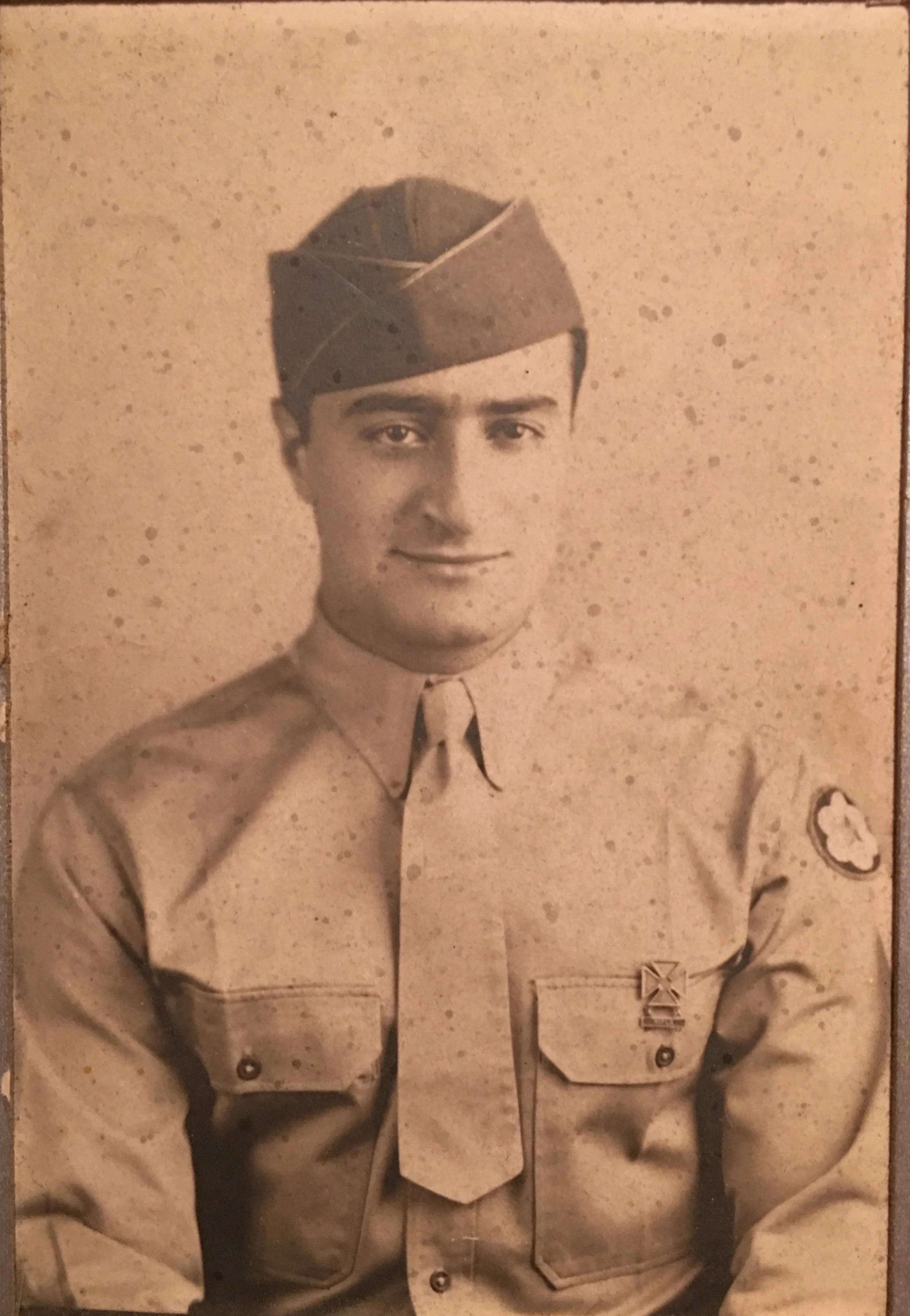
Albert M. Albert · United States Army · World War II
Next Saturday I fly with heroes — and carry everyone who made me
Three years ago I put my name in. I asked to be considered as a volunteer photographer for an Honor Flight out of Cleveland. Nothing came of it, and eventually I moved on. Then a couple weeks ago, out of nowhere, a text arrived. They needed someone. Next Saturday.
Some things find their timing.
I've been a professional photographer since 1988. Over those years I've photographed a lot of veterans — always for free, always with gratitude. It's work that has meant something to me in a way that was hard to fully explain. Until now maybe I didn't need to explain it. To understand why I said yes without hesitation, you need to know where I came from.
You need to know my family.
My father was Master Sergeant Albert M. Albert, United States Army, World War II. He read his Bible in the foxholes of the Pacific. He walked through Hiroshima after the bomb. He came home and never made a big deal of any of it.
He served as head of communications in the Pacific theater. After the bomb dropped on Hiroshima, he was among the American servicemen sent into that city to dismantle radio equipment — in those first days, before anyone fully understood what the radiation meant. He walked through it. He came home.
He had eight siblings. Six of them died from cancer. My father, who walked through Hiroshima, never got it. In the foxholes before all of that, he had his Bible open. He was a man who knew exactly what he believed and why — because he had seen enough to leave no doubt. Occasionally a story from those years would surface, always carrying the same thread running through it: he knew God had saved them from destruction.
He didn't talk much about the war. That was his generation. You did what was asked, you came home, and you got on with living. He raised a family, held his faith, and led quietly. That's what Master Sergeants do.
He's been gone for years now. But next Saturday I'll be standing at the World War II Memorial in Washington, D.C., with a camera in my hands and his memory in my chest.
Then there was my mother. She was the glue. She believed in me completely — not conditionally, not cautiously, but fully and without reservation. I was a mama's boy, and I wear that without apology. She told me I could do anything I wanted with my life. She meant it every single time. When I found her in 2013, gone without warning, it was the hardest thing I have ever carried. Some things you don't get over. You just learn to hold them differently.
My oldest brother, Michael, is fourteen years my senior and has been a rock in my entire life. When the business got tight — and in thirty eight years it gets tight — Michael was there. He backed me. He believed in me. He picked up a camera and worked events beside me when I needed another set of hands. He never made it feel like a favor. That's just who he is.
My sister Christine is in the middle of us — 68 years old, sweet to her core, living with some issues that have made her path harder than it should have been. Michael and I look after her. She doesn't fully grasp what this trip means historically, but she always wants to know about my jobs. Always asks how it went. Always proud of her little brother. Sometimes that uncomplicated love is the most sustaining kind there is.
And then there was Jim.
Jim was thirteen years older than me — a mentor, a guide, a force. He shot Leica his whole life. Voigtlander, M8, M9 — he'd come downtown Canton, retired, Leica in hand, working slowly and deliberately the way rangefinder photographers do. I used to laugh at him. How long everything took. Why not just use an autofocus camera and get on with it?
Jim never argued the point. He just kept shooting.
When he got sick in 2021 — complications from Covid — I made him a promise. When he got out of the hospital, I was going to buy him a Leica 28mm Elmarit. Something he'd always wanted. A gift between brothers who had spent years laughing at each other across camera systems.
He never made it out of the hospital.
I inherited his cameras. The M9 had a sensor issue. The M8 still works — exactly the way Jim left it. And somewhere in the grief of those months I picked up his Leica and something shifted. I bought gear, sold it, bought it back. I couldn't let it go. The first time around I just couldn't find the feel. But now I do.
A store owner downtown told me not long after Jim passed — Jim used to come in and talk about his little brother. How proud he was. How I'd built something real. Jim never said that to my face. That's brothers. You say the important things to strangers instead and hope it gets back.
It got back.
So next Saturday I'll carry a Leica M10R with a 50mm APO — a lens I traded three others to own — along with a 35mm and a 26mm. Small, quiet, manual focus. A camera that asks you to slow down and pay attention. Jim tried to teach me that for years. I just needed to lose him to finally understand it.
The itinerary is full — the Navy Memorial, the WWII Memorial, the Vietnam Wall, the Lincoln Memorial, the Korean Memorial, Arlington Cemetery, the Tomb of the Unknown Soldier, the Iwo Jima statue. Fourteen hours. A group of veterans, most of them in the later chapters of their lives, finally making this trip. I've been asked to document it.
I take that seriously. But I also know there will be a moment at the World War II Memorial — standing where Master Sergeant Albert M. Albert's war is honored in stone — when I'll have to set the camera down for a second and just be a son.
I'll carry my father's faith. My mother's voice telling me I can do anything. Michael's steadiness. Christine's uncomplicated love. And Jim's camera, with Jim's patience, finally making sense in my hands.
Somewhere Jim will be standing next to me, finally getting the last laugh about the Leica.
I'll share images when I'm back. Until then — if you know a veteran, tell them thank you. If you still can.
J. Albert
J. Albert Studios · Canton, Ohio
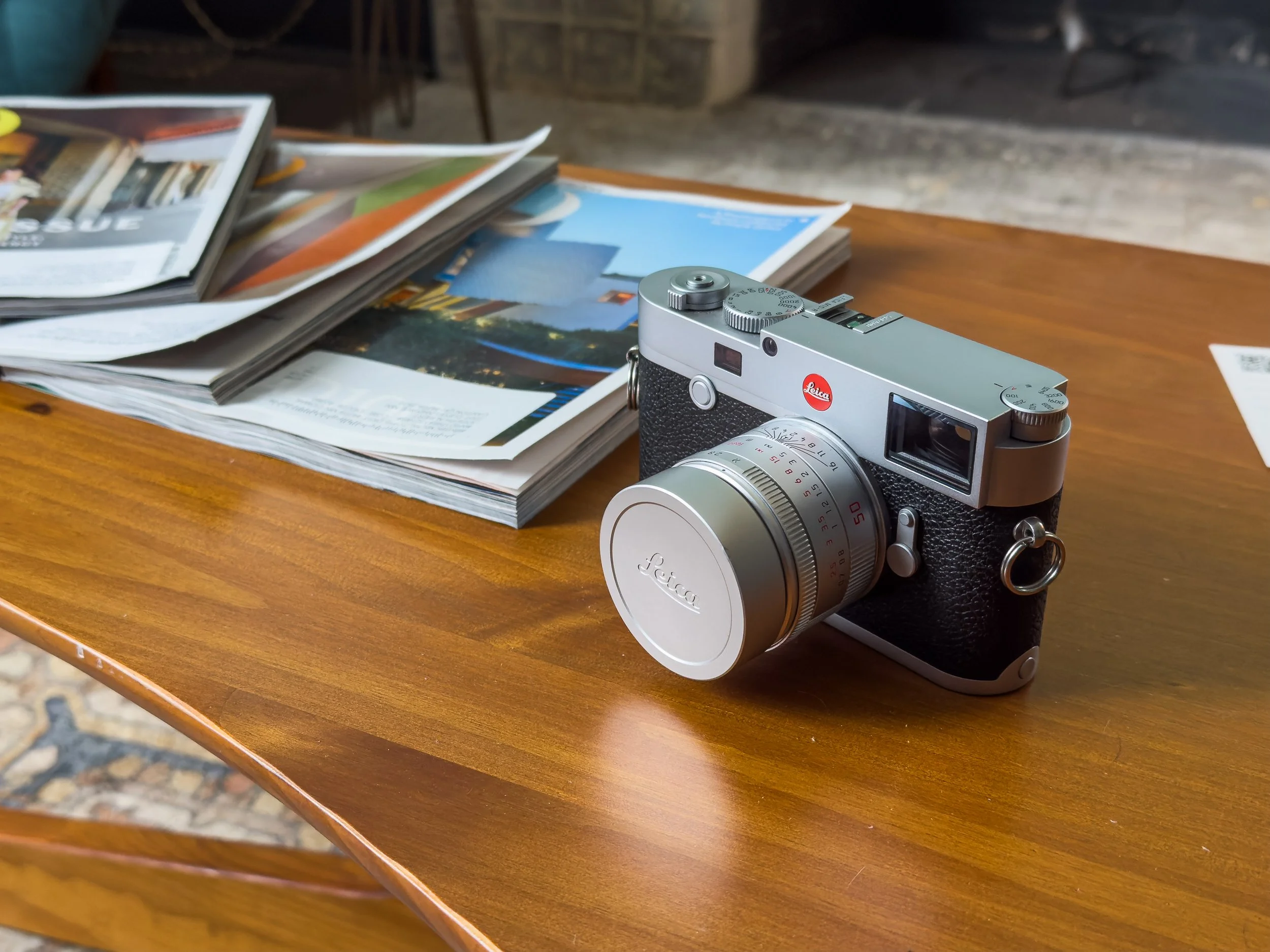
The Big Switch: Why I Traded My Nikon Kit for Leica
For years, Nikon was my workhorse. It was reliable, versatile, and could handle almost any situation I threw at it. But recently, I realized that "versatility" was becoming a distraction. I was carrying bags of lenses "just in case," and focusing more on the settings than the soul of the image.
I decided to make a change. I traded in my Nikon kit for a more focused, intentional setup: the Leica 50mm f/2 APO-Summicron-M and a Voigtländer 35mm.
Here is why I did it—and why it’s the best move I’ve made for my photography in years.
1. Intentionality Over Options
With a zoom lens, you stand still and change the focal length. With a prime lens—especially on a Leica—you have to move. You have to engage with the subject. By limiting myself to just a 28mm and a 50mm, I’m forced to make a decision before I ever lift the camera. It’s a slower process, but the results are far more deliberate.
The "Leica Look" is Real
People often ask if the "Leica Look" is a myth. After working with the 50mm APO, I can tell you it isn't. There is a micro-contrast, a way the lens handles light, and a transition from sharp to "bokeh" that feels organic rather than digital. It brings a certain "soul" to my Signature Series portraits that I found myself chasing in post-production with other systems.
Reducing the Friction
A heavy kit is a barrier. When I’m exploring abandoned buildings or urban architecture here in Ohio, I want to be nimble. This new setup is compact and lightweight. It removes the "friction" between me and the shot. I’m finding that I’m taking more photos because the gear isn't getting in the way.
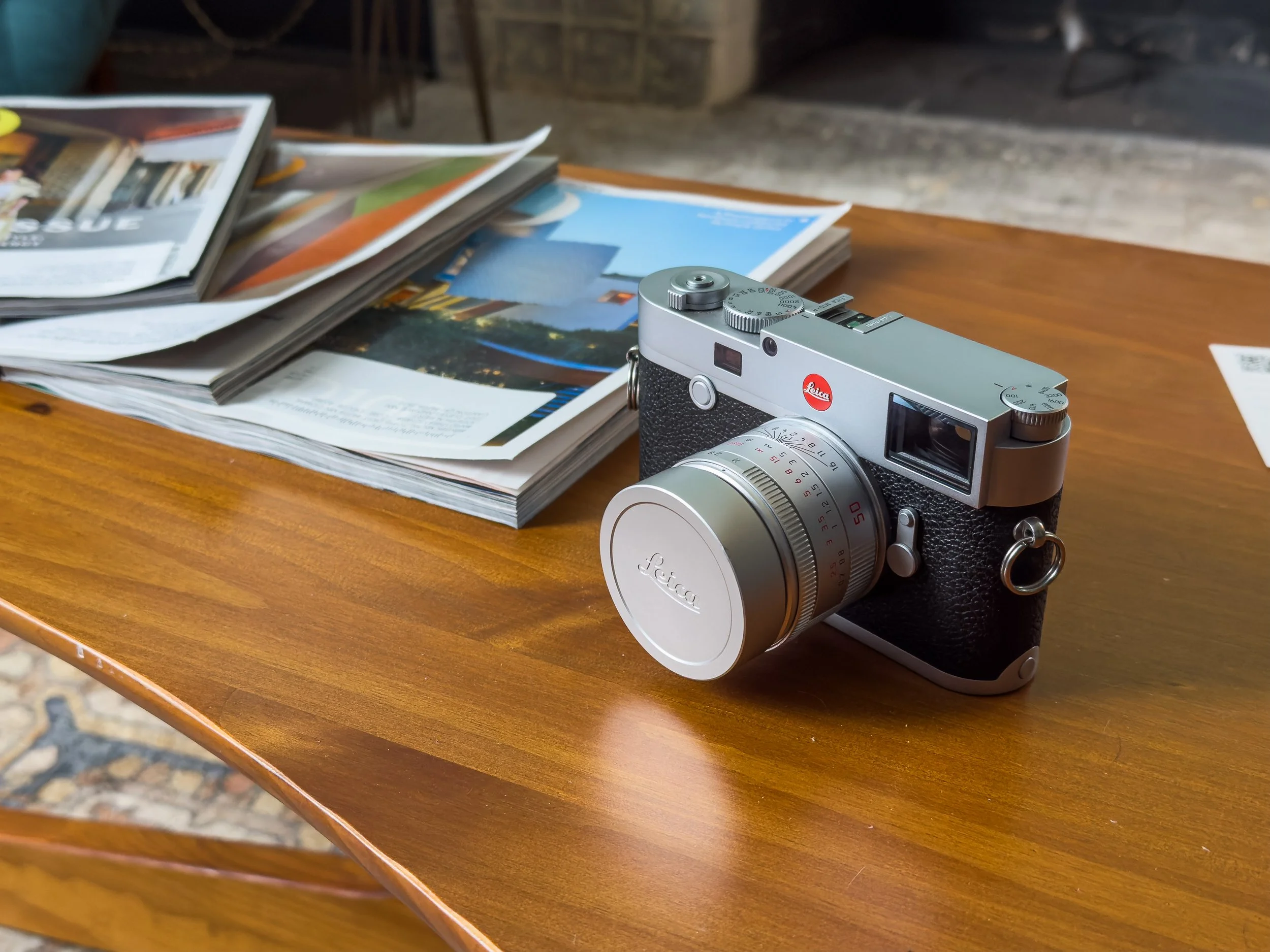
Leica M10-R with Leica APO-Summicron-M 50mm f/2 ASPH
My clients don't hire me because I have the most lenses; they hire me for my vision. By simplifying my gear, I’ve actually expanded my creativity. I’m no longer worried about which lens to use—I’m worried about capturing the light and the moment.

The Power of the Signature: Why Your Professional Image Needs a Point of View
Why Your Brand Needs a Visual Identity
In a world where everyone has a high-powered camera in their pocket, the "average" photograph has become a commodity. Whether you’re a CEO in downtown Canton or a local business owner building a digital presence, it’s easier than ever to get a clear picture. But there is a massive difference between a clear picture and a Signature Look.

Captured on location with Hasselblad
What is a Signature Look?
A signature look isn't just about technical perfection—it’s about a consistent, recognizable point of view. It’s the difference between a generic headshot and a portrait that conveys authority, approachability, and character.
When I transitioned my work into the Joe Albert Signature Series, I did it with a specific philosophy in mind: every frame should feel intentional. Whether I’m using the surgical precision of the Leica 50mm APO or the unmatched depth of a Hasselblad system, the goal is to create an image that doesn't just look like you—it looks like the best version of your brand.

Why Consistency Matters for Your Business
If you look at the most successful brands in the world, they don’t just use random imagery. They have a visual language. Here is why that matters for you:
Instant Recognition: A signature style ensures that whether someone sees your face on LinkedIn, your website, or a billboard near the Civic Center, they recognize the "vibe" immediately.
Built-in Trust: Professionalism is perceived through consistency. If your visual branding is cohesive, your clients subconsciously view your services as equally reliable.
Cutting Through the Noise: In 2026, the digital space is louder than ever. A unique aesthetic—perhaps a specific use of high-contrast black and white or a particular way of handling light—helps you stand out from the "sea of sameness."
The "Signature" Experience
For me, creating a signature look for a client starts long before I press the shutter. It’s about the conversation we have about your goals, the choice of environment, and the deliberate selection of gear that brings a specific "soul" to the image.
I recently moved my digital home to Squarespace to better showcase this evolution. I wanted a platform that stayed out of the way so the work—and the people in it—could speak for themselves.
What’s Your Visual Signature?
Your brand is too important to leave to chance or "good enough" lighting. If you’re ready to move past the standard headshot and into a visual identity that actually says something about who you are, it’s time to find your signature. Ready to elevate your image?
The Iron and Stone of St. John’s
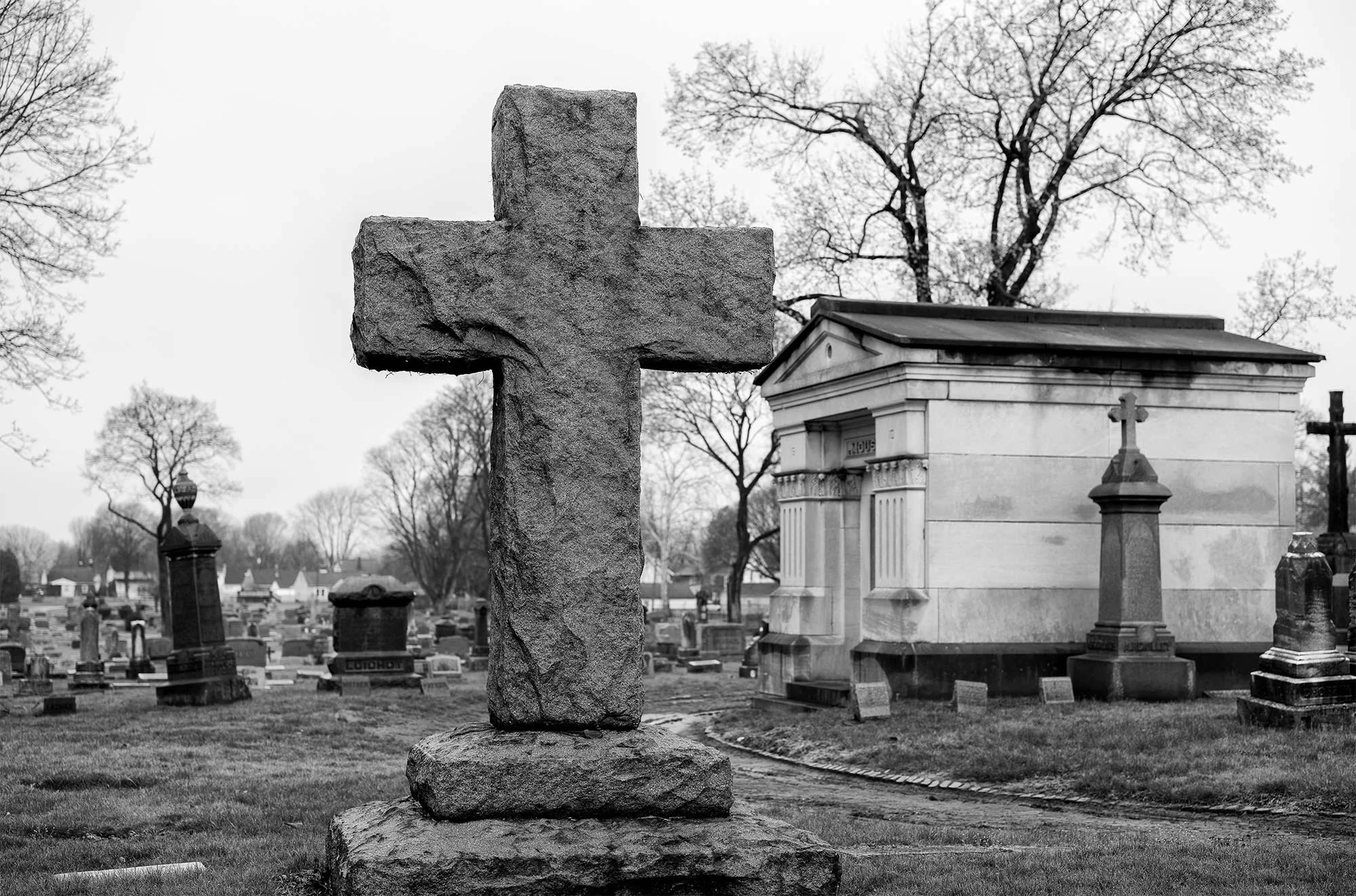
"Black and white photography of St. John’s Cemetery Canton Ohio
A Leica 50mm APO Study of Canton’s Oldest Catholic Parish
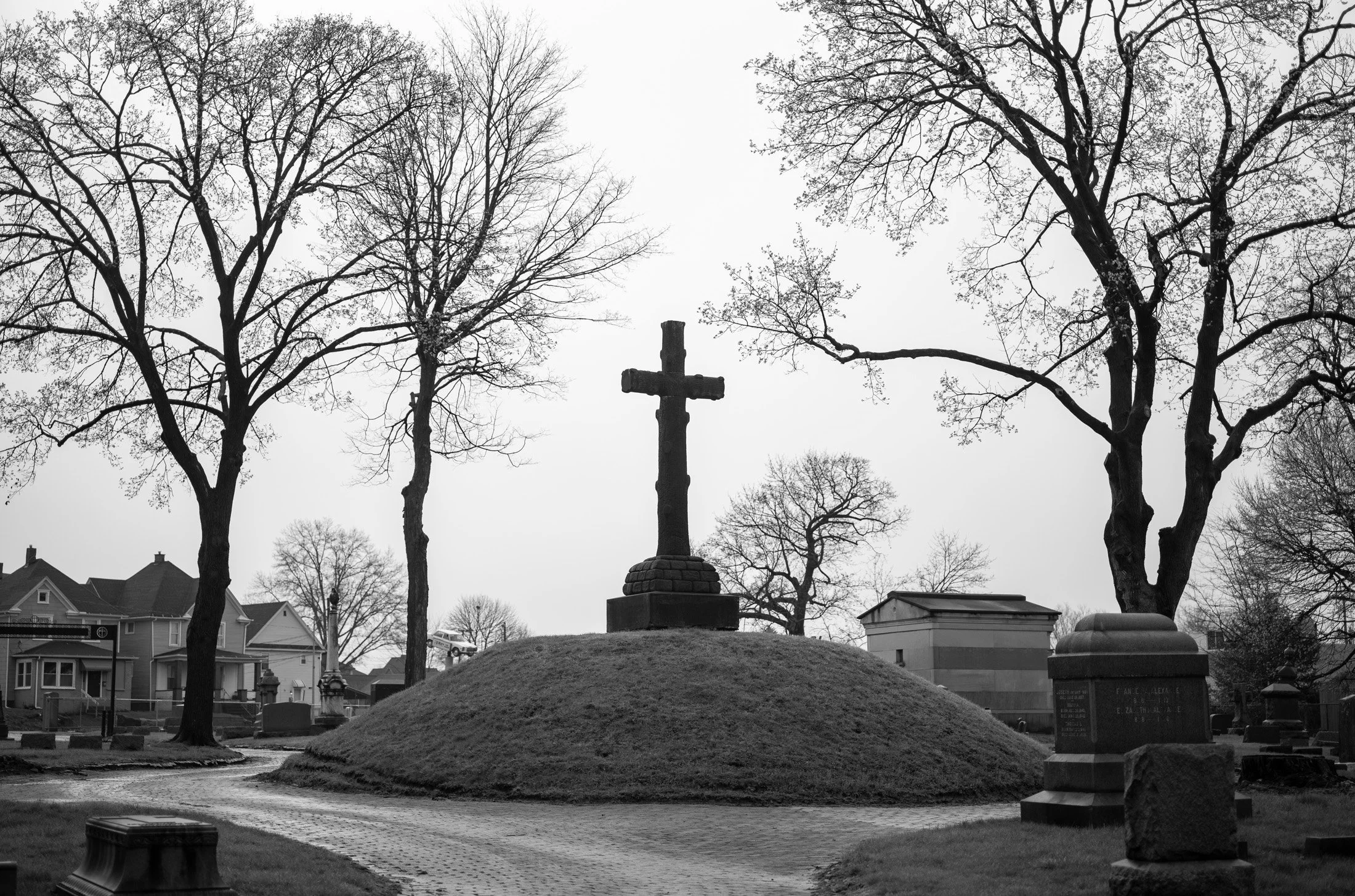
A black and white landscape of the central crucifix mound at St. John’s Cemetery in Canton, Ohio, captured with a Leica 50mm APO.
There is a specific weight to the air at St. John’s Cemetery on Walden Avenue. Established in 1823 as the final resting place for the Basilica of Saint John the Baptist, it is a quiet island of memory tucked into the heart of Canton. For this installment of my Silent Cities series, I wanted to strip away the modern world and focus on the raw, enduring textures of our city’s pioneers.
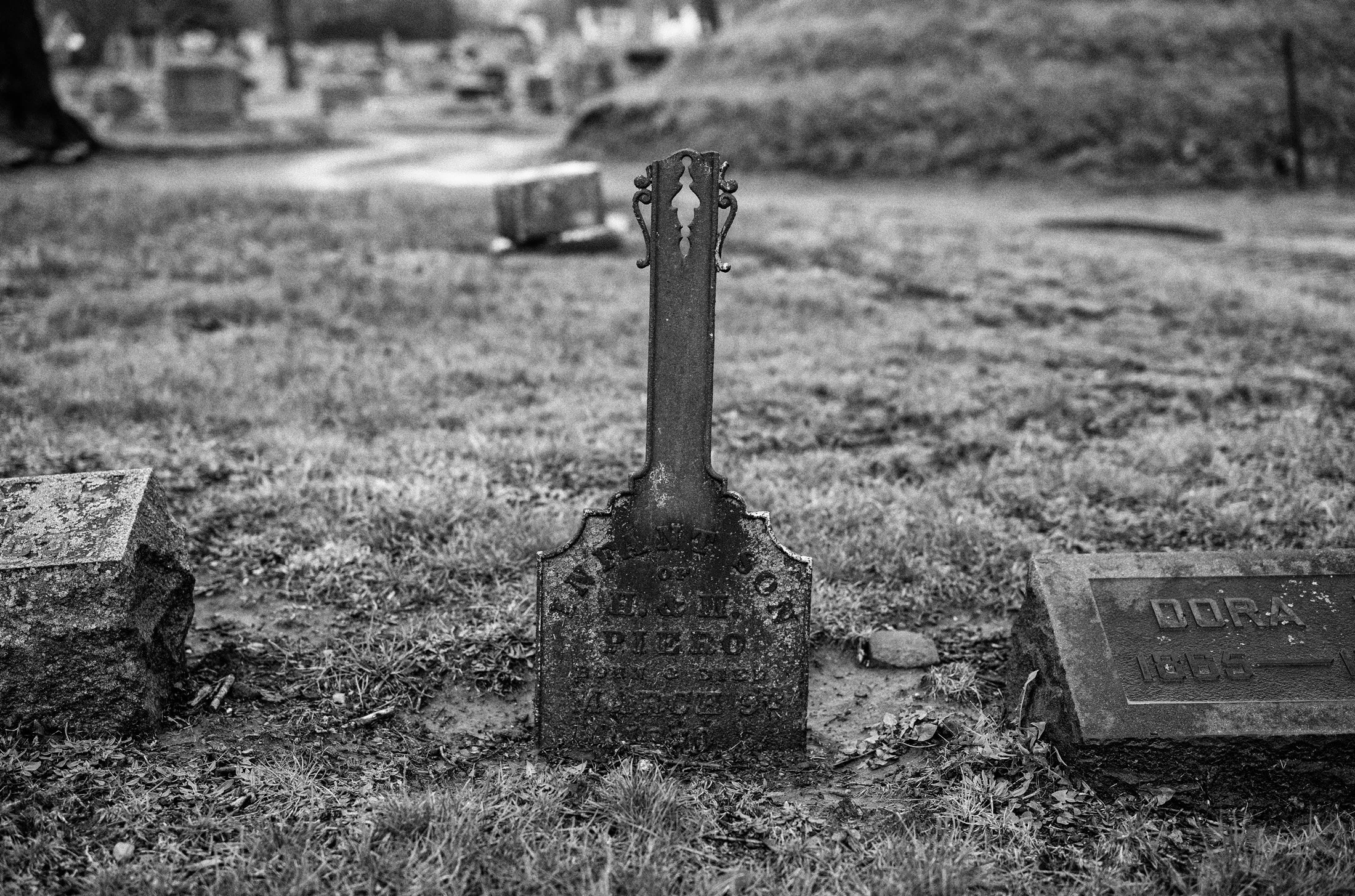
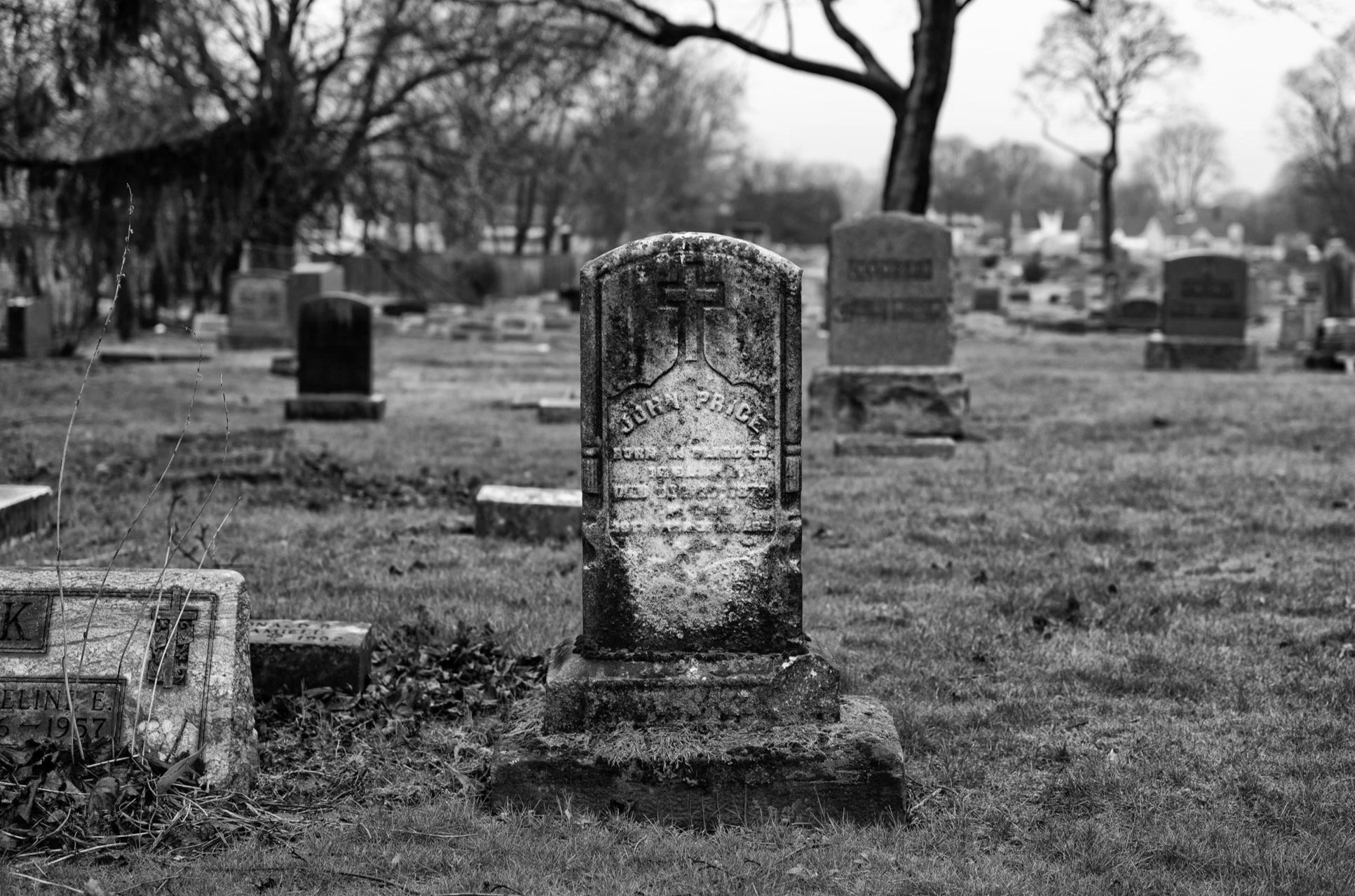
The walk through St. John’s is a walk through generations. From the towering Celtic High Crosses that speak to the Irish immigrants who served in the 8th Ohio Volunteer Infantry, to the rare, sharp geometry of the Piero family's cast-iron marker, the diversity of craftsmanship is staggering.
While the grand monuments like the central crucifix atop the mound (pictured) command the horizon, it’s the intimate details that hold the most weight. The fragile, broken porcelain at the Hercules memorial serves as a poignant reminder that while stone and iron endure, the act of remembrance is often delicate and deeply personal.
In monochrome, the distractions of the 21st century fade. We are left with the grit, the grace, and the silent stories of the oldest Catholic parish in northeastern Ohio.
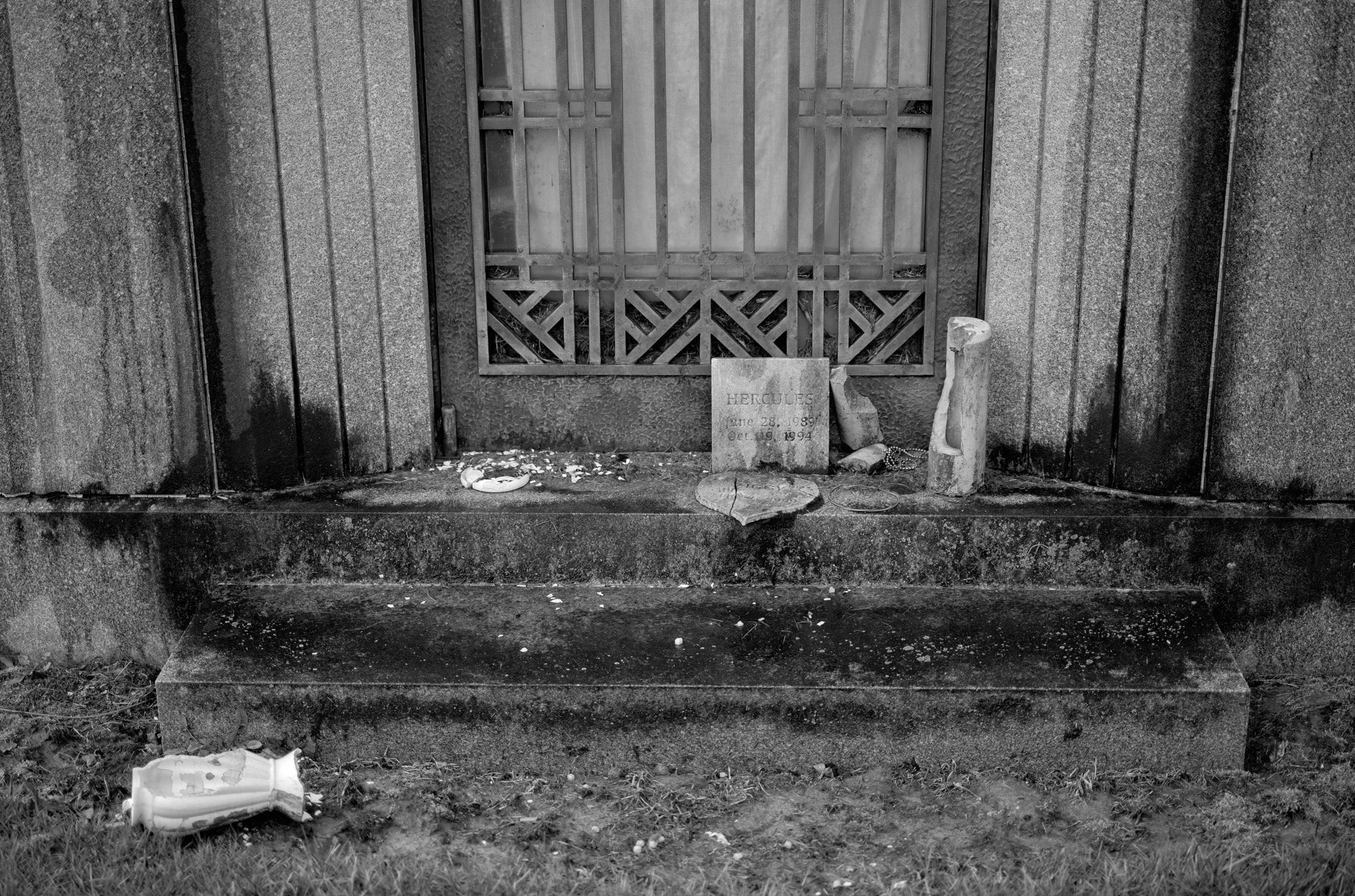
Hercules Monument
Every "Silent City" has two faces: the grand, historic monuments that speak to the collective past, and the small, fragile tokens that speak to individual loss. At St. John’s Cemetery, these layers exist side by side. While exploring the grounds, my eye was drawn away from the towering Celtic crosses to the base of a weathered mausoleum. There, I found the memorial for Hercules.
In photography, we often look for the "perfect" subject, but there is an undeniable beauty in the imperfect. The shattered porcelain and the small, cracked heart-shaped stone resting on the steps tell a story of a visit made, a tribute left, and the slow, inevitable wear of time. It’s a stark contrast to the iron-sharp lines of the Piero family marker or the stoic endurance of John Price.
This is the reality of St. John’s—a place established in 1823 that continues to hold the stories of Canton’s families today. It reminds us that while the history of the 8th Ohio Volunteer Infantry or the pioneering Shorb family provides the foundation, it is these smaller, personal echoes that keep a cemetery "alive."
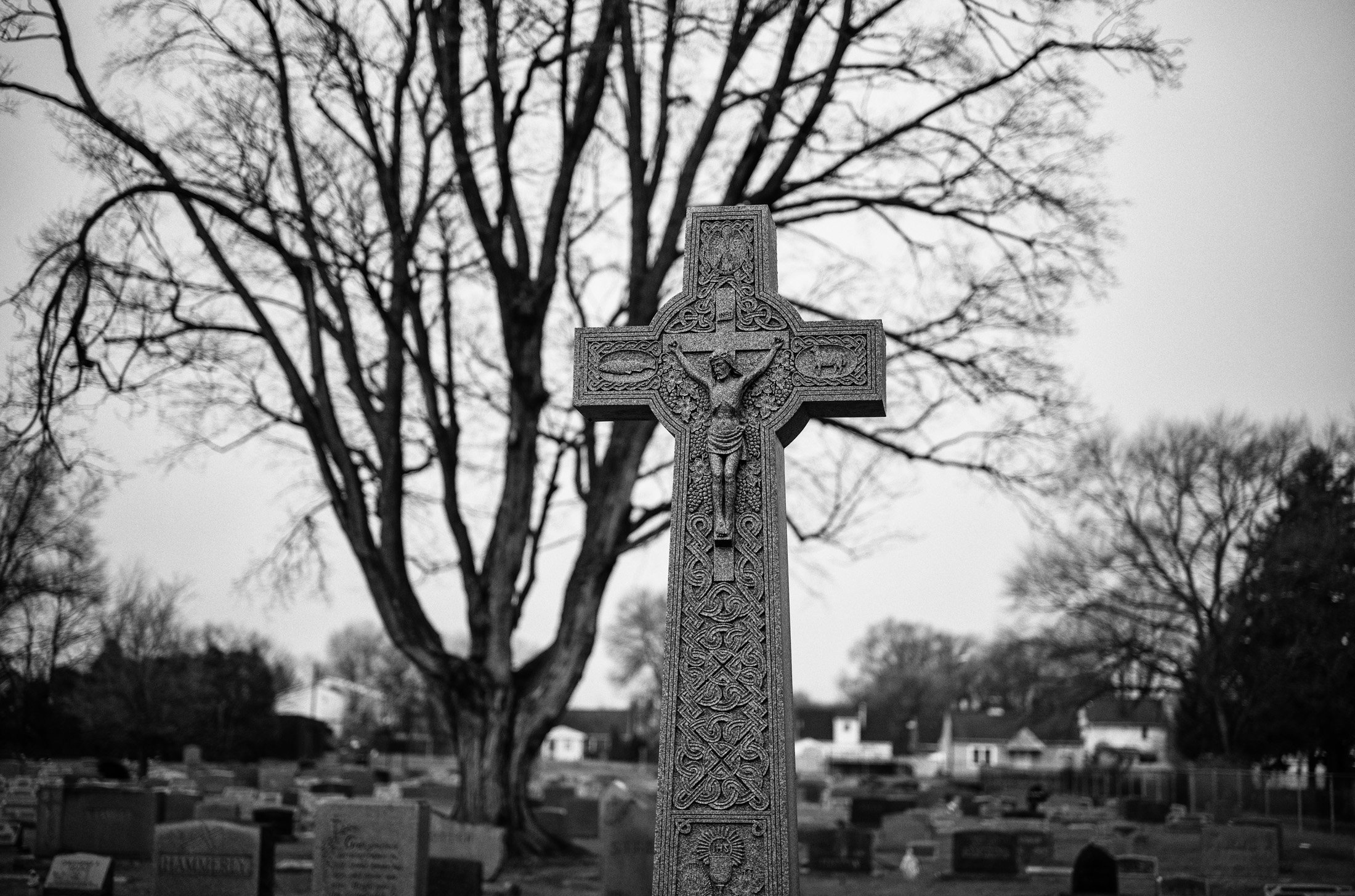
Celtic Cross
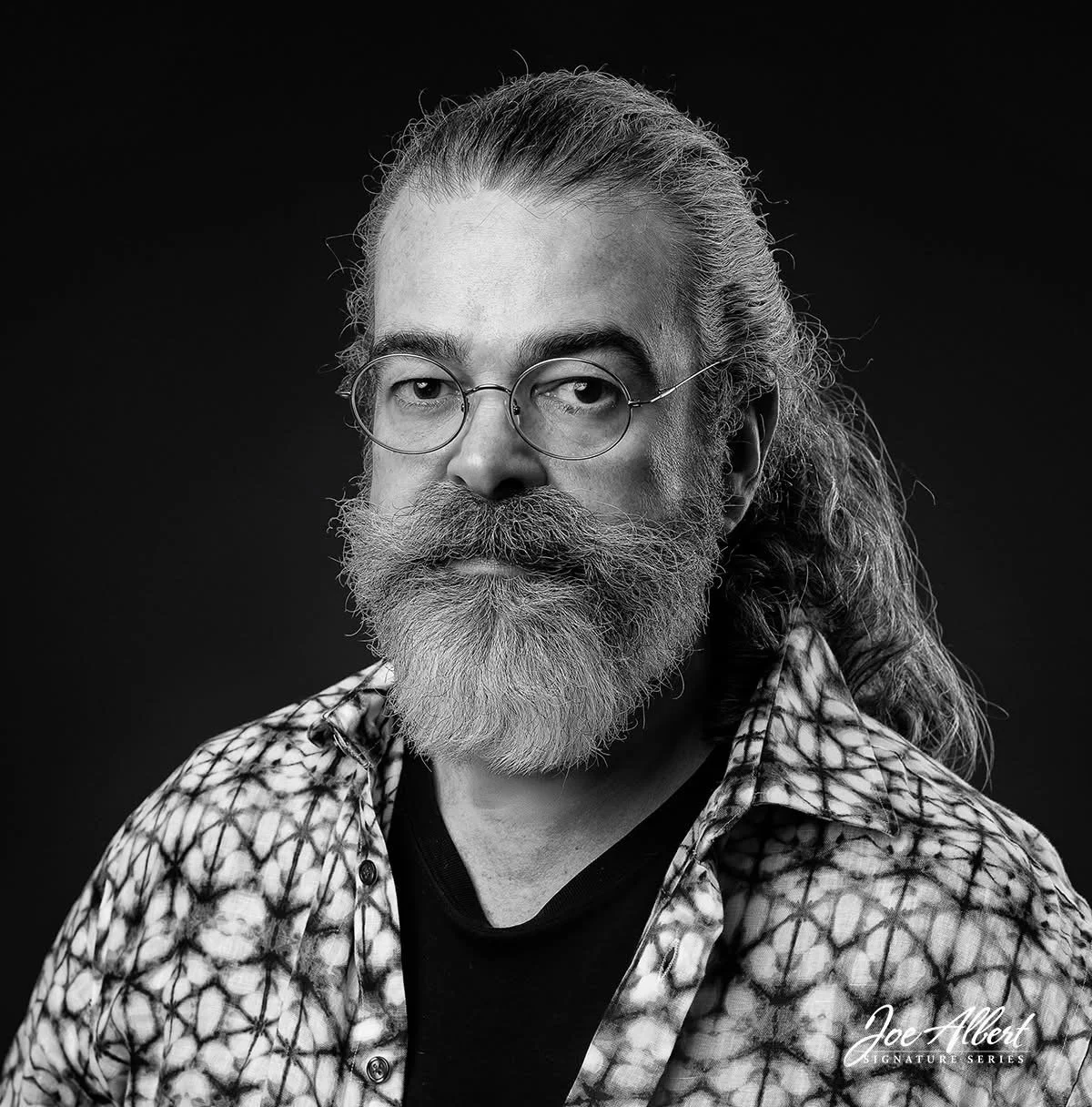
Is Your Headshot Costing You Business? 5 Mistakes Professionals Make (and How to Fix Them)
Most people don’t think about their headshot until they need one.
But here’s the reality—your image is often your first introduction.
Before a handshake, before a conversation, before a meeting… people have already formed an impression based on your photo.
LinkedIn, company websites, marketing materials—your headshot is working for you (or against you) every day.
So the question is: what is your current image saying?
1. Your Photo Is Outdated
If your headshot is more than a few years old, there’s a good chance it no longer represents who you are today.
Even subtle changes matter—hairstyle, weight, style, confidence. When someone meets you and there’s a disconnect, it creates hesitation, even if they don’t realize it.
A current image builds trust immediately.
2. Poor Lighting Sends the Wrong Message
Lighting is everything.
Flat or poorly executed lighting can make someone appear tired, less confident, or even unapproachable. On the other hand, intentional lighting creates depth, confidence, and presence.
This is one of the biggest differences between a quick snapshot and a professional portrait.
3. Your Team Looks Inconsistent (For Businesses)
This is one of the most overlooked issues I see.
Different backgrounds, different lighting styles, different crops—it creates a disjointed look that weakens your brand.
A consistent set of professional images across your team sends a clear message:
you’re organized, professional, and detail-oriented.
4. You Chose Trendy Over Timeless
Trends fade. Your image shouldn’t.
Over-edited photos, dramatic filters, or “social media style” portraits might look interesting today—but they don’t age well and can hurt credibility.
A clean, classic portrait will always hold its value
5. You Settled for “Good Enough”
This is the most common mistake—and the most costly.
A lot of professionals use a photo that’s “fine.”
But “fine” doesn’t stand out. It doesn’t create confidence. It doesn’t elevate your brand.
Your headshot should position you as someone who takes their work seriously.
Final Thought
A strong portrait isn’t about vanity—it’s about communication.
It tells people who you are before you ever say a word.
If your current image doesn’t reflect where you are today—or where you’re going—it may be time to update it.
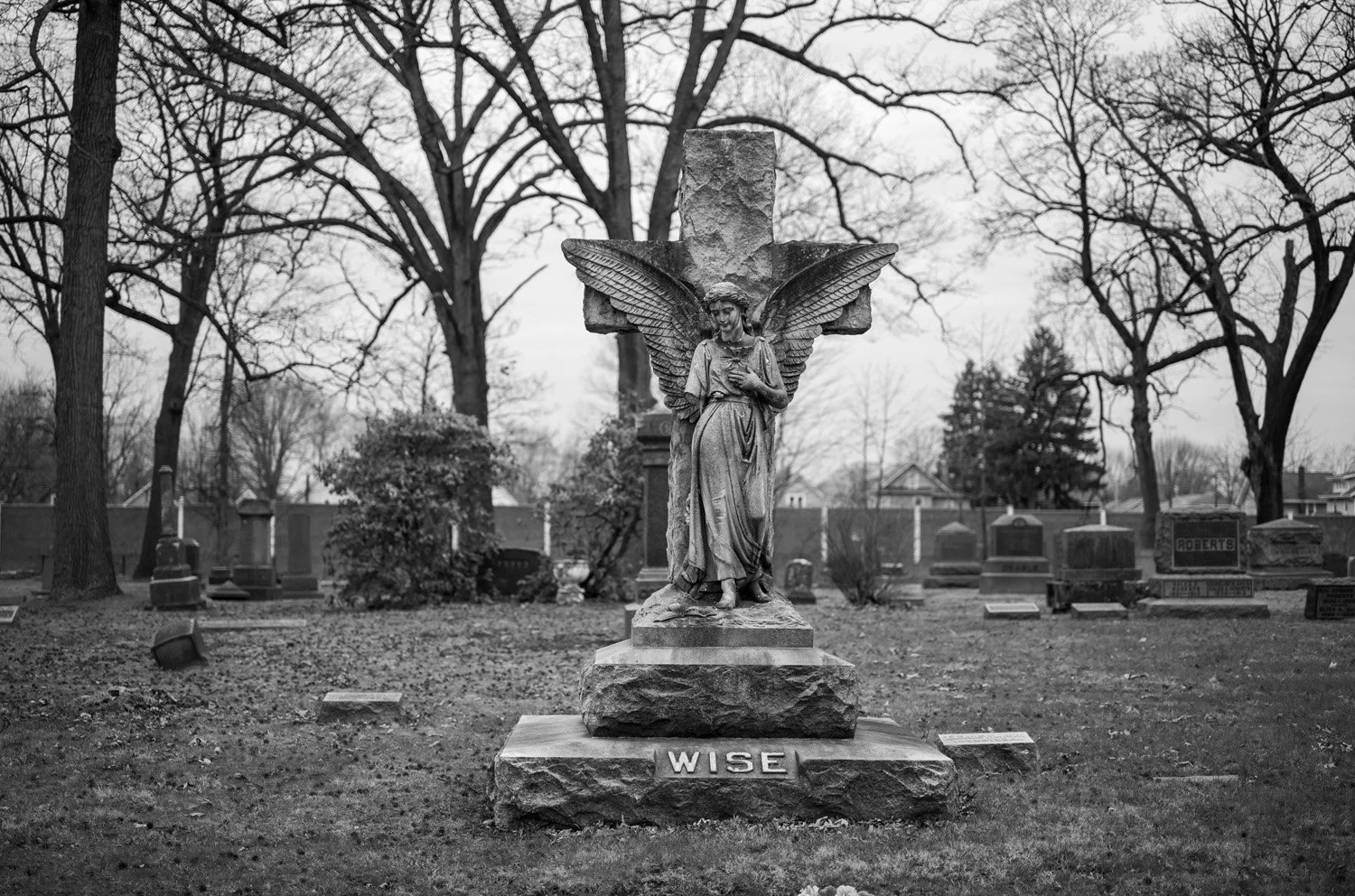
"The Silent Narrative of West Lawn"
In the heart of Canton, West Lawn Cemetery stands as more than just a resting place; it is a permanent archive of the people who built this city. From the industrial legacies of names like Aultman, Harter, and Renkert to the quiet, unnamed watchers in stone, these grounds hold a narrative that often goes unheard in the rush of modern life.
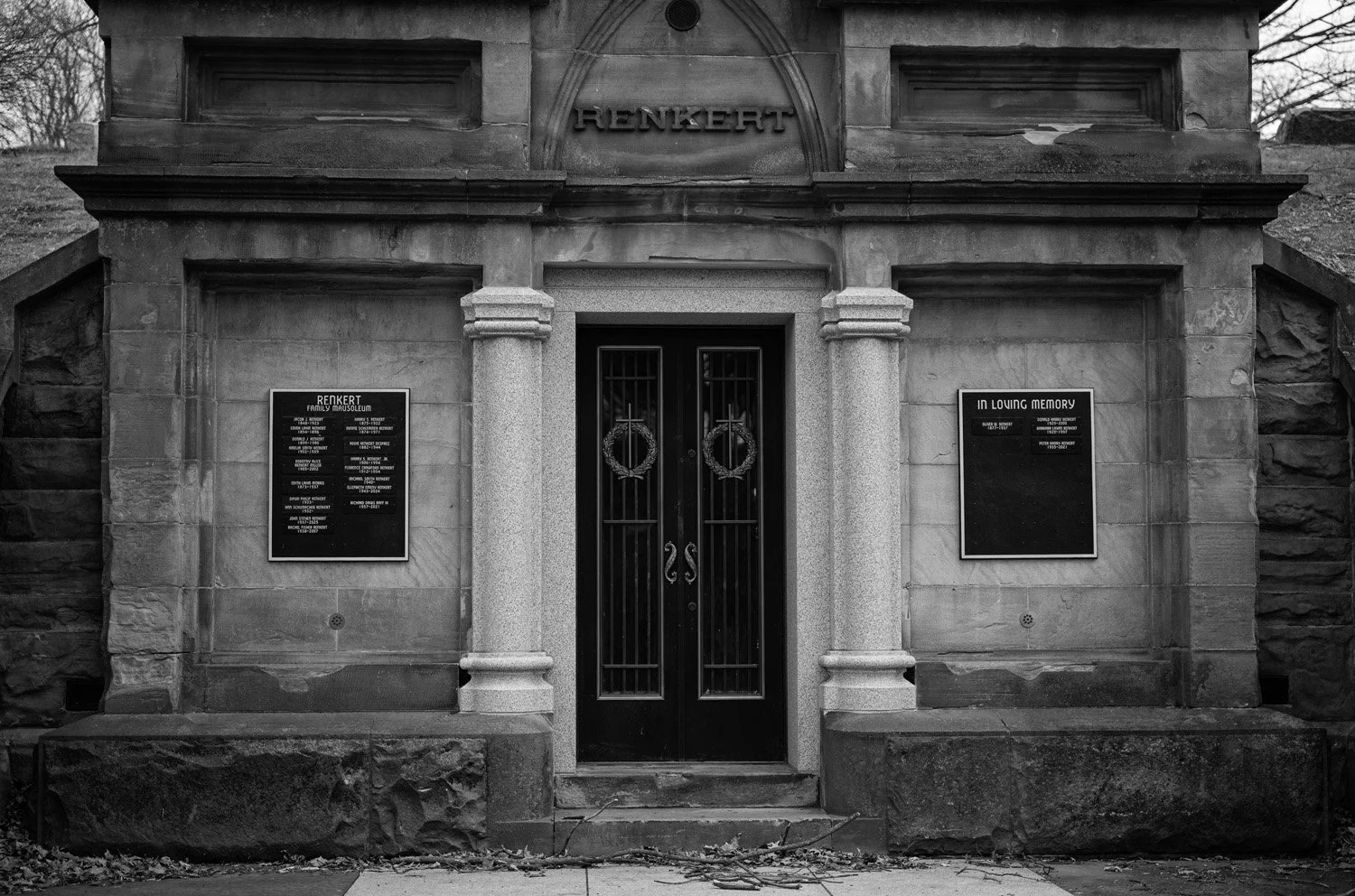
Renkert Family Mausoleum
This ongoing series, captured for the Joe Albert Signature Series, is a study in texture, light, and legacy. Using the Leica 50mm f/2 APO-Summicron-M, I’ve focused on the "bite" of the weathered granite and the soft, respectful isolation of these monuments. By working primarily in Black and White, we strip away the distractions of the present to find the timeless integrity of the past.
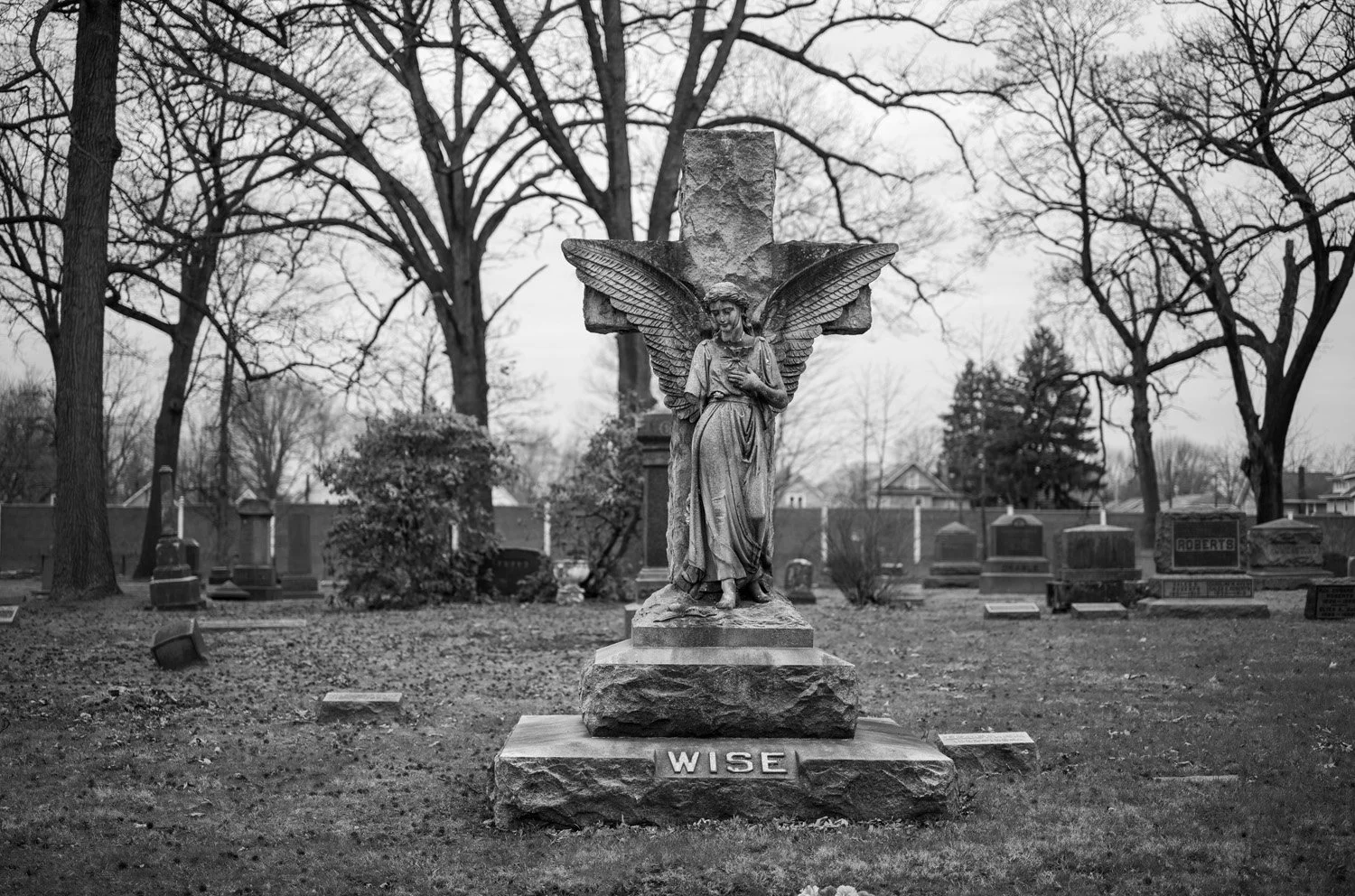
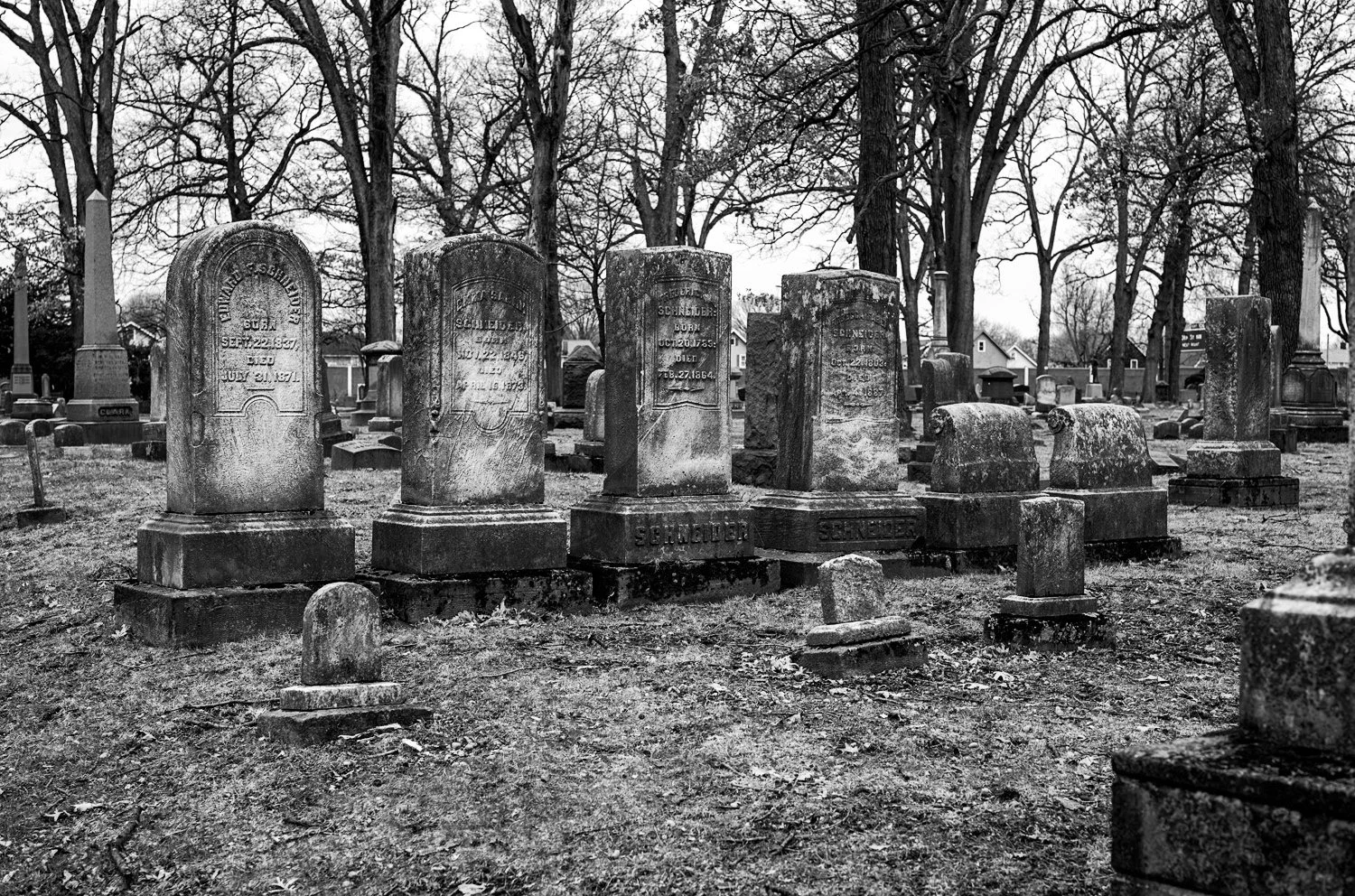
Whether it’s the imposing architecture of a family mausoleum or a simple, moss-covered veteran’s marker, each frame is an act of preservation. This project is about honoring the craftsmanship of those who carved these stones and the history of those who rest beneath them. It is an exploration of how we choose to be remembered—and how that memory evolves over centuries of Ohio winters.
Finding Silence: A Leica Study of the Lost and Forgotten (Rowland Cemetery)
Finding Silence: A Leica Study of the Lost and Forgotten (Rowland Cemetery)
Finding Silence: A Leica Study of the Lost and Forgotten
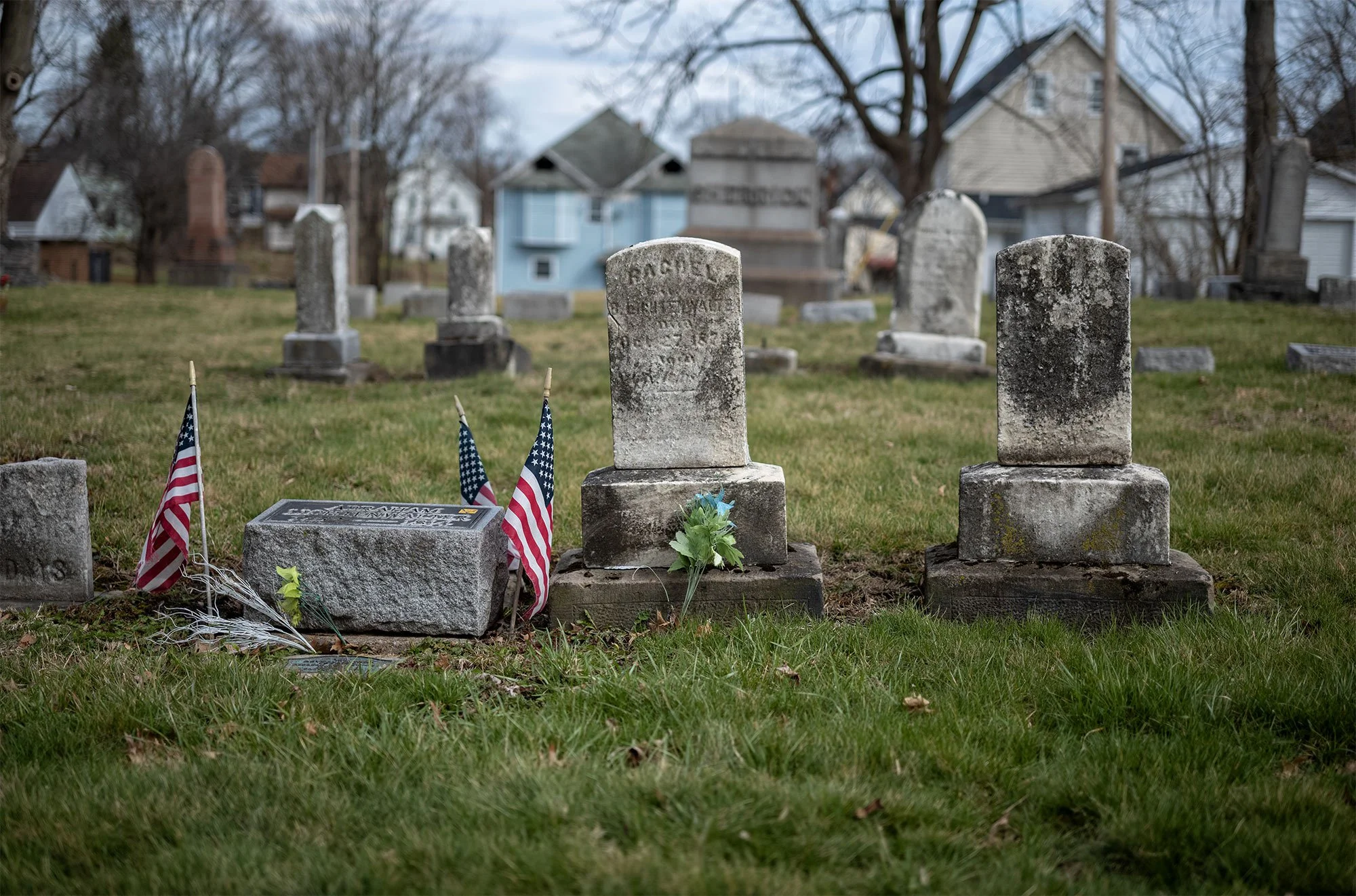
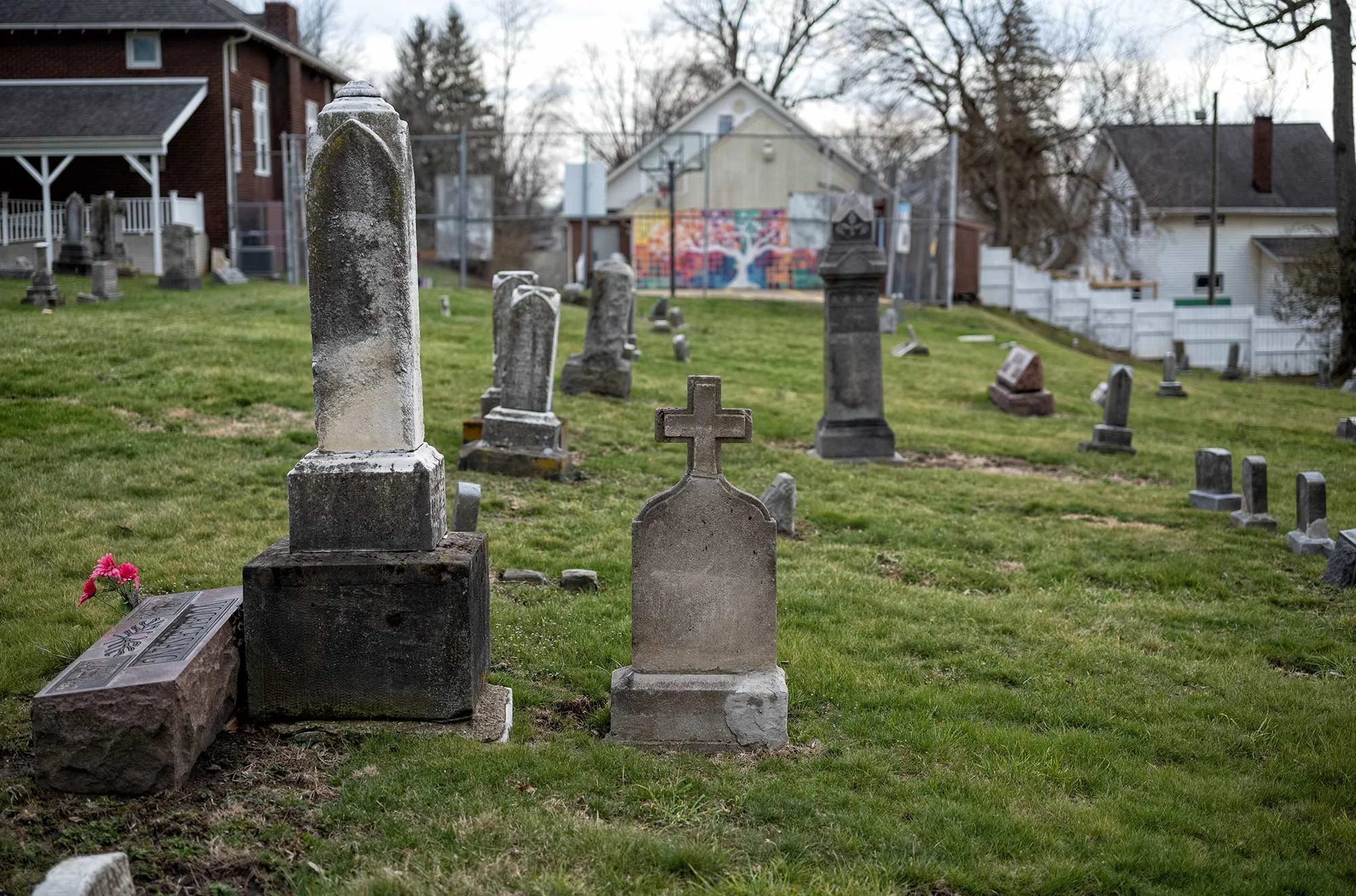
This past week, I visited Rowland Cemetery, not for a commission, but for a deeply personal pilgrimage. I was searching for someone I never met—my aunt, who was buried there at just two years old. Like many of the older stones in this quiet corner, her grave is unmarked. We don't know exactly where she is. This photograph captures the essence of that search—a singular, weathered marker standing as a quiet testament to a life that once was.
Passed away in the 1800’s
The detail in this shot, captured on my Leica M10-R, is a reflection of my experience. The mossy texture of the stone, the soft, respectful fall-off in the background—it all speaks to the dignity that remains, even as nature takes its course. I am grateful to the volunteers who dedicate their time to maintaining this sacred space, ensuring that these forgotten stories are not completely erased.
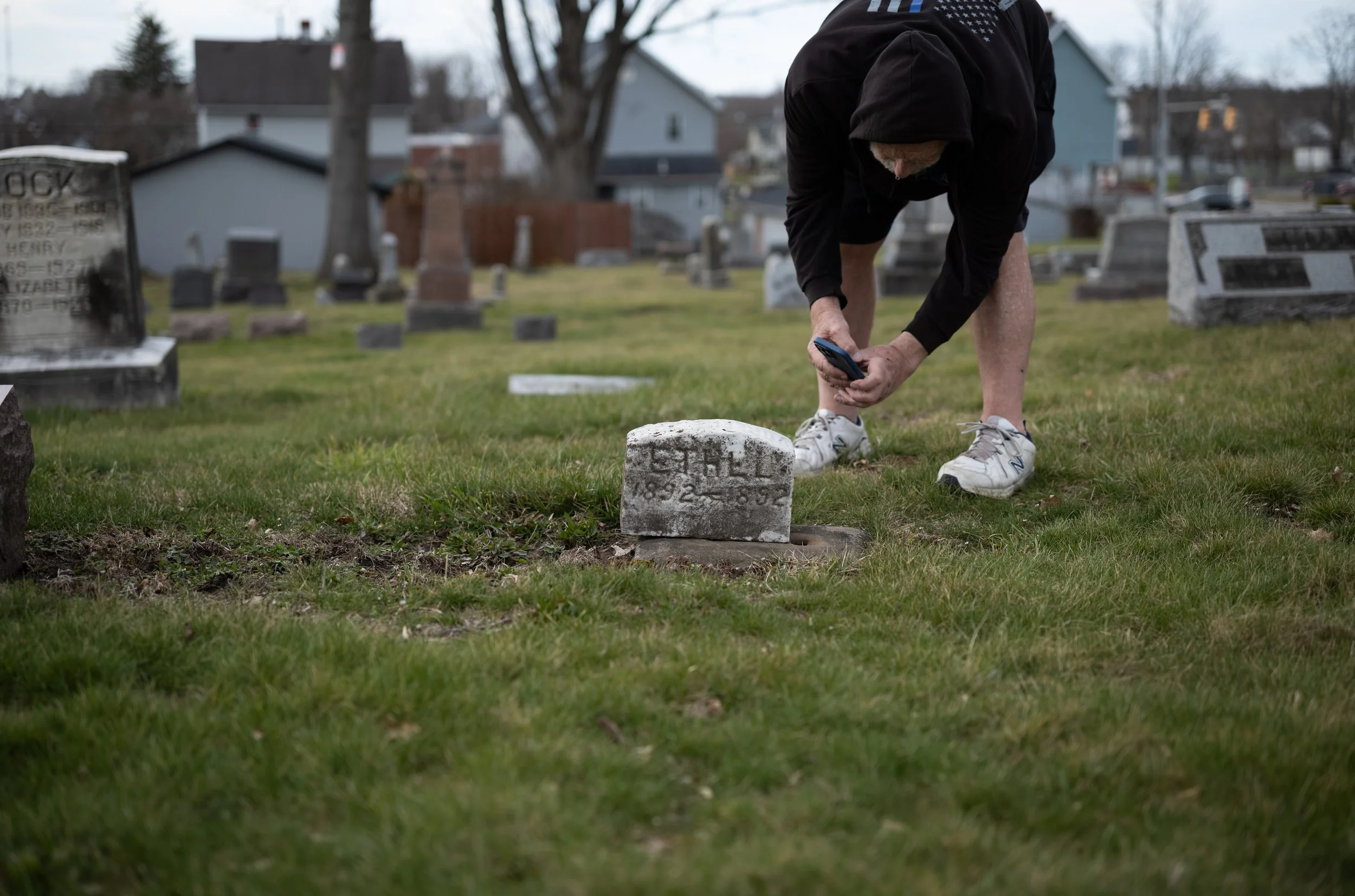
My Brother capturing some old graves with his phone
My 'Signature Series' is about capturing the enduring spirit of a moment. This visit to Rowland Cemetery was a reminder that even the quietest, most unmaintained places have a story to tell. It's my honor to document them.
The Difference Between a Snapshot and a Legacy
The Difference Between a Snapshot and a Legacy
The Snapshot is an Accident; the Portrait is an Intention. In an era where everyone carries a high-resolution camera in their pocket, the word "photograph" has been diluted. We are drowning in snapshots—momentary captures of light hitting a sensor by chance. But for those of us who have spent decades behind the glass of a Leica or a Hasselblad, we know that a true portrait isn't "taken"; it is constructed. It is the difference between a house and a home; one is a structure of convenience, the other is an integrity of space.
The Precision of the Glass
When Every Millimeter Matters. In my kit, I rely on tools that most photographers consider "overkill." Whether it's the Leica 50mm f/2 APO-Summicron-M ASPH—widely regarded as the sharpest lens ever made—or specialized Tilt-Shift optics, these aren't just toys. They are precision instruments used to correct the "Geometry of Vision."
The APO Advantage: Most lenses struggle with color fringing and edge-to-edge sharpness. The APO glass ensures that a portrait of a CEO or the texture of a limestone facade is captured with absolute fidelity.
Tilt-Shift Architecture: In architectural work, I use specialized lenses to ensure that vertical lines stay vertical. No "leaning" buildings, no distorted perspectives—just the integrity of the design as the architect intended.
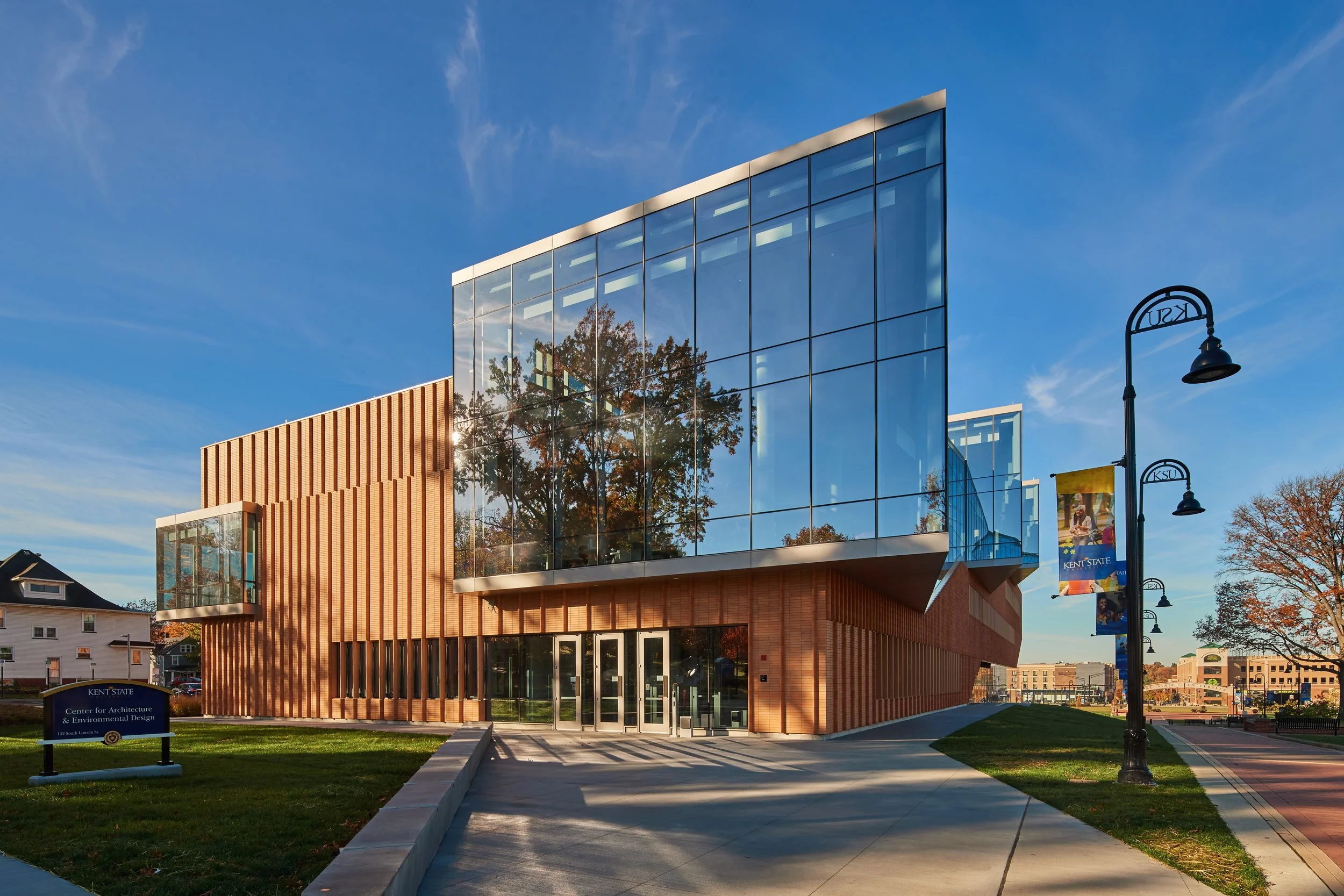
Lighting: The Invisible Tool of the Trade. Most people walk into my studio in Canton and tell me the same thing: "I’m not photogenic." What they are actually saying is that they have spent a lifetime being victimized by bad lighting. They’ve been flattened by overhead office fluorescents or washed out by a direct camera flash. My job is to use light as an architect uses steel—to create shape, depth, and character where there was previously only a flat surface. When we control the "Geometry of Vision," we aren't just capturing what you look like; we are revealing who you are.
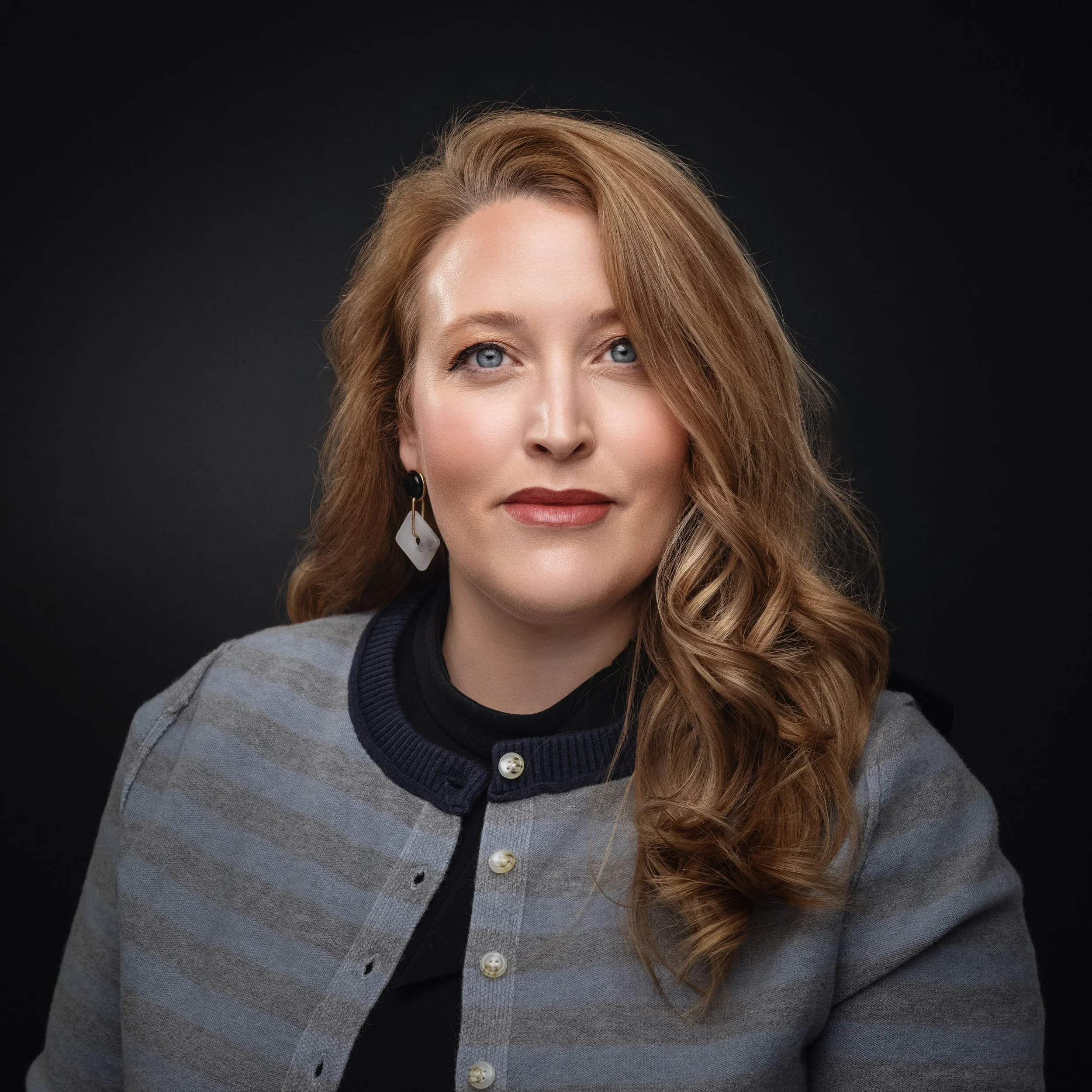
Gina